Is home charging cheaper than public charging?
Almost always, and usually by a factor of three to ten. Here is the arithmetic, and the situations where it does not hold.

Home charging is cheaper than public charging in almost every case. The interesting question is by how much, and when the rule breaks.
The core comparison
Charging at home draws electricity at your domestic unit rate. Public rapid charging bundles in the cost of the hardware, the grid connection, the site rental, the payment infrastructure and a margin — so it costs several times more per unit.
Ranked cheapest to most expensive:
- Home, off-peak tariff — the floor price
- Home, standard rate — roughly 3–4× the off-peak rate
- Destination AC charging — often cheap or free while you shop or stay
- Public AC charging — mid-range, slow
- Public DC rapid — the highest per-unit price
- Motorway rapid — the highest of all
Where the rule breaks
Free workplace charging beats everything, including your off-peak rate. If your employer offers it, it changes the whole calculation — and it is worth asking, because provision has grown quickly.
No off-street parking. If you cannot charge where you park, the cheap tier simply is not available. This is the single biggest factor in EV running costs and it is decided by your housing, not your car.
Very low mileage. If you drive 3,000 miles a year, the absolute difference between tariffs is small enough that the hassle of switching may not be worth it.
Do the sum for your own situation
The honest answer depends on three numbers: your annual mileage, your car's efficiency, and the split between home and public charging. Our home vs public calculator takes those and shows the annual difference, including what happens if you shift the split by ten or twenty points.
For most drivers with a driveway, moving from all-public to mostly-home charging saves more per year than any other single decision about running an EV.
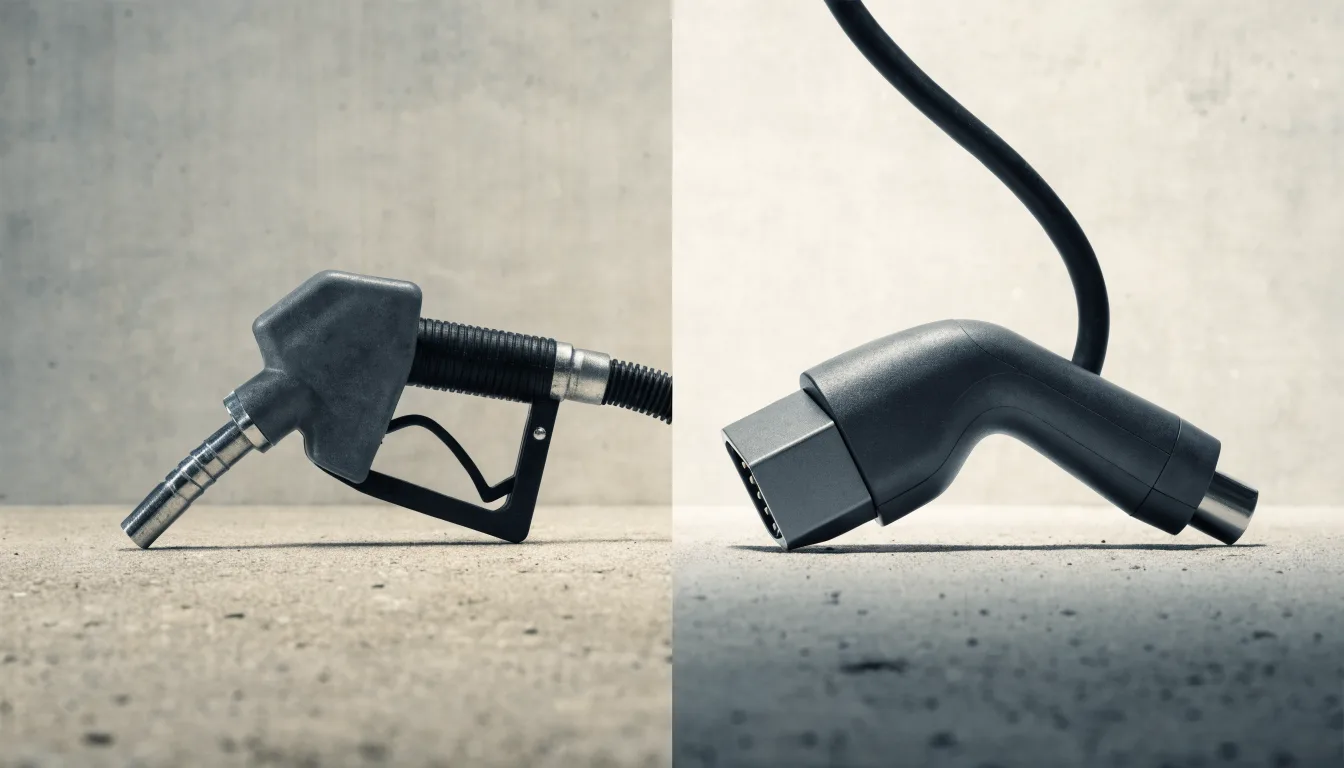
In pictures

Common questions
Is public charging ever cheaper than home?
Occasionally. Free workplace charging beats any home tariff, and some supermarket and destination chargers are free or heavily subsidised while you shop. On a standard home rate, a cheap AC destination charger can also come close.
About the author
ElectraMile EditorialEditorial desk
The ElectraMile editorial team covers charging, running costs and EV ownership for readers in the UK and US.
Spotted something wrong? Tell us — we correct and date every change.
Figures shown for United Kingdom in GBP. Switch market in the header to see local pricing and terminology.