AC vs DC charging, explained without the engineering
Batteries only accept DC. The difference between AC and DC charging is simply where the conversion happens.
One fact explains the whole distinction: a battery can only store DC. Mains electricity is AC. Something has to convert between them, and the only question is what.
AC charging: the car converts
Plug into a home or destination charger and you are supplying AC. The car's onboard charger converts it to DC.
That onboard unit is a physical component with a size, weight and cost, so manufacturers keep it modest — typically 7.4 kW or 11 kW, sometimes 22 kW.
This is why home charging is slow, and why it does not matter. The car caps it, and you were asleep anyway.
DC charging: the charger converts
A rapid charger does the conversion itself, in a large cabinet, and feeds DC straight to the battery, bypassing the onboard charger entirely.
Freed from the size and weight limits of something that has to live inside a car, that cabinet can be enormous — which is how 50 kW to 350 kW becomes possible.
What follows from this
AC is limited by the car. A 22 kW post charging a car with a 7.4 kW onboard charger delivers 7.4 kW. The post is not broken.
DC is limited by the battery. The cabinet can supply far more than the pack will accept, so the battery's own limit governs — and that limit falls as it fills. See why DC charging slows near 80%.
AC is nearly linear; DC is not. An AC charge time estimate is dependable. A DC one is an estimate with a curve behind it — which is why our charge time calculator derates DC rather than quoting peak power.
Which connector does what
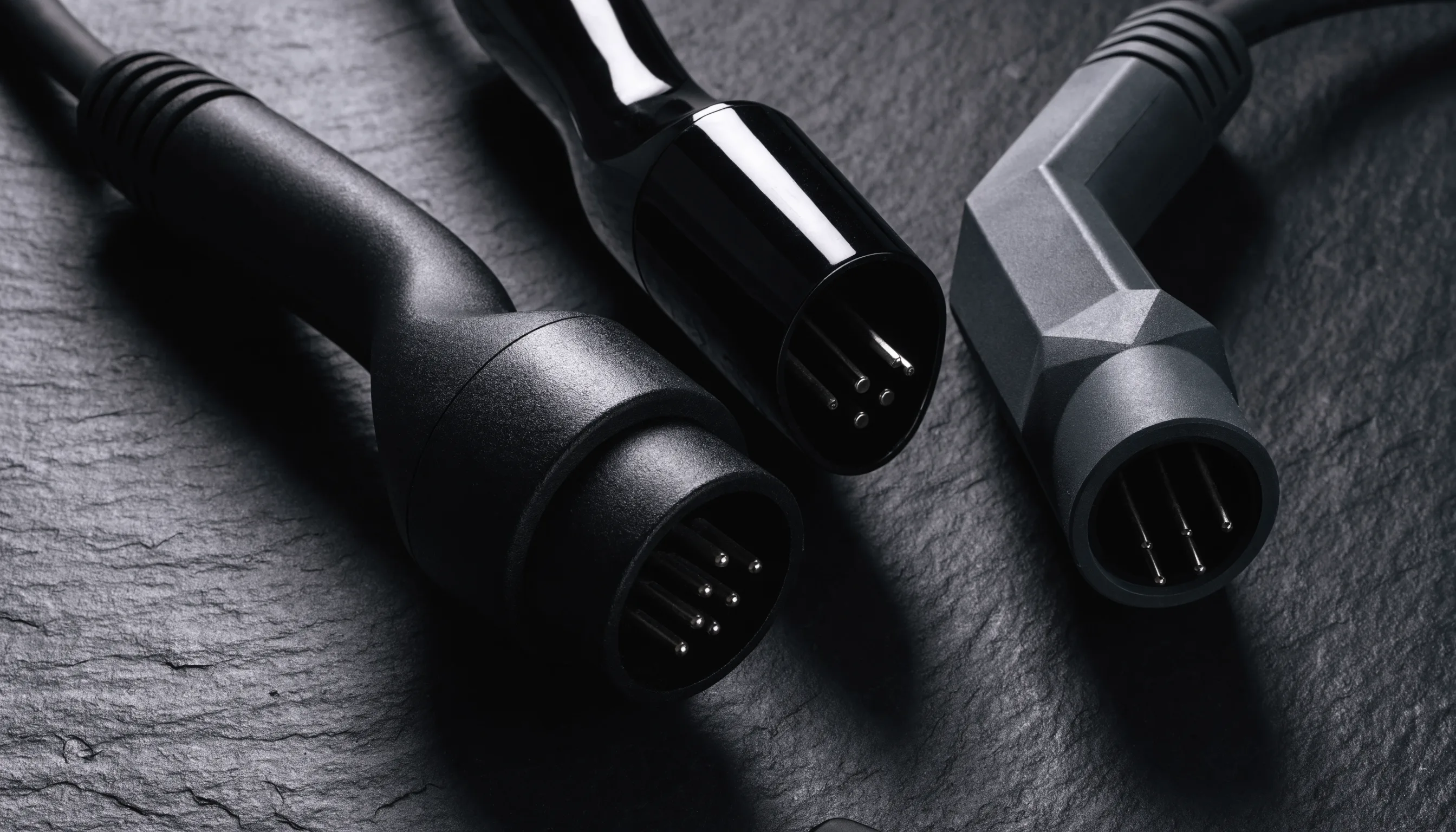
In the UK and Europe, Type 2 carries AC and CCS2 carries DC — the same socket, with two extra pins below for the high-current DC path. In the US it is J1772/CCS1, increasingly NACS. Full detail in CCS vs NACS vs Type 2.
The practical version
Use AC where you park — cheap, gentle, and slow does not matter overnight. Use DC when you are travelling and time does matter. Neither is better; they solve different problems.
In pictures

Common questions
Is DC charging bad for the battery?
Occasional use is what it is designed for. Exclusive DC charging, especially to 100% in high heat, accelerates degradation somewhat. For most drivers the cost difference matters more.
About the author
ElectraMile EditorialEditorial desk
The ElectraMile editorial team covers charging, running costs and EV ownership for readers in the UK and US.
Spotted something wrong? Tell us — we correct and date every change.
Figures shown for United Kingdom in GBP. Switch market in the header to see local pricing and terminology.