Charging without a driveway: what actually works
Roughly a third of UK households have no off-street parking. Lamp-post charging, kerbside gullies and the workplace option most drivers overlook.
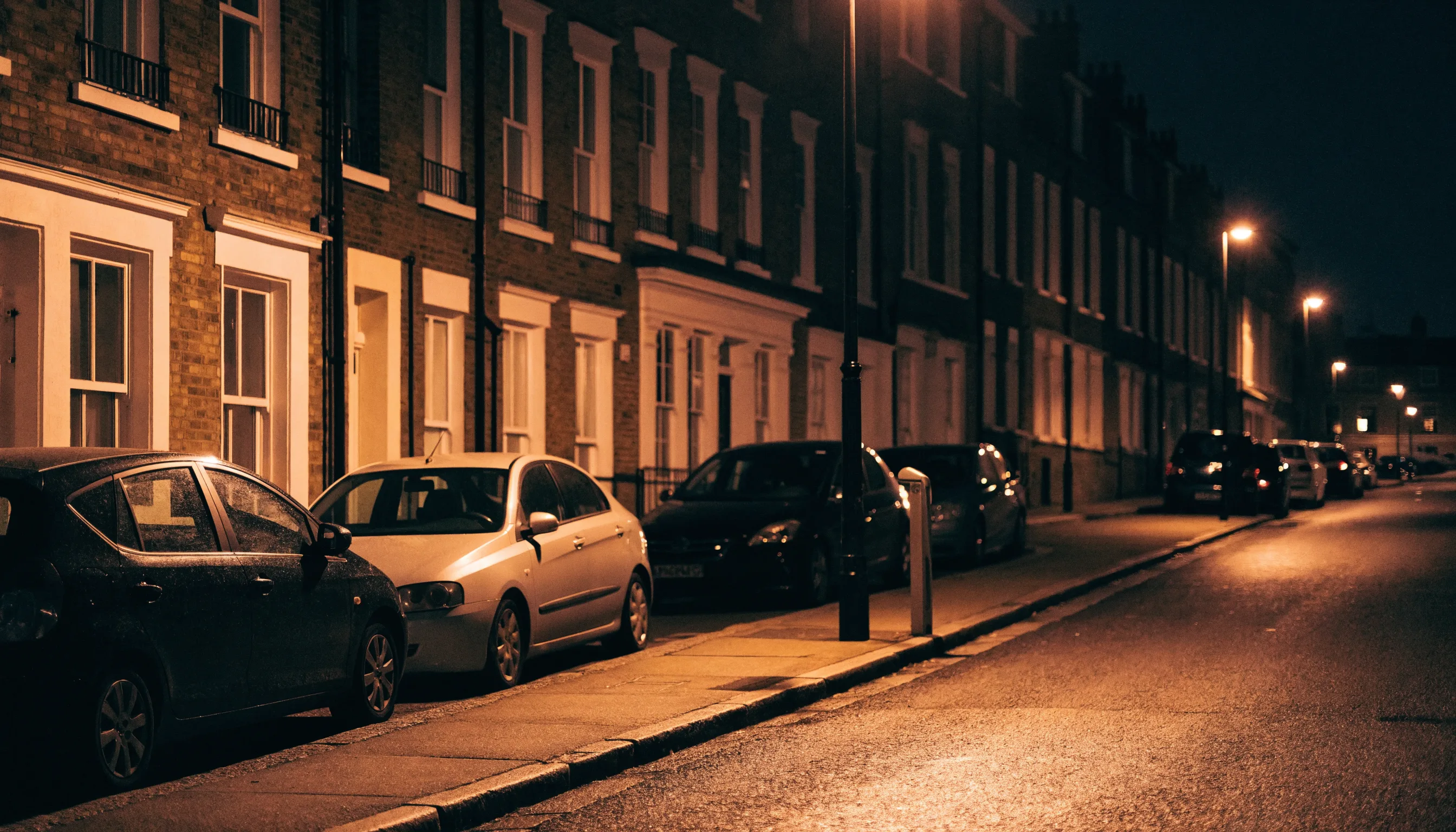
The advice "just charge at home overnight" assumes a driveway. Around a third of UK households do not have one, and for them the economics of an EV look different — but not necessarily bad.
Option 1: workplace charging
The most overlooked and often the cheapest. Many employers now offer charging, sometimes free, sometimes at cost. If you commute most days, a workplace charger substitutes almost entirely for home charging.
Free workplace charging beats even the best home tariff. It is worth asking your employer directly, and worth factoring into a job decision if you are on the fence about an EV.
Option 2: lamp-post and on-street charging
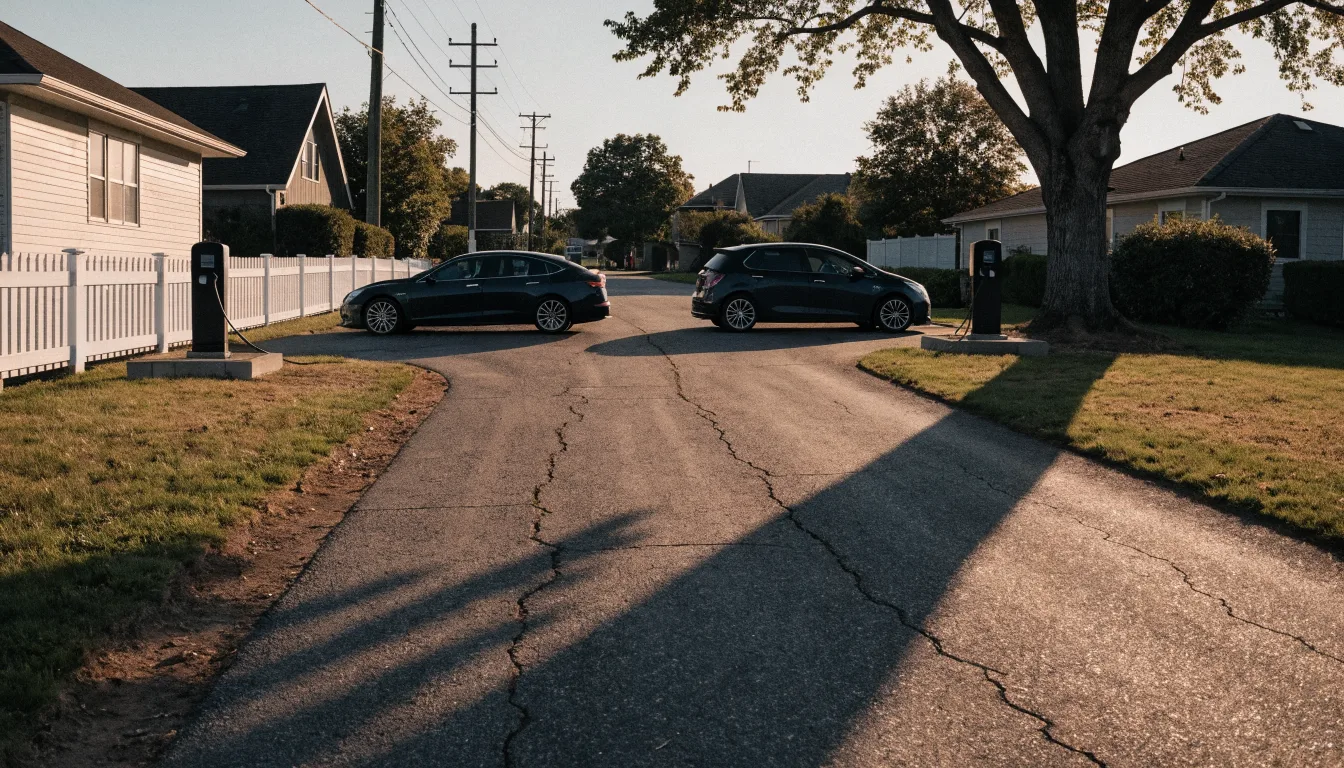
Charge points built into existing street furniture, typically 3–7 kW. Because the electrical supply is already there, they are relatively cheap for councils to install, and coverage has expanded significantly in urban areas.
How it works in practice: you park in a bay near the post, plug in with your own Type 2 cable, and pay through an app or contactless. Rates sit between home and rapid charging — more than a home tariff, considerably less than a motorway stop.
The catch is bay availability. These are usually not enforced EV-only bays in every borough, so a petrol car can occupy the space.
Check your council's website; provision varies enormously between authorities.
Option 3: cable gullies
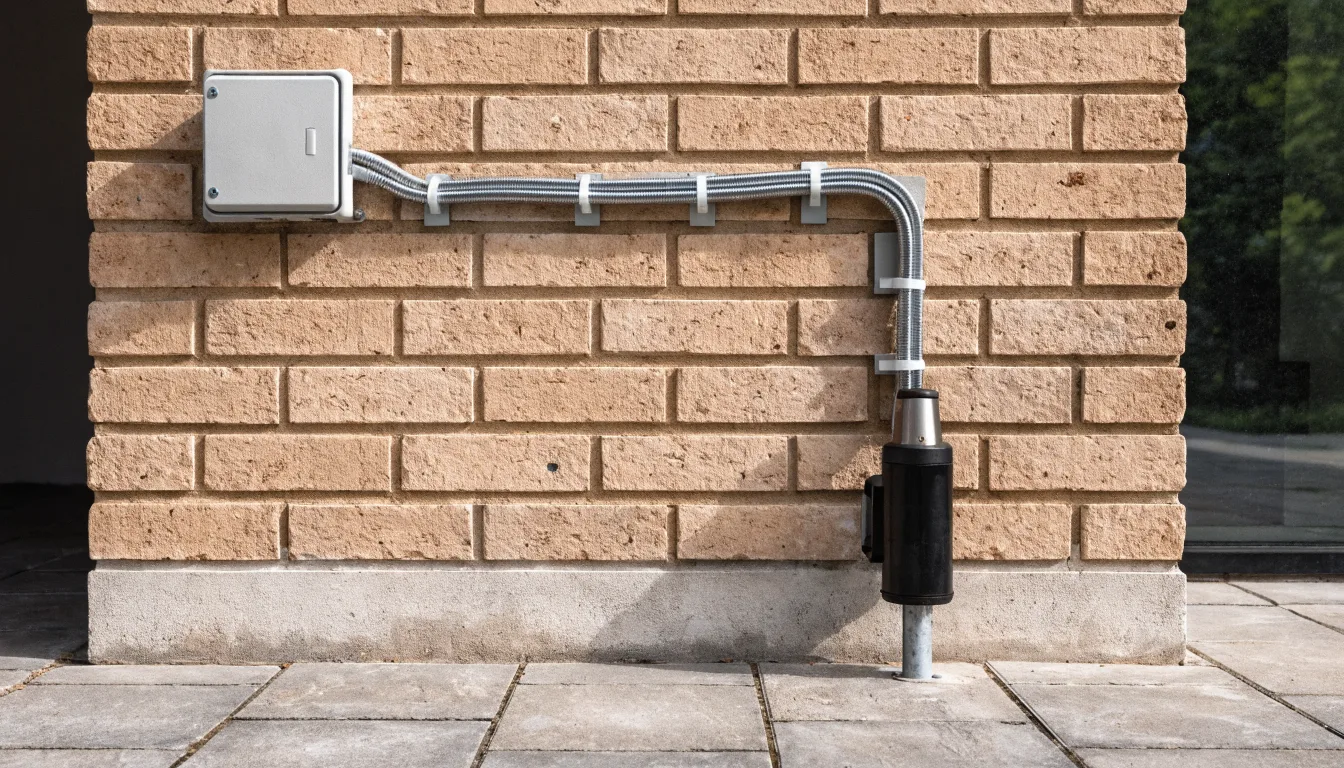
A channel installed flush into the pavement, running from your property boundary to the kerb, with a lid. You run your cable through it, so nothing sits proud of the surface.
This requires council permission, and policies vary — some authorities have a clear licensing scheme, others refuse outright. The cost is usually a few hundred pounds plus a licence fee.
Do not simply run a cable across the pavement under a rubber mat. Councils treat it as an obstruction and a trip hazard, and you carry the liability if someone falls.
Option 4: rapid charging as routine
Perfectly workable, and how many urban EV drivers actually live. One or two rapid stops a week, combined with a supermarket or gym charger while you are there anyway.
The cost is the issue: at rapid rates, running costs approach or exceed petrol. If this is your only realistic option, run the numbers on your actual mileage before committing to an EV — our charging cost calculator will do it with your figures.
Option 5: destination charging
Supermarkets, gyms, cinemas, car parks. Often slow AC, frequently cheap or free, and it costs you nothing in time because you were stopping anyway.
This works best as a supplement rather than a primary strategy, but for a low-mileage driver it can cover most of the need.
What we would actually suggest
- Ask about workplace charging first. It is the biggest single lever.
- Check your council's on-street provision and its cable-gully policy before assuming anything.
- Map the destination chargers you already pass weekly.
- Model the cost honestly if rapid charging will be your default — for some mileages an EV still wins, for others it genuinely does not.
An EV without a driveway is entirely viable. It just requires a plan rather than an assumption.
In pictures
Common questions
Can I run a cable across the pavement?
Not as a loose cable — it is a trip hazard and councils treat it as an obstruction. Some councils permit a purpose-built cable gully installed flush into the pavement, under licence. Ask before you buy anything.
Is a lamp-post charger slow?
Yes, typically 3–7 kW. That is fine for overnight parking, adding perhaps 100–200 miles over a night, but it is not a top-up-in-an-hour solution.
About the author
ElectraMile EditorialEditorial desk
The ElectraMile editorial team covers charging, running costs and EV ownership for readers in the UK and US.
Spotted something wrong? Tell us — we correct and date every change.
Figures shown for United Kingdom in GBP. Switch market in the header to see local pricing and terminology.