EV vs petrol: what a year actually costs
Fuel is where the gap is largest and clearest. Servicing helps the EV, insurance and depreciation can go the other way.
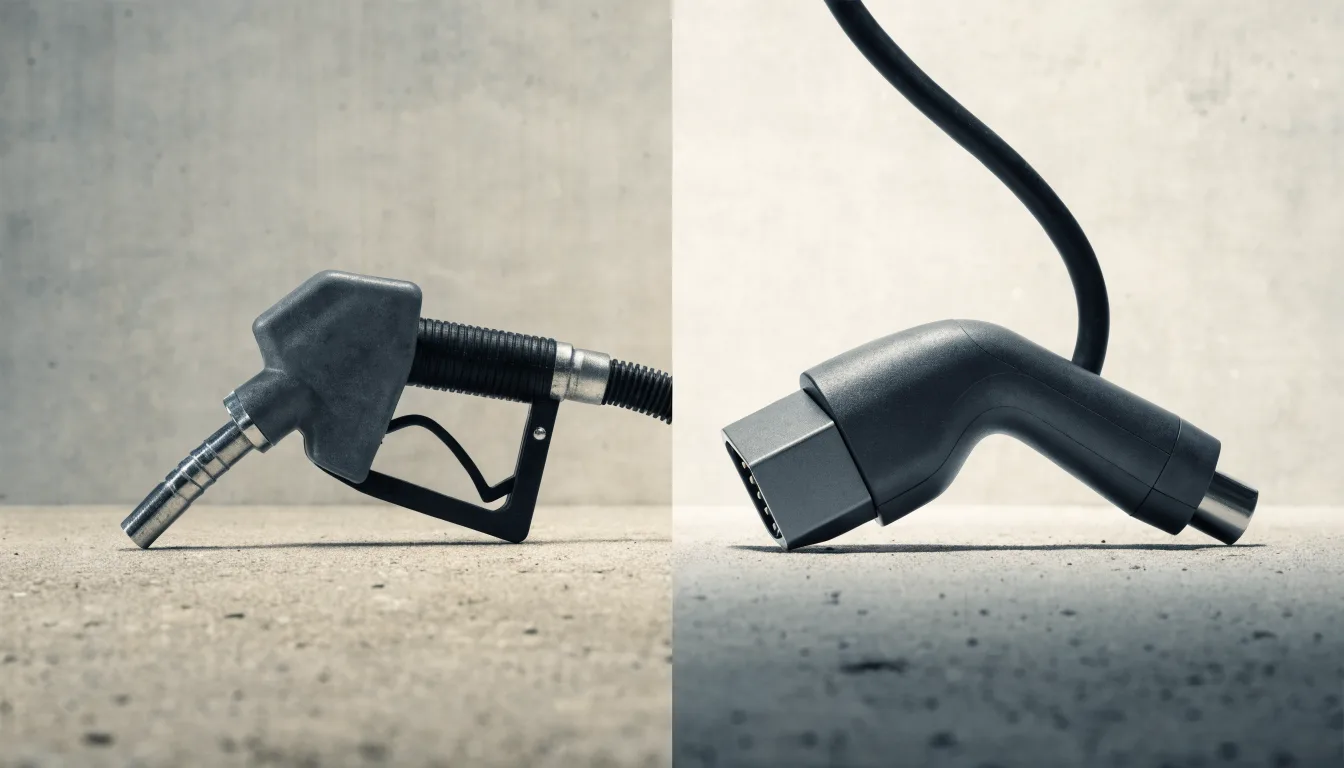
Most EV-versus-petrol comparisons quote the best case for the EV and the worst for the petrol car. Here is the whole picture, including the parts that do not flatter electric.
Fuel: the big one
At 10,000 miles a year:
| How you charge | Per mile | Per year |
|---|---|---|
| EV, off-peak home | ~1.8p | ~£180 |
| EV, standard home rate | ~6.5p | ~£650 |
| EV, 80% home / 20% rapid | ~5.6p | ~£560 |
| EV, rapid only | ~21p | ~£2,100 |
| Petrol, 45 mpg | ~14p | ~£1,400 |
Two things stand out. Home charging is dramatically cheaper than petrol. And rapid-only charging is more expensive than petrol — which is why the driveway question decides more than the car choice does.
Run your own figures through the charging cost calculator.
Servicing
Genuinely lower. No oil changes, no cambelt, no exhaust, no spark plugs, far less brake wear thanks to regeneration.
Not zero, though: brake fluid, coolant, cabin filters, and the 12 V battery all still need attention.
Tyres
Worse for the EV. The extra weight and instant torque wear tyres faster — see why EV tyres wear faster. Budget more here, not less.
Insurance
Frequently higher for EVs. Repair costs, specialist parts and a smaller repairer network all push premiums up. Get a real quote for the specific car before assuming.
Depreciation
The largest cost of new car ownership and the one most often omitted. EV depreciation has been steep. That is bad news buying new and good news buying used — see the used EV buying guide.
Putting it together
For a driver with a driveway and an off-peak tariff, the fuel saving alone is large enough to dominate, and an EV is comfortably cheaper to run.
For a driver with no home charging doing high mileage, the numbers are much closer, and can favour petrol on running costs alone.
Start from where you will charge, not from the car. It is the single biggest variable in the whole calculation.
In pictures

Common questions
Is an EV always cheaper to run?
On fuel, only if you can charge at home. Relying entirely on rapid charging costs more per mile than petrol. Where you charge matters more than which car you buy.
What about depreciation?
EV depreciation has been steep, which hurts new buyers and helps used ones. It is real money and it belongs in any honest total-cost comparison.
About the author
ElectraMile EditorialEditorial desk
The ElectraMile editorial team covers charging, running costs and EV ownership for readers in the UK and US.
Spotted something wrong? Tell us — we correct and date every change.
Figures shown for United Kingdom in GBP. Switch market in the header to see local pricing and terminology.