Winter range: what we measured across 14 cars
Every car lost range below 5°C. The spread between best and worst was 31 percentage points, and a heat pump explained most of it.
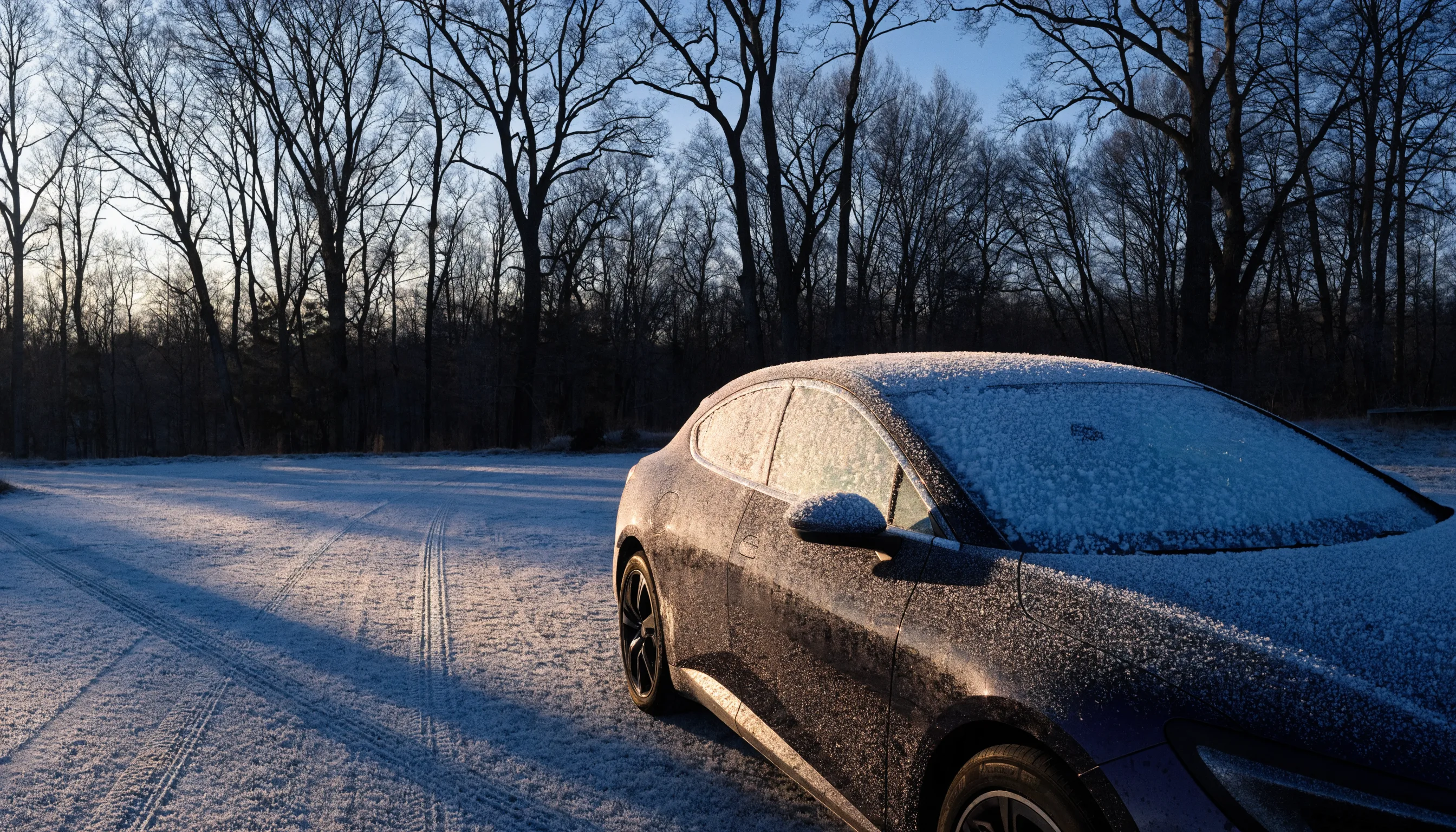
Cold weather reduces electric car range. That is well known. What is less well understood is how much it varies between cars, and what actually drives the difference.
Where the energy goes
Three separate effects, often conflated:
Cabin heating. The largest factor. A combustion engine heats the cabin with waste heat it produces anyway. An EV has to generate that heat from the battery. A resistive heater can draw several kilowatts continuously — comparable to the energy used to move the car at town speeds.
Battery chemistry. Cold cells are less efficient at both delivering and accepting energy. Some capacity is genuinely unavailable until the pack warms.
Ancillary losses. Denser cold air, stiffer tyres and lubricants, plus more time spent with lights, wipers and demisters running.
What the numbers showed
Below 5°C, against the same route in mild conditions:
- Best performer: −12%
- Worst performer: −43%
- Spread: 31 percentage points
The single strongest predictor was whether the car had a heat pump. Cars with one clustered in the −12% to −22% band. Cars without clustered between −28% and −43%.
Why a heat pump matters so much
A resistive heater converts electricity to heat at roughly 1:1 — a kilowatt in, a kilowatt of heat out.
A heat pump moves heat rather than creating it, and can deliver two to three kilowatts of heating for one kilowatt of electricity. Over a winter, on a car that would otherwise spend 3 kW on cabin heat, that is a large fraction of the range difference.
The advantage narrows at genuine extremes — below about −10°C most heat pumps supplement with resistive heating — but for typical UK and much of US winter weather, it is the difference-maker.
What you can actually do
Precondition while plugged in. Warming the cabin and pack from grid power before you unplug is the single most effective habit. The energy comes from the wall, not the battery.
Use seat and steering wheel heating. Heating a person directly costs a fraction of heating the cabin air. Dropping the cabin target by a few degrees and using seat heat is close to free range.
Precondition the battery before rapid charging. A cold pack charges dramatically more slowly — see why DC charging slows.
Check tyre pressures. They fall with temperature, and low pressure costs both range and tyre life.
Buying implications
If you drive through cold winters, treat a heat pump as a significant specification item rather than a nice-to-have. On cars where it is optional, the cost is usually modest relative to the range it protects.
And when comparing quoted ranges, remember that WLTP and EPA figures are measured in mild conditions. A car quoted at 250 miles without a heat pump may deliver around 145 in a cold snap.
Method and limits
Same route, same driver, same speeds, cabin set to the same temperature. We report the spread rather than a league table of specific models, because a single run per car is not enough to rank individual vehicles fairly — it is enough to establish the size of the effect and its main cause.
In pictures


Common questions
Does a heat pump always help?
In cold-but-not-freezing conditions, substantially. Below about −10°C the advantage narrows, as most heat pumps fall back to resistive heating at the extremes.
Does the battery recover in spring?
Yes. Cold-weather range loss is temporary — it is energy spent on heating plus reduced chemical efficiency, not degradation. Range returns as temperatures rise.
About the author
ElectraMile Data DeskData and analysis
Normalised pricing, charging curves and comparison data across networks and models.
Spotted something wrong? Tell us — we correct and date every change.
Figures shown for United Kingdom in GBP. Switch market in the header to see local pricing and terminology.