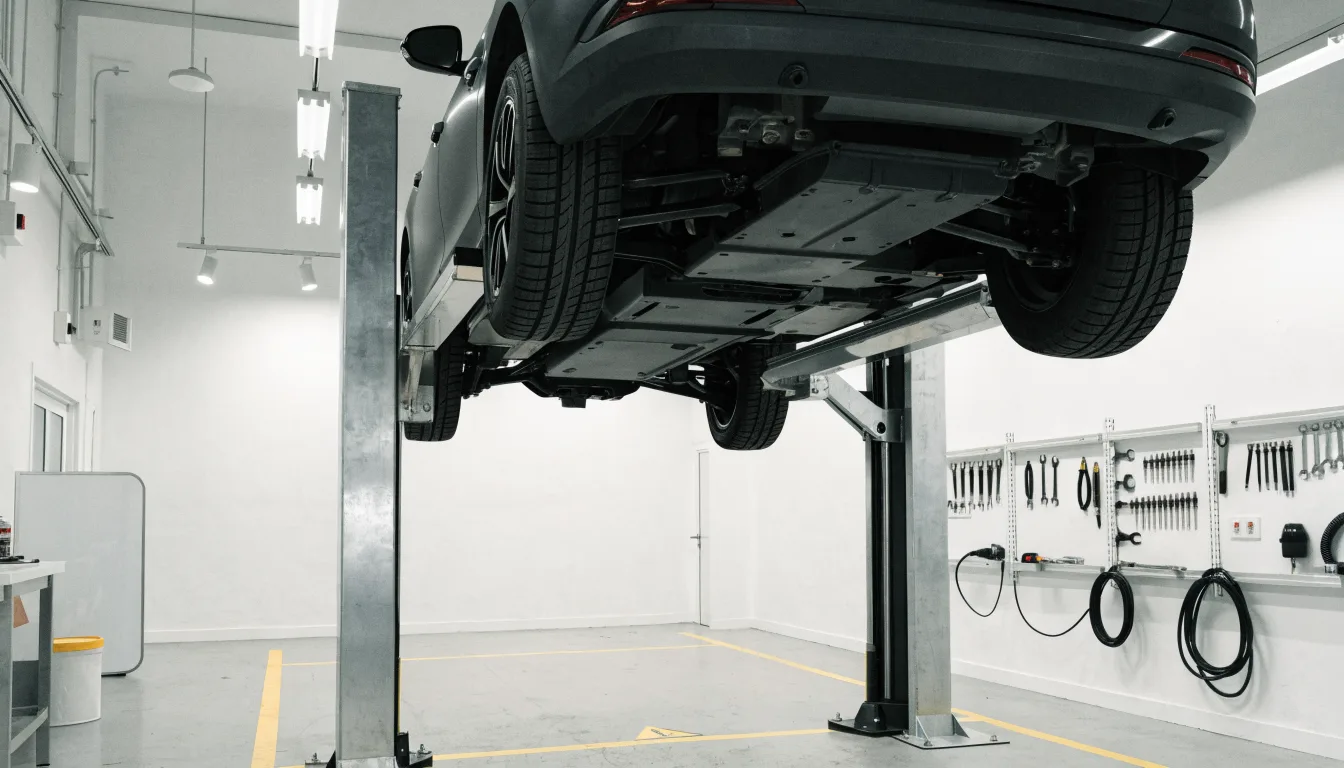
What actually needs servicing on an electric car
Far less than a combustion car, but not nothing — and the items that remain are different ones.
An electric car has far fewer moving parts, and its service schedule reflects that. What is left is worth knowing, because it is not the same list.
Gone entirely
- Engine oil and filter
- Spark plugs
- Cambelt
- Exhaust, catalytic converter, DPF
- Clutch and gearbox oil in most cases
- Fuel filter
That is most of a conventional service, and it is the source of the lower running cost.
Still required
Brake fluid. Hygroscopic, absorbs moisture over time, needs replacing on schedule regardless of how little the brakes are used.
Coolant. EVs have thermal management for the battery and motors. It is not the same coolant loop as an engine, but it exists and it needs checking.
Cabin filter. Same as any car.
Reduction gearbox oil. Some manufacturers specify a change at high mileage; many do not.
Brakes — for corrosion, not wear. Because regeneration does most of the slowing, discs can seize or corrode from underuse. Occasional firm braking helps keep them clean.
Watch more closely than on a petrol car
Tyres. EVs are heavy and torquey. They wear faster, and this is the item most likely to catch you out — see why EV tyres wear faster.
The 12 V battery. Yes, still there. It powers the electronics and wakes the main system. When it dies the car will not start, which surprises people every time. Typical life is three to five years.
Software. Genuinely part of maintenance now. Updates change efficiency, charging behaviour and preconditioning logic.
What a service actually costs
Materially less than an equivalent combustion car, mostly because the labour-heavy items are gone. The gap narrows on tyre-heavy years.
What to keep records of
For resale, keep evidence of servicing, tyre changes and — most valuable of all — battery state of health readings over time. A documented health history is worth real money to a buyer, and is exactly what our used EV buying guide tells them to ask for.
In pictures

Common questions
Do EV brakes really last longer?
Yes, because regenerative braking does most of the slowing. The risk flips from wear to corrosion — discs that get little use can rust.
About the author
ElectraMile EditorialEditorial desk
The ElectraMile editorial team covers charging, running costs and EV ownership for readers in the UK and US.
Spotted something wrong? Tell us — we correct and date every change.
Figures shown for United Kingdom in GBP. Switch market in the header to see local pricing and terminology.