The Tesla Maintenance Schedule, Explained by Mileage
Tesla's maintenance schedule runs on mileage and years, not months. Here's every interval that matters, in the order it actually falls due, with what each one costs.
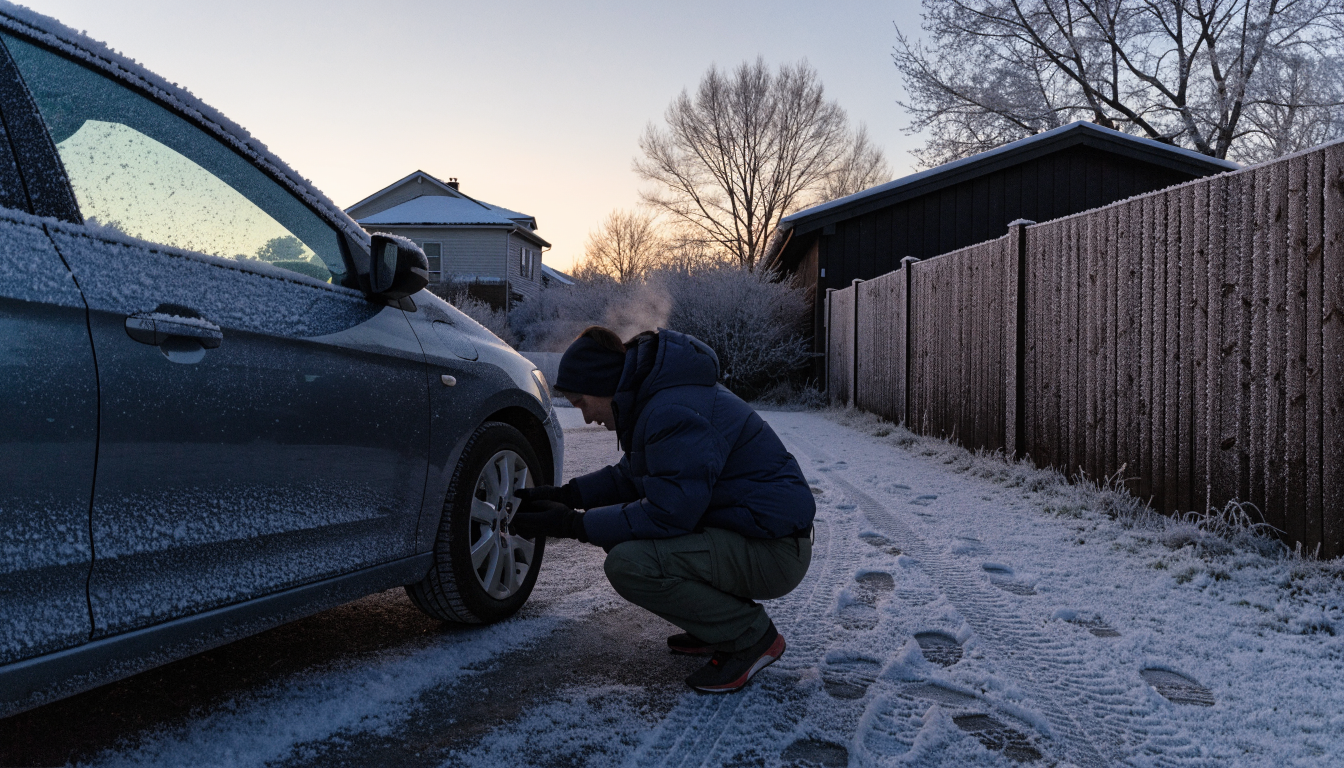
The Tesla maintenance schedule runs on mileage and years, not a fixed calendar. Tyre rotation falls due every 6,250 miles, brake fluid gets tested every 4 years, a cabin filter is due every 2 years, and a 12V battery is replaced on warning, not on a set date. There's no single "12-month service" the way a petrol car has one — several separate intervals run side by side, and which one lands next depends on how much you drive.
Why "when is my service due" doesn't have one answer
Ask a petrol garage when your car's next service is due, and you'll get a date or a mileage, printed on a sticker under the bonnet. Ask the same question about a Tesla, and there isn't one answer. There isn't one schedule. There are several, each running on its own clock.
That trips people up constantly. New owners check the touchscreen expecting a countdown to "next service", the way a dashboard reminder works on a petrol car. Instead they find separate, quieter reminders: a tyre wear notification here, a 12V battery health note there. It looks like nothing is being tracked. In fact, more is being tracked, just not in one bundle.
Once you know the individual intervals, the picture gets simple fast. The confusing part was ever expecting a single number in the first place. Write the six intervals down once, next to your own annual mileage, and you'll rarely need to look them up again.
The intervals, and why each one is set where it is
Distance-based intervals
Tyre rotation is due every 6,250 miles (10,000 km), or sooner if tread depth differs by 1.5mm or more between tyres, per Tesla's own service intervals. This one is set by mileage, because tyre wear tracks distance driven, not time. A car doing 20,000 miles a year needs it roughly three times as often as one doing 6,000.
Time-based intervals
Brake fluid is tested every 4 years regardless of mileage. It absorbs moisture from the air over time, so a car driven gently for four years still needs the check, even with light tyre wear. The cabin filter works the same way: every 2 years on a Model 3 or Model Y, every 3 years on a Model S or X. It clogs with airborne dust and pollen at a fairly steady rate, whether the car covers long motorway miles or short local trips.
Condition-based intervals
The 12V battery has no fixed interval at all. It typically lasts three to six years, and the car's software flags it when its condition drops, rather than the owner guessing at a date. Brake calipers work the same way in salt-affected regions: clean and lubricate them once a year if you live somewhere that grits the roads in winter, because road salt, not mileage, is what corrodes the caliper guide pins.
Reading the schedule in the order it actually happens
- Weeks 1–4: nothing due. Tesla's tyre pressure monitoring and 12V battery status run continuously from day one, but no scheduled item falls due yet on a new car.
- Around 6,250 miles: the first tyre rotation, sooner if you've covered high mileage quickly or notice uneven wear.
- Year 2: the cabin filter is due on a Model 3 or Model Y, and by now most owners have covered enough miles for a second or third rotation too. Many book both together with a UK EV Service.
- Year 3, UK only: the first MOT is required by law, three years after first registration, regardless of anything Tesla-specific.
- Year 4: the brake fluid test falls due, and the 12V battery is now inside its typical three-to-six-year replacement window. Watch for a warning rather than replacing it early.
- Ongoing, every 12 months in salted regions: brake caliper cleaning, which runs on its own annual clock, separate from everything above.
The pattern worth remembering is simple. Distance items arrive faster if you drive more. Time items arrive on schedule regardless. Condition items arrive when the car tells you, not before.
The schedule as a table
| When it's due | What falls due | Runs on |
|---|---|---|
| Every 6,250 mi / 10,000 km | Tyre rotation | Mileage |
| Every 12 months (salted roads only) | Brake caliper clean and lubricate | Time, regionally triggered |
| Every 2 years (Model 3/Y) | Cabin filter | Time |
| Every 3 years, first registration | MOT (UK only) | Legal requirement |
| Every 4 years | Brake fluid test | Time |
| Every 3–6 years, on warning | 12V battery | Condition |
Nothing here is due monthly. That's the biggest structural difference from a petrol schedule. It's also why most owners visit a service centre far less than once a year.
What following the schedule actually costs
In the UK, Kwik Fit's Tesla EV Service bundles the cabin filter, a brake fluid change and a four-wheel balance into one visit. It costs £227.95, due every 24 months or 20,000 miles, as of August 2026. That single visit covers two of the six intervals above in one go. It's largely why Tesla owners visit a garage so rarely: independent research from Which? found only 42% of Model 3 owners, and 38% of Model Y owners, had any service visit at all in the twelve months their survey covered.
Add tyres, an MOT once you're three years in, and an eventual 12V battery, and a realistic average lands around £150–£300 a year in the UK, or $400–$600 in the US. Any single year can still run higher or lower, depending on what falls due together. Knowing the schedule in advance is what turns that lump into something you can plan for, rather than a surprise invoice.
When the schedule isn't the whole story
Following every interval above doesn't cover everything. A warning light, a grinding noise, pulsing through the brake pedal, or a car that's sat in standing water all need attention straight away, regardless of where you are in the schedule. These are fault signs, not maintenance items, and waiting for the next interval is the wrong call.
Climate and mileage both shift the dates. Heavy winter salt use adds the annual caliper clean even if your mileage is low that year. Very high mileage compresses every distance-based interval into a shorter timeframe than the headline numbers suggest, so a driver covering 25,000 miles a year should expect roughly four tyre rotations in that time, not the one or two a lighter driver sees.
What to do next
Check the touchscreen for what's actually flagged on your specific car, rather than assuming a generic schedule applies exactly. Mileage and climate shift these dates more than most owners expect, and a five-minute check now beats a surprise warning light later. If you're planning for the season ahead, our measured winter range data explains what else changes with temperature, and why EV tyres wear faster is worth reading before your first rotation catches you by surprise. For the main battery's long-term health, separate from the 12V unit covered here, see how to look after an EV battery — all three sit within our wider ownership coverage.
Sources
Common questions
Is there a fixed tesla maintenance schedule like a petrol car has?
No single fixed calendar. Instead there's a set of independent intervals — tyre rotation by mileage, brake fluid and cabin filter by years, 12V battery on warning — that land at different points depending on how much you drive. The touchscreen tracks all of them for your specific car.
What does an ev car maintenance schedule look like compared with petrol?
Shorter and less frequent. A petrol car's schedule is built around the engine — oil, filters, belts — none of which an EV has. What's left is tyres, brake fluid, a cabin filter and the 12V battery, plus tyre rotation more often than a petrol car needs it.
How much does following the tesla maintenance schedule cost overall?
Roughly £150–£300 a year in the UK or $400–$600 in the US when averaged across ownership, dominated by tyres and a biennial EV service costing £227.95 at UK chains such as Kwik Fit. Individual years vary sharply depending on what falls due.
What happens if I ignore the tesla maintenance schedule entirely?
Nothing dramatic in the short term, but risks build. Untested brake fluid can affect braking feel under hard use, an unreplaced cabin filter reduces airflow and can smell musty, and a neglected 12V battery is the most common reason a Tesla won't wake up on a cold morning.
Should I check anything extra before winter?
Yes — tyre tread and 12V battery health matter more in the cold. AAA's 2026 testing found EVs lose around 39% of range at 20°F (roughly −7°C), and a weak 12V battery is far more likely to fail in low temperatures than a healthy one.
About the author
ElectraMile EditorialEditorial desk
The ElectraMile editorial team covers charging, running costs and EV ownership for readers in the UK and US.
Spotted something wrong? Tell us — we correct and date every change.
Figures shown for United Kingdom in GBP. Switch market in the header to see local pricing and terminology.