Polestar 4: UK lease deals, real-world range and verdict
No rear window, a premium price, and real-world range that actually holds up. Here's what a Polestar 4 costs to lease in the UK, and whether it's worth it.
DisclosureSome links on this page earn ElectraMile a commission. It never changes what we recommend.
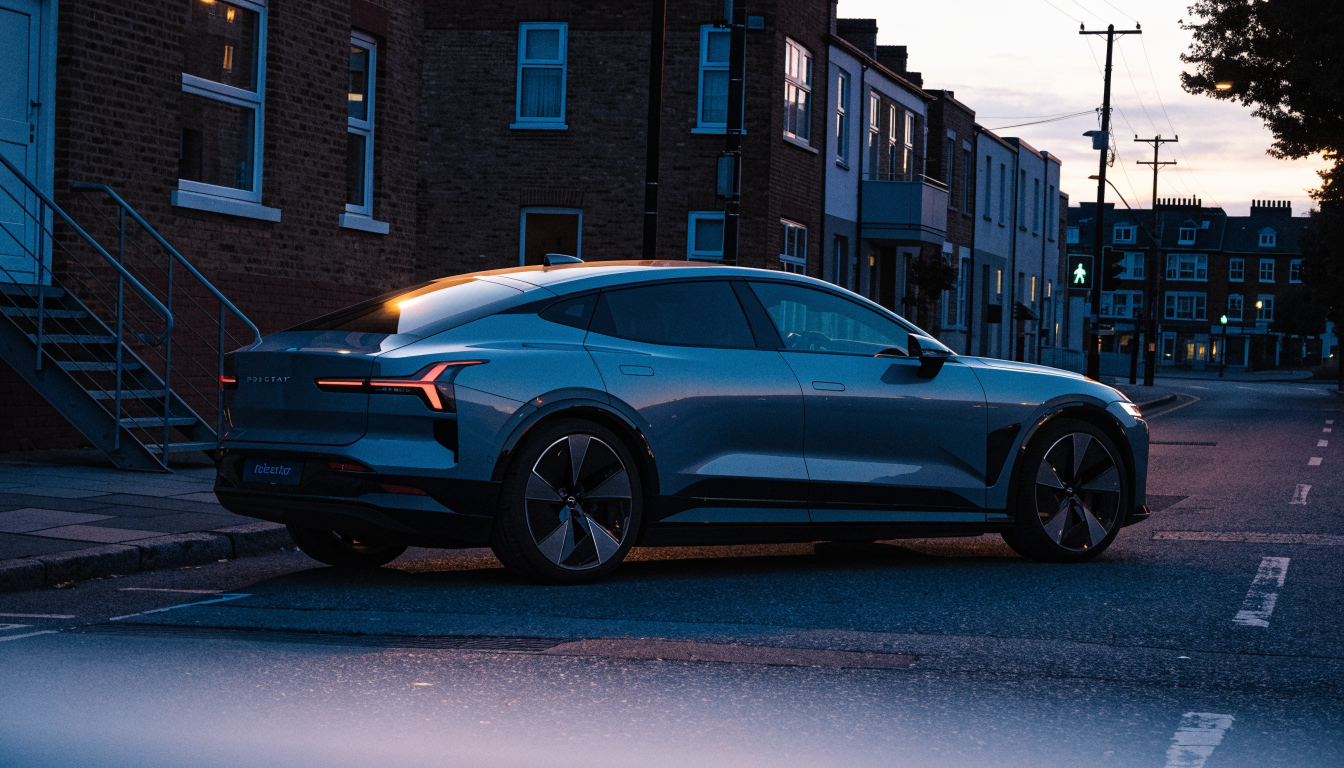
The Polestar 4 is a five-seat electric coupe-SUV that leases in the UK from around £532 a month. Real-world testing shows it holds onto roughly 90% of its claimed range — genuinely close to the spec sheet, which is rare for an electric SUV. Its most talked-about feature is not a spec at all. There is no rear window. A camera and a screen sit where the mirror would normally be.
The question behind "Polestar 4"
Three searches point at this car for three different reasons. Some people are comparing lease deals before they commit. Some have heard about the missing rear window and want to know if it is a real problem. Others want to know if the claimed range holds up once you actually drive it. All three are really the same question. Is this car as good to live with as its spec sheet suggests?
Polestar's UK range covers five trims. It runs from a single-motor, rear-wheel-drive car up to a dual-motor Performance version. Prices start around £56,750 and reach £71,250, before any lease or finance deal. That is genuinely premium money. It sits closer to a Porsche Macan Electric than a Tesla Model Y.
Why the reviews focus on the rear window and the range
The missing rear window
Polestar removed the conventional rear window entirely. In its place sits a panoramic glass roof, running further back than most rivals, plus a digital rear-view mirror fed by a roof-mounted camera. Reviewers call it manageable, not ideal. Judging distance through a camera feed takes longer to trust than a normal mirror, especially at first.
It also costs the car boot space. At around 500 litres, the boot trails a Tesla Model Y by a wide margin, and reviewers flag this consistently as a genuine downside, not a nitpick. If family space matters more than styling, our six-seat Tesla Model Y L guide covers a very different kind of practicality. If outright pace matters more, our Tesla Model S Plaid guide covers Tesla's performance flagship instead.
Real-world range holding up
Independent testing found the single-motor car covered 333 miles on a real-world route. Polestar's own claim is 385 miles WLTP. That is close to 90% of the official figure — better than most electric SUVs manage once you leave the test lab. The dual-motor version claims 367 miles WLTP. Expect a similar real-world proportion, though its extra weight and power make it slightly thirstier per mile.
Interior quality that shows up on a test drive, not a spec sheet
Reviewers consistently rate the cabin above the Polestar 4's direct rivals, with material quality that feels closer to a noticeably more expensive car. The Google-built infotainment system responds faster than most rivals' native software, and the interior uses recycled and animal-free materials as standard, a genuine point of difference for buyers who care about that. None of this shows up in a simple spec-sheet comparison, which is exactly why lease shoppers who rule the car out on price alone are often the ones most surprised by it in person.
How to work out if a Polestar 4 lease actually makes sense
1. Work out the real cost of a lease, not just the headline monthly figure. Carwow's advertised deals start from £532 a month. The typical structure is nine months' payment upfront, then a 48-month term with an 8,000-mile annual allowance. That is 56 monthly-equivalent payments in total. Over the contract, that comes to £29,792, covering 32,000 contracted miles. Work it through and that is roughly 93p a mile — before electricity, insurance, or a single mile over the allowance.
2. Decide between single motor and dual motor honestly. The single-motor Long Range car is the one reviewers rate as more engaging to drive. It is not just the cheaper choice — it also holds the longer claimed and real-world range. The dual-motor Performance trim adds pace, not range, so pick it because you want the speed, not because more motors sounds like a better car all round.
3. Check the mileage allowance against how you actually drive. An 8,000-mile-a-year lease suits someone who mostly charges at home and drives locally. Go over that allowance and most UK leases charge an excess-mileage fee per mile. That can turn a good-looking monthly figure into a worse deal than it first appeared.
4. Weigh the missing rear window against how you actually park. If you reverse into tight spaces by eye, rather than by camera or sensor, spend real time with the rear-view screen before signing anything. It is a genuine adjustment, not a minor styling choice, and a five-minute test drive at a dealership rarely reveals that fully.
5. Compare it against rivals at the same money. A used EV bought outright can stretch your budget further than a four-year lease on a car that keeps depreciating the whole time you are paying for it. Our used EV buying guide covers how to shop that route safely.
Which Polestar 4 trim actually makes sense
| Trim | Power | From (UK list price) | Claimed WLTP range | Best for |
|---|---|---|---|---|
| Single Motor Business | 272bhp | £56,750 | 385 miles | Best range, cheapest way in |
| Single Motor Prime | 272bhp | £60,750 | 385 miles | Same range, plusher standard spec |
| Dual Motor Business | 544bhp | £63,750 | 367 miles | All-wheel grip, family use |
| Dual Motor Prime | 544bhp | £67,750 | 367 miles | Dual-motor grip with the plusher spec |
| Dual Motor Performance | 544bhp | £71,250 | 367 miles | Pace over efficiency |
The Single Motor Business stands out as the trim worth having. It is the cheapest way in. It holds the longest range. Reviewers also rate its steering and body control higher than the heavier dual-motor cars. Paying more here buys speed or standard equipment. It does not buy a genuinely better everyday car.
What it costs to charge, on top of the lease
The Polestar 4 carries a 100kWh battery, 94kWh of it usable. A full charge from empty costs around £24.54 on Ofgem's standard price cap rate of 26.11p per kWh, for July–September 2026. Charge overnight instead, on a cheap EV tariff such as Octopus's Intelligent Octopus Go at 8p per kWh, and the same full charge drops to about £7.52. That saving is worth arranging before your lease even starts, since it applies to every single charge across the whole four-year contract.
DC rapid charging tells a similar story. The car's 200kW peak DC rate takes a 10–80% charge to around 30 minutes, on a charger powerful enough to sustain it. A typical motorway rapid unit will not hold the full 200kW throughout, in practice. Public rapid charging in the UK commonly costs 60–80p per kWh, several times the home rate. Treat it as an occasional top-up, not routine charging, if you can help it.
When leasing, or buying, a Polestar 4 isn't the answer
If the missing rear window is a genuine dealbreaker, no configuration of this car solves that. It is a design decision built into the whole range, not something limited to one trim you could simply avoid. If boot space matters more than driving feel, a more conventionally shaped SUV gives more usable cargo room for less money. And if you drive well over 8,000 miles a year, price a higher-mileage lease or outright purchase properly before signing. Excess-mileage charges on a car this size add up fast.
What to do next
Our wider EV model guides cover rivals at every price point, if the Polestar 4's premium positioning stretches past your budget. Our guide to the best electric cars for towing is worth a look too, if load-hauling matters more to you than a camera-fed rear-view mirror.
Sources
Common questions
What is the Polestar 4 like to drive, and is it worth buying (UK review)?
Reviewers rate the Polestar 4 highly for interior quality and driving feel, particularly the single-motor version. Its biggest drawback is a smaller boot than rivals like the Tesla Model Y, plus a missing rear window replaced by a camera-fed digital mirror, which some buyers need to adjust to.
How much does it cost to lease a Polestar 4?
UK lease deals start from around £532 a month, typically on a nine-month upfront payment followed by a 48-month term and an 8,000-mile annual allowance. Across the full contract, that works out to roughly 93p a mile before electricity, insurance or any mile over the allowance.
Where can I find the best Polestar 4 lease deals?
Compare quotes across several UK leasing brokers rather than accepting the first offer, since contract length, upfront payment and mileage allowance all change the real cost. Check the single-motor Long Range trim first — it is cheaper to lease and holds the longest real-world range.
What is the Polestar 4's real-world range?
Independent testing found the single-motor version covered 333 miles on a real-world route, against a claimed 385 miles WLTP — close to 90% of the official figure. The dual-motor version claims 367 miles WLTP and should return a similar real-world proportion.
Does the Polestar 4 have a rear window?
No. Polestar removed the conventional rear window entirely, replacing it with a panoramic glass roof and a digital rear-view mirror fed by a roof-mounted camera. Reviewers call it manageable rather than ideal, since judging distance through a camera feed takes longer to trust than a normal mirror.
About the author
ElectraMile EditorialEditorial desk
The ElectraMile editorial team covers charging, running costs and EV ownership for readers in the UK and US.
Spotted something wrong? Tell us — we correct and date every change.
Figures shown for United Kingdom in GBP. Switch market in the header to see local pricing and terminology.