Jeep Avenger review: UK prices, range and boot space
Electric from £29,999, mild-hybrid from £27,050, and a WLTP range that drops hard once you drive it. Here's what the Jeep Avenger actually costs and delivers on UK roads.
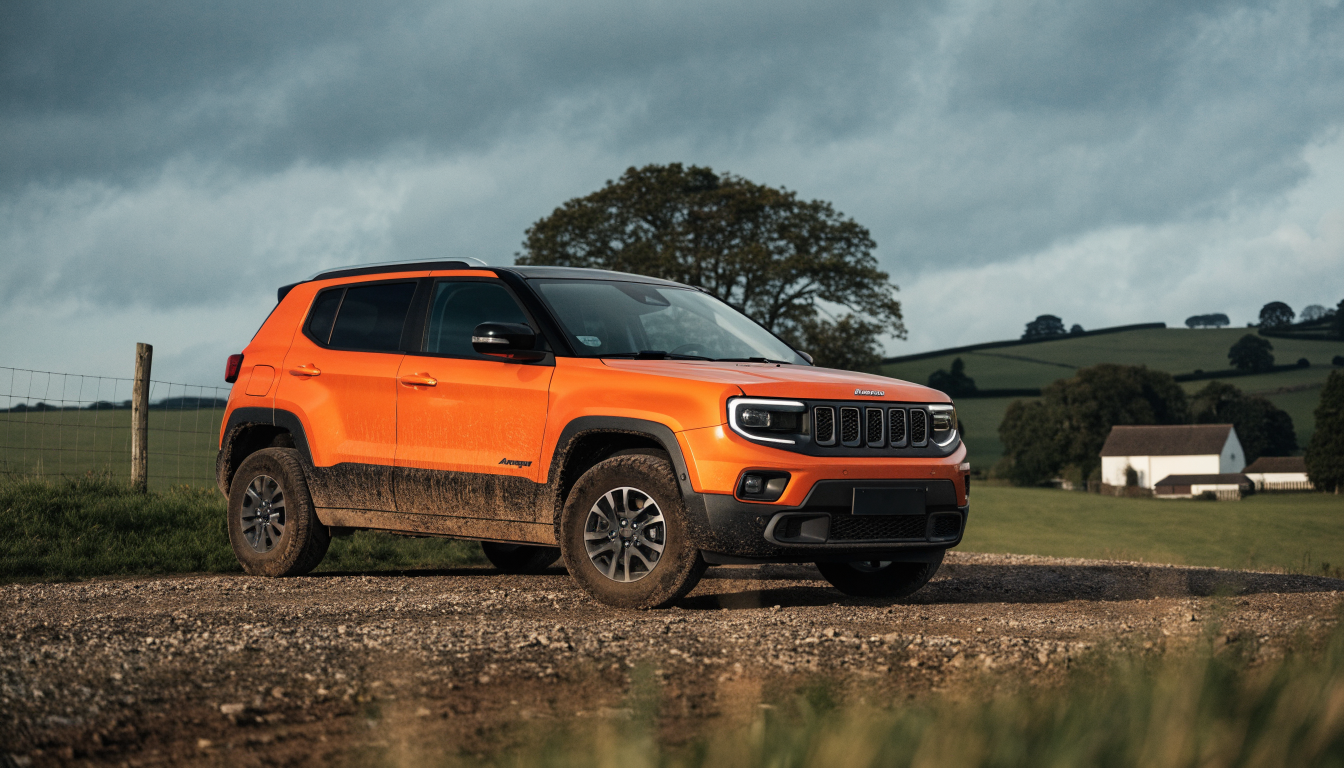
DisclosureSome links on this page earn ElectraMile a commission. It never changes what we recommend.
The Jeep Avenger is a small SUV sold in the UK as either a mild-hybrid petrol or a fully electric model, and the electric version costs from £29,999 with an official range of 248 miles. Real-world driving cuts that closer to 180 miles once you are away from a lab test. The mild-hybrid version costs less to buy, from £27,050, but only ever runs on electric power for a few hundred metres at a time. Which one actually suits you depends far more on how you drive than the badge on the tailgate.
What "Jeep Avenger" buyers actually want to know
Most people searching the bare model name already know Jeep makes a small, boxy SUV. What they want is simpler than a full spec sheet: is it any good, what does it actually cost once you pick a version, and does the electric one really do what the brochure claims.
The honest answer changes depending on which Avenger you mean. Jeep sells three distinct versions in the UK: petrol, mild-hybrid e-Hybrid, and fully electric. They share a body and very little else underneath. Picking the wrong one for how you actually drive is an easy, expensive mistake to make. If you are cross-shopping against other small EVs before buying new, our used EV buying guide is a useful reality check first.
Electric or hybrid: what actually changes
Price and range
The electric Avenger starts at £29,999 for the entry Longitude trim, rising to £31,999 for Altitude and £33,999 for the range-topping Summit. That is a real cut from where pricing sat a year earlier — Jeep trimmed up to £5,000 off the electric range once cheaper petrol and hybrid versions arrived to sit alongside it in showrooms.
Every electric Avenger uses the same 54kWh battery, of which 51kWh is usable, giving an official WLTP range of up to 248 miles. Real-world testing has returned closer to 180 miles, at an efficiency of around 3.5 miles per kWh. That gap between the lab figure and the road figure is worth planning around, not simply ignoring until it becomes a problem on a longer trip.
The e-Hybrid starts considerably lower, from £27,050. It pairs a 1.2-litre petrol engine with a small electric motor and a six-speed automatic gearbox, together producing 99bhp — the same combined output as the plain petrol version. It can run on electric power alone for short bursts, Jeep quotes around a kilometre at a time, which mainly helps in slow town traffic rather than on any longer journey.
Charging and running
A 100kW rapid charger takes the electric Avenger's battery from 10% to 80% in around 25 to 30 minutes. A full 7kW home charge from empty takes roughly 8 hours overnight, which comfortably fits an ordinary daily routine. The e-Hybrid, by contrast, never needs a plug at all. It tops up its small battery entirely through braking and the engine, and returns up to 57.1mpg on the WLTP combined cycle — a genuine advantage if home charging is not realistic for you.
How to choose the right Avenger for you
1. Work out your real daily and weekly mileage. If most of your driving sits comfortably inside 150 miles between charges, the electric Avenger's real-world range is not a problem worth worrying about. If you regularly drive further without a reliable charging stop, the e-Hybrid removes that risk entirely.
2. Price in the company car tax difference, if it applies to you. A fully electric company car sits at just 4% Benefit-in-Kind tax for the 2026/27 tax year, against 17% or more for the mild-hybrid. On a £29,999 electric Avenger, that is roughly £20 a month in tax for a basic-rate taxpayer. The same calculation on a hybrid, even at the lowest applicable band, comes out several times higher.
3. Check charging access before you buy electric. A 100kW rapid charger gets you to 80% in half an hour, but only if you have regular access to one nearby. Without a home charger or a reliable public option close by, the e-Hybrid's petrol-station convenience becomes the more realistic choice day to day.
4. Compare the actual purchase price, not just the badge. £29,999 for the electric Longitude against £27,050 for the e-Hybrid is a £2,949 gap. That is the real cost of going electric on the entry trim, before you weigh in any tax or fuel savings that follow over the years you own the car.
5. Think about resale and towing separately. Electric SUVs generally hold their value less predictably than an equivalent hybrid at this end of the market. If towing matters to you, check our guide to the best electric cars for towing before assuming any small electric SUV, Avenger included, is really built for the job.
Electric vs e-Hybrid vs trim, compared
| Version | Price from | Range or economy | 0-60mph | Best for |
|---|---|---|---|---|
| Electric Longitude | £29,999 | 248 miles WLTP (~180 real-world) | 9.6 sec | Short, predictable journeys with home charging |
| Electric Summit | £33,999 | 248 miles WLTP, same battery | 9.6 sec | Buyers who want the full kit list, not more range |
| e-Hybrid | £27,050 | Up to 57.1mpg | 10.4 sec | Longer, unpredictable trips without reliable charging |
The three electric trims share exactly the same battery and range. The extra money buys equipment, not distance, so there is little reason to pay for the Summit specifically for range reasons alone.
What it actually costs to own
Insurance, servicing and tyres vary less between these versions than the sticker price suggests, since both share the same core running gear underneath the body. The gap that matters most is fuel and electricity.
Charging an electric Avenger's roughly 51kWh usable battery from empty at Ofgem's standard rate of 26.11p per kWh costs around £13.32. On a cheap overnight EV tariff at 8p per kWh, the same charge costs about £4.08. Filling the e-Hybrid's petrol tank costs considerably more per mile at current fuel prices, though it needs no home charger and no changed daily routine to fit around.
Company car tax, where it applies, tips the maths further towards electric. At 4% Benefit-in-Kind for 2026/27, a basic-rate taxpayer on a £29,999 electric Avenger pays around £20 a month: £29,999 × 4% gives an annual taxable benefit of £1,199.96, and 20% of that is £239.99 a year, or about £20 a month. That gap alone can outweigh the electric version's higher purchase price within a couple of years for a company car driver.
When the Avenger isn't the right car
If you regularly drive long distances without reliable charging along the way, the electric Avenger's real-world range shortfall makes it a genuine risk, not just an inconvenience. Auto Express rated it four stars out of five, calling it "a stylish SUV offered with petrol, hybrid and electric power, though more practical rivals exist" — a fair summary of a car that looks better on paper than it drives in some respects.
If boot space is your absolute priority over badge or running costs, look elsewhere first. Rivals in the same size and price bracket offer more usable load space than the Avenger's battery-compromised boot. And if you are choosing between this and a completely different kind of EV, our Tesla Model 3 lease deals guide shows what a much larger car costs to run instead, if your budget can stretch that far.
What to do next
Match the version to your real mileage before you compare a single spec sheet any further. Browse the rest of our EV model guides for direct rivals at a similar price, or see what a bigger, faster Tesla Model S price guide covers if the Avenger's size does not suit your household at all. Whichever version you choose, get a real-world range figure from an owner forum before committing to electric on a long commute.
Sources
- Jeep UK — Discover the Jeep Avenger Electric SUV
- RAC Drive — Jeep Avenger review 2026
- Carwow — Jeep Avenger review 2026
- Auto Express — Jeep Avenger review 2026
- Auto Express — Jeep Avenger now £11,000 cheaper thanks to new petrol versions
- GOV.UK — Taxation of company cars: the appropriate percentage 2025 to 2028
Common questions
Is the Jeep Avenger any good?
Auto Express rated it four stars out of five, calling it a stylish small SUV offered with petrol, hybrid and electric power, though it notes more practical rivals exist. It is a genuinely well-styled car with a comfortable interior, but the electric version's real-world range falls well short of its WLTP figure.
Is the Jeep Avenger available in the UK?
Yes, in three powertrains: petrol, mild-hybrid e-Hybrid from £27,050, and fully electric from £29,999. All three share the same body and interior, so the choice comes down almost entirely to how you drive, how far you go, and whether you can charge reliably at home or nearby.
How much does the electric Jeep Avenger cost and how far does it go?
It starts at £29,999 for the Longitude trim, rising to £33,999 for the Summit. Every electric version shares the same 54kWh battery and an official WLTP range of up to 248 miles, though real-world testing has returned closer to 180 miles, roughly 3.5 miles per kWh.
What is the Jeep Avenger's interior like?
It carries Jeep's usual rugged styling cues inside — chunky switchgear, a raised driving position and a simple touchscreen — rather than the minimalist look common on rival small EVs. Reviewers generally rate it as solidly built, if not class-leading on outright material quality for the price.
How much boot space does the Jeep Avenger have?
RAC Drive and Carwow both list 355 litres for the Electric version, competitive for a small SUV of this size, though the underfloor battery pack means it does not match a similarly sized petrol-only rival on outright load space. Fold the rear seats and that figure grows considerably for occasional bulky loads.
Should I buy the hybrid or electric Jeep Avenger?
Choose electric if most of your driving sits inside 150 miles between charges and you have somewhere to plug in overnight. Choose the e-Hybrid if you regularly drive further without reliable charging access, since it never needs a plug and still returns up to 57.1mpg.
About the author
ElectraMile EditorialEditorial desk
The ElectraMile editorial team covers charging, running costs and EV ownership for readers in the UK and US.
Spotted something wrong? Tell us — we correct and date every change.
Figures shown for United Kingdom in GBP. Switch market in the header to see local pricing and terminology.