Tesla Model 3 top speed: every trim, and what it costs
The Model 3's top speed barely changes across most of the range, and it is not the same question as charging speed. Here is every trim compared, plus the Model S above it.
DisclosureSome links on this page earn ElectraMile a commission. It never changes what we recommend.
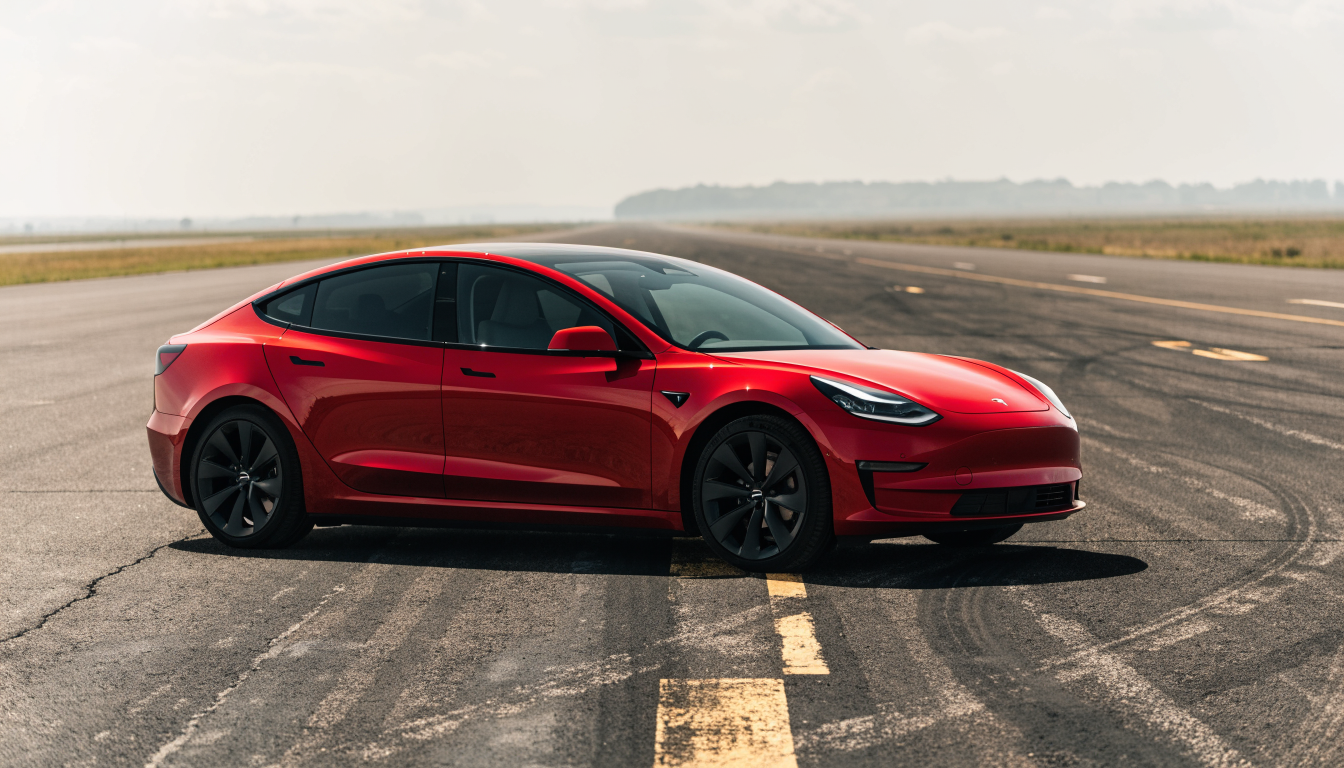
The Tesla Model 3's top speed is 125mph on the entry RWD and Long Range trims, rising to 163mph on the Performance. That is the electronically limited maximum, not a figure you will ever use on a UK road. Confusingly, "how fast it goes" and "how fast it charges" get typed into the same search box a lot — they are two completely different numbers, and this guide covers both without mixing them up.
Two different questions wearing one search term
"Tesla Model 3 top speed" and "Tesla Model 3 charging speed" sound related. They are not the same question at all. One is about how fast the car drives. The other is about how fast electricity flows into the battery, measured in kW rather than mph. It is an easy pair to muddle, because both get shortened to "how fast" in everyday conversation.
This guide is mainly about the driving number: the electronically limited maximum speed of each Model 3 trim, and how the flagship Model S compares. If you actually meant the charging number, our dedicated guide to how to charge a Tesla Model 3 covers port location, charge times and real running costs in full, so this guide will not repeat it.
Why top speed barely changes across most of the range
RWD and Long Range share the same limit
The entry RWD and the Long Range AWD are both capped at 125mph (201km/h). That is a genuine surprise to some buyers: stepping up from RWD to Long Range adds roughly £12,000 to the price, a bigger battery, and all-wheel drive, but it adds nothing at all to the top speed. The extra money buys range and grip, not pace at the very top end.
Performance is the only trim that actually goes faster
Only the Performance trim raises the ceiling, to a claimed 163mph. It also cuts the 0-62mph time to 2.9 seconds claimed, independently tested at 2.8 seconds — covered in full, alongside every other current Tesla, in our Model 3 0-60 guide. Top speed and acceleration are related but separate specs. A car can be quick off the line without a high top speed, and vice versa, though on the Model 3 range both happen to move together on the Performance trim specifically.
Where the Model S Plaid fits above it
Tesla's flagship, the Model S Plaid, is capped at 175mph in normal use, rising to 200mph with an optional Track Package that adds carbon-ceramic brakes and track-ready tyres for around £16,000. Our Tesla Model S Plaid guide covers that option, and what buying the now-inventory-only Model S actually involves, in full. Every current Model 3 trim sits well below it.
How to work out if top speed should matter to you
1. Check your actual roads, not the spec sheet. The UK's motorway limit is 70mph, less than every current Model 3 trim's electronic cap. Even the entry RWD's 125mph limit is a number you are legally never meant to reach on a public UK road.
2. Consider where you actually drive, if you split time between countries. Germany's derestricted autobahn sections allow genuinely unlimited speed where conditions permit, and a handful of US toll roads post limits up to around 85mph — both closer to a Model 3's real ceiling than anywhere in the UK, though still short of it on most trims.
3. Separate "fast" from "quick" before you pay for either. A high top speed matters on a derestricted autobahn or a track day. A quick 0-62mph time matters every time you join a motorway slip road. They cost different amounts of money for different trims, so work out which one you actually want before upgrading.
4. Price the jump to Performance against what it actually buys. Covered with real figures below, the Performance's extra pace and top speed come at a genuine premium — one worth knowing before you assume it is the "best" trim by default.
5. Do not confuse a higher top speed with faster charging. The two numbers live on completely different parts of the spec sheet. A Model 3's peak charging rate, on Tesla's fastest Superchargers, runs up to roughly 250kW regardless of which trim tops out at 125mph or 163mph.
Every current Tesla, top speed compared
| Trim | Price (OTR) | Top speed | 0-62mph |
|---|---|---|---|
| Model 3 RWD | £37,990 | 125mph | 6.2 sec |
| Model 3 Long Range AWD | £49,990 | 125mph | Under 5 sec |
| Model 3 Performance | £59,990 | 163mph | 2.9 sec |
| Model S Plaid (standard) | £114,930 | 175mph | 1.99 sec claimed |
| Model S Plaid + Track Package | ~£130,930 | 200mph | 1.99 sec claimed |
Long Range AWD sits in the middle of the price table and at the bottom of the speed table, tied with the cheapest car in the range. If top speed specifically is what you are paying for, that trim buys you none of it.
What the extra speed actually costs
Work out the jump from RWD to Performance and the number is stark: £22,000 more for an extra 38mph of top speed, or roughly £579 for every additional mph. As a sum, that is 22000 ÷ 38 = 579. Compare Long Range AWD to Performance instead, since Long Range is the trim people often assume is the natural upgrade path, and the sum changes to £10,000 for the same 38mph gain — about £263 per extra mph, because Long Range's own price already sits well above the entry car's.
Either way you calculate it, the Performance's price premium buys you a genuinely much quicker car far more than it buys you a meaningfully higher top speed most drivers will ever use. The 0-62mph gain is the number you would actually notice pulling out of a junction. The extra 38mph on the top end is not.
Run the same sum on the Model S Plaid and the pattern repeats at a much higher price. The standard car costs £114,930 for a 175mph limit. Adding the Track Package brings the total to roughly £130,930 for 200mph — about £640 for every extra mph, in the same rough range as the Model 3 Performance's own £579-per-mph, on a car costing more than twice as much to begin with. A higher top speed does not get proportionally cheaper as the car gets more expensive. It stays a similarly steep add-on at every price point in Tesla's current range.
When top speed should not be the deciding factor
If your driving is mostly UK motorways and A-roads, every current Model 3 trim already offers more top speed than you can legally use, so paying extra purely for a higher number buys you nothing you will experience. If range or running cost is the real question behind your search, our guide to how much EV range you actually need is a more useful place to spend the time. And if you are cross-shopping rather than set on a Model 3, current Tesla Model 3 lease deals are worth checking before you commit to buying any trim outright.
What to do next
Decide honestly whether you are chasing a number you will use or a number you like on paper, then pick the trim that matches. Our used EV buying guide is worth a read if a used Performance model, rather than a new Long Range, turns out to fit your budget better. Browse the rest of our EV model guides for the wider range if none of the three quite fits.
Sources
- EV Specifications — 2026 Tesla Model 3 Standard RWD top speed
- EV Database — Tesla Model S Plaid price and specifications
- Carwow — Tesla Model S Track Package: full details revealed
- Edmunds — Our Tesla Model 3 Performance is quicker than a whole bunch of supercars
- Carwow — Tesla Model 3 review
- Zapmap — Tesla Model 3 charging guide
Common questions
What is the Tesla Model 3 Long Range's top speed?
125mph (201km/h), identical to the entry RWD trim. Stepping up to Long Range adds a bigger battery, more range and all-wheel drive, but it does not raise the electronic speed limiter at all — only the Performance trim does that.
What is the Tesla Model S's top speed?
The current Model S Plaid is capped at 175mph in standard form, rising to 200mph with the optional Track Package, which adds carbon-ceramic brakes and track-focused tyres for around £16,000. Every current Model 3 trim, including the Performance, sits well below both of those figures.
What is the Tesla Model 3's charging speed?
On Tesla's fastest Superchargers, a Model 3 can draw up to roughly 250kW, regardless of which trim's top speed you are asking about. Charging speed and top speed are unrelated specifications that happen to share the word "speed" in casual conversation.
How do you charge a Tesla Model 3?
Plug a Type 2 cable into the port on the rear-left wing for AC charging, or use a CCS rapid charger through the same socket for DC. Our dedicated guide to charging a Tesla Model 3 covers charge times, costs and port location in full.
Does a higher top speed mean a better car?
Not necessarily for everyday UK driving, where the 70mph motorway limit sits well under even the entry Model 3's 125mph cap. A quicker 0-62mph time is far more noticeable day to day than a higher top speed most drivers will never reach on public roads.
About the author
ElectraMile EditorialEditorial desk
The ElectraMile editorial team covers charging, running costs and EV ownership for readers in the UK and US.
Spotted something wrong? Tell us — we correct and date every change.
Figures shown for United Kingdom in GBP. Switch market in the header to see local pricing and terminology.