Electric Car Charge Points: Will Your Car Actually Fit?
Most electric car charge points fit almost any modern EV, but older imports and US cars are the exceptions. Here is how to check your connector before a cable simply will not go in.
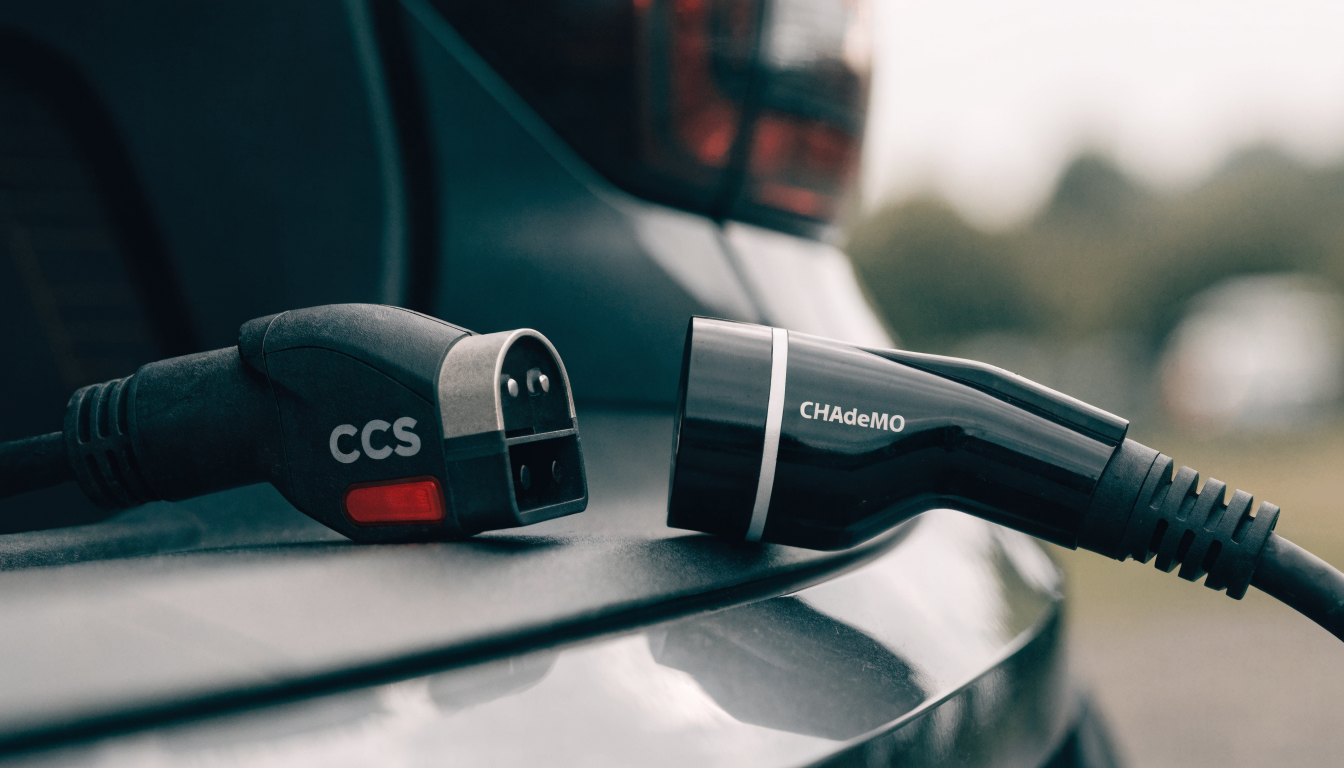
Almost every new car fits almost every public site, because most electric car charge points now use just two shared standards. The exceptions are older Japanese imports with a CHAdeMO socket, and, in the US, a market still mid-way through switching from one plug shape to another. Check your car's actual port before you assume "any charger" genuinely means any charger.
The moment a cable simply will not go in
You arrive at a charger, cable in hand, and it does not fit. Not loosely, not with a wiggle. It simply will not go in the socket. That is not a fault on either side. It is two different connector standards meeting each other.
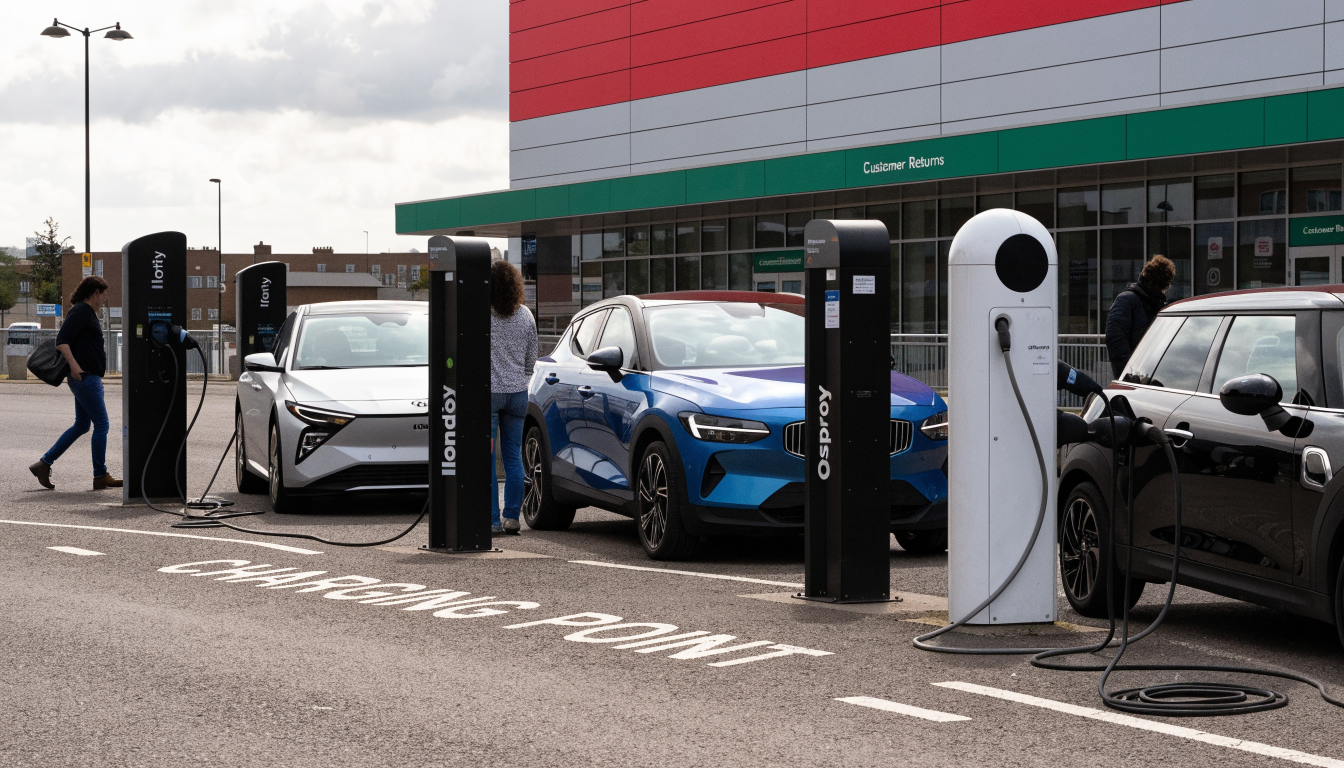
This confuses drivers because most modern marketing implies universal compatibility, and for the newest cars, that is broadly true. Electric car charge points across the UK and Europe overwhelmingly use one plug for slower AC charging and a second, closely related one for rapid DC charging. Almost every EV built since around 2018 supports both.
The picture gets messier at the edges. Older cars, particularly early Japanese imports, use a third standard that is slowly being phased out. And the US is not on the same page as the UK at all, since it is still partway through switching its main DC standard to a completely different plug.
None of this is really about "ev charge points uk" versus "electric vehicle charge points" as search terms. Both phrases describe the exact same hardware. The real split that matters is the one between connector generations, not between the words a driver happened to type into a search bar that day.
Why there is more than one standard
Different regions solved the same problem separately
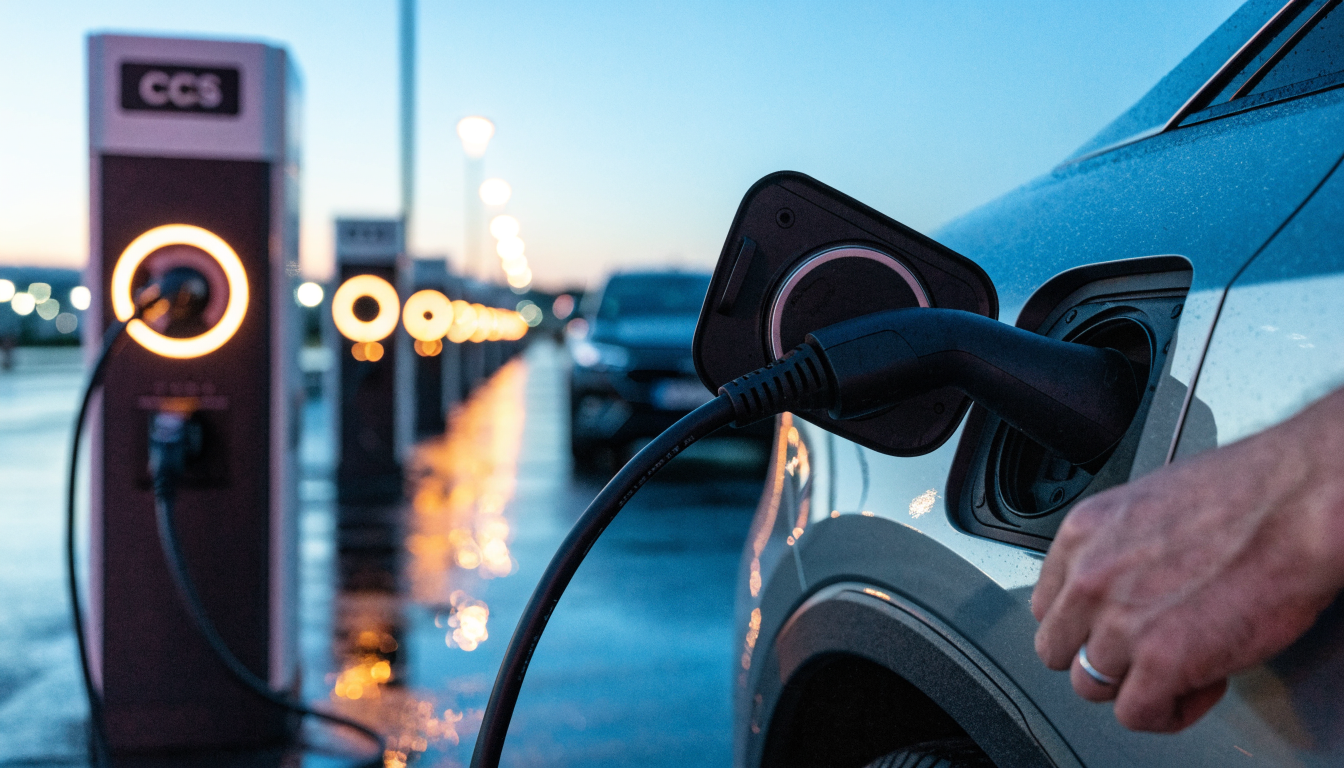
Type 2 became the standard plug for slower AC charging across the UK and Europe. CCS adds two extra pins beneath a Type 2-shaped socket. That combination became the standard for UK and European rapid charging too. One shape now covers power from roughly 25kW right up past 350kW (Zap-Map, 2026). That single family of plugs is a large part of why compatibility feels simple here today.
CHAdeMO came first, then lost the race
CHAdeMO reached the market before CCS did. It became common on early Nissan Leafs. But it never became the wider industry standard outside Japan. Newer rapid chargers increasingly skip the CHAdeMO cable altogether. If you drive an older Leaf, check a site actually has a CHAdeMO connector before you set off. Do not simply assume it.
The US is mid-transition to a new standard entirely
North America built its own rapid-charging standard, called CCS1. For years, this ran largely separate from Tesla's own connector. That changed once regulators gave Tesla's plug an official name: SAE J3400, better known as NACS. Opening that standard up let every other manufacturer use it too. Most automakers have now committed to fitting native NACS ports on new models. Federally funded chargers in the US must also support both CCS1 and NACS side by side (Joint Office of Energy and Transportation, 2026). A US driver in 2026 may own a car with either port, purely depending on how old it is.
How to check before you plug in, or before you buy
- Check your car's actual port shape, not just its brand. Manufacturer and connector are not the same thing, and two cars from the same maker can carry different ports across different model years.
- In the UK or Europe, expect Type 2 for AC and CCS2 for DC on almost any car from 2018 onward. This covers the overwhelming majority of what you will meet across the wider public charging network here.
- If you drive an older Nissan Leaf, or another early Japanese import, confirm CHAdeMO is actually fitted at your chosen site first. Fewer new rapid chargers carry it every year, so do not assume the nearest one does.
- In the US, check whether your car has native NACS or CCS1, and whether the site you are heading to has an adapter built in, since a growing number now do.
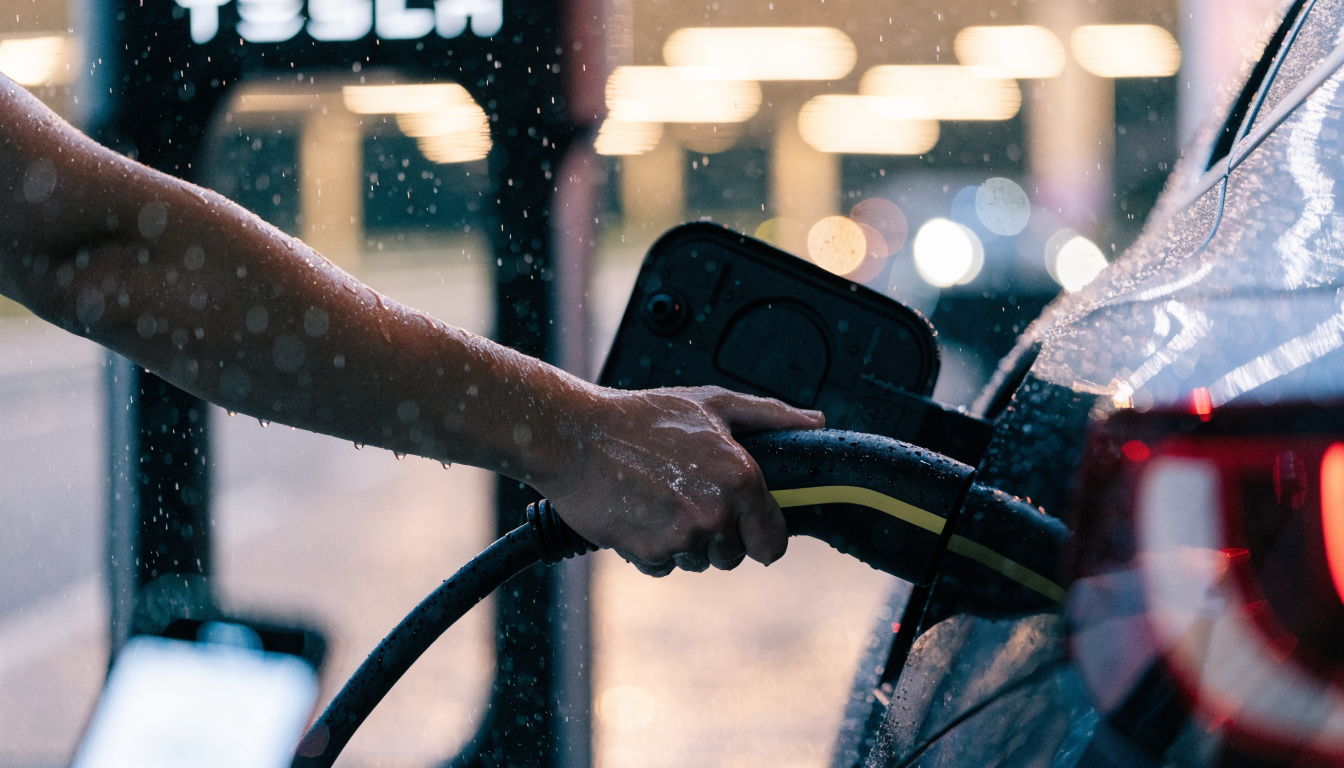
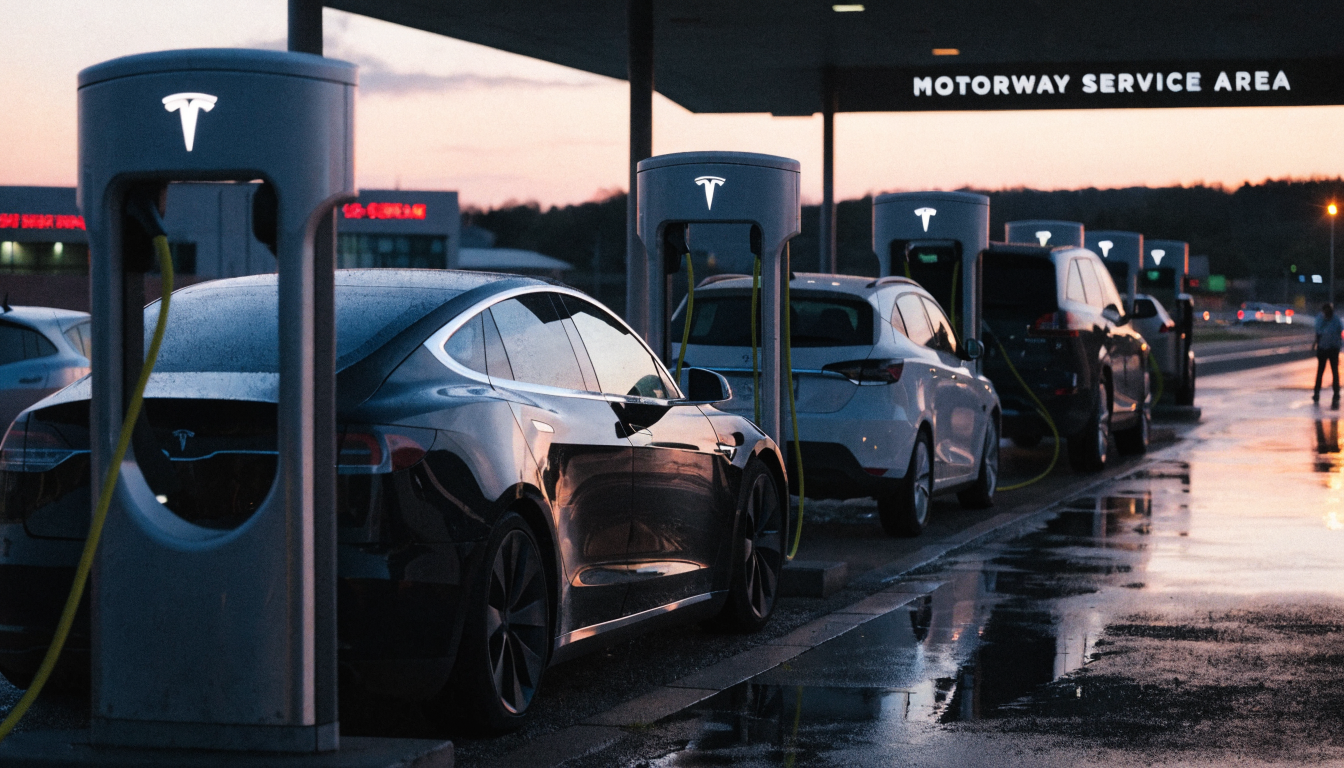
- Treat Tesla's own connector as its own case. In the UK and Europe, Tesla uses standard CCS2 at its public Superchargers, so no adapter is needed. In the US, older Tesla Superchargers may need a Magic Dock or adapter for a non-NACS car. Our guide to the Tesla charging network covers this in full.
- Before buying a car or a home charger, check the plug shape in the vehicle's own specification sheet. A dealer's brochure photo is not reliable evidence on its own; the manufacturer's technical specification page is.
- For a workplace or fleet install, confirm the connector with your employer before you rely on it. An "ev charge points for business" installation is sometimes fitted with only one connector type, chosen for the fleet vehicles the business already owns, not for every visiting car.
If a charger's connector matches your car and it still will not start a session, that is very likely a separate payment or app issue rather than a compatibility one. Our guide to public charging reliability covers those causes instead.
Connector compatibility at a glance
| Vehicle type | AC connector | DC (rapid) connector | Notes |
|---|---|---|---|
| Most UK/EU EVs, 2018 onward | Type 2 | CCS2 | Covers the large majority of electric car charge points uk-wide |
| Older Nissan Leaf / early Japanese imports | Type 1 or Type 2 | CHAdeMO | Fewer new rapid sites still carry this cable |
| Tesla, UK/Europe | Type 2 | CCS2 (Tesla-shaped tether at Superchargers) | No adapter needed at UK Superchargers |
| US EVs built before roughly 2025 | J1772 | CCS1 | Still the majority of the US fleet on the road today |
| US EVs from around 2025 onward | NACS | NACS | Growing share of new US models and chargers |
What compatibility actually costs you
Getting this wrong rarely costs money directly, but it costs time, and sometimes a diversion to a completely different site. Where an adapter genuinely helps, such as a US CCS1 car visiting a native NACS-only Supercharger, it is a one-off purchase rather than a recurring cost, and several manufacturers now bundle one with new deliveries rather than charging separately for it.
The bigger cost risk sits with older CHAdeMO-only cars. As fewer rapid units carry that cable each year, an owner may eventually need to plan routes specifically around the shrinking number of sites that still support it, which can mean a longer or slower trip than a CCS-equipped car would need for the same journey.
For anyone in London specifically, this rarely bites in practice. EV charge points in London skew heavily towards newer Type 2 and CCS2 installs, simply because so much of the capital's public charging infrastructure was installed recently. A CHAdeMO-only car is more likely to run into trouble on a quieter rural route than on a typical London street.
When this isn't really a compatibility problem
If a cable simply looks like it should fit but will not go in, do not force it. Mismatched standards are not close enough to bridge by pushing harder, and doing so risks damaging the pins on either the cable or the car. Walk away and check the plug type properly instead.
Equally, if your car and the charger clearly match but nothing happens, the fault almost certainly lies elsewhere, in payment, in the app, or in the unit itself. Our guide to planning long EV trips covers building a route where a single mismatched or broken site never becomes a real problem in the first place.
What to do next
Check your own car's connector against the table above before your next trip, especially if you are driving an older import or a US-market EV. For the practical side of actually starting a session once the plug fits, read our guide to EV charge points, and compare specific operators in our EV charging network guide.
Sources
Common questions
Why won't my cable fit an electric car charge point?
Almost always a genuine connector mismatch, not a fault. The UK and Europe use Type 2 and CCS2, older Japanese imports often use CHAdeMO, and US cars split between CCS1 and the newer NACS standard. Check your car's actual port before assuming a charger is broken.
Are ev charge points uk and electric vehicle charge points the same hardware?
Yes. Both phrases describe identical UK public charging equipment. The connector generation, not the wording used to search for it, is what actually determines whether your car will plug in.
Do I need an adapter for a tesla charge points map site?
In the UK and Europe, no, since Tesla Superchargers use standard CCS2. In the US, an older Supercharger may need a Magic Dock or NACS adapter for a CCS1 car, though newer sites increasingly carry both connectors built in.
Will an older Nissan Leaf struggle to find ev charge points london-wide?
Less than on a rural route. London's public charging infrastructure is mostly newer Type 2 and CCS2 equipment, and a missing CHAdeMO cable is more likely on a remote countryside rapid charger than on a typical London street unit.
What connector do ev charge points for business typically install?
Usually whatever matches the fleet vehicles the business already runs, which is not always compatible with every visiting car. Confirm the connector with the site owner before relying on a workplace charger for your own vehicle.
About the author
ElectraMile EditorialEditorial desk
The ElectraMile editorial team covers charging, running costs and EV ownership for readers in the UK and US.
Spotted something wrong? Tell us — we correct and date every change.
Figures shown for United Kingdom in GBP. Switch market in the header to see local pricing and terminology.