Tesla Model S in 2026: why buying one just got complicated
Tesla has stopped building the Model S. Here's what that means for new, used and Plaid prices, battery replacement cost and insurance before you buy one.
DisclosureSome links on this page earn ElectraMile a commission. It never changes what we recommend.
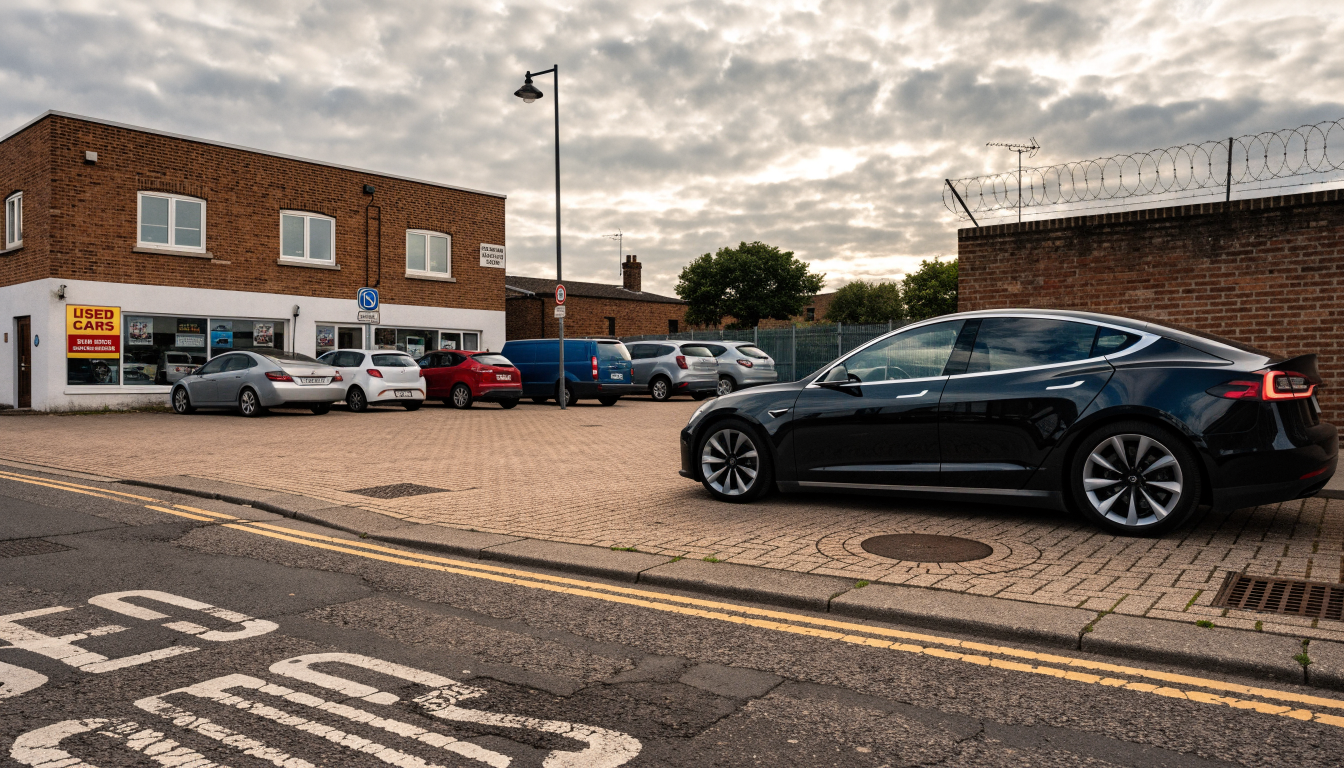
Tesla ended Model S production in spring 2026, so "buying a Tesla Model S" in the UK now almost always means buying used, not new. Right-hand-drive production stopped back in 2020, and the newest cars were sold from left-hand-drive inventory only. The realistic choice today is between an older right-hand-drive car from around £12,995 and a newer, harder-to-insure left-hand-drive import. The two numbers that matter most either way are the battery's health and the insurance quote.
The question behind "Tesla Model S"
A search for the bare model name used to be simple. People wanted to know if Tesla's flagship saloon was worth the money. In 2026 the question has changed shape, because the car itself is no longer in production.
Elon Musk confirmed on Tesla's Q4 2025 earnings call that the Model S and Model X would stop being built. Production wound down through the second quarter of 2026. For UK buyers this closes a chapter that arguably started years earlier. Tesla suspended right-hand-drive production of the Model S back in 2020 and never restarted it. Every Model S sold here since has been left-hand-drive only, and for the last stretch, available from existing inventory rather than to order.
Why the answer has changed
Right-hand drive stopped in 2020
Every new Model S in the UK has been left-hand-drive since 2020. That is a genuine daily-driving compromise on British roads. Overtaking, junctions and even things like drive-through ticket machines are all designed around a right-hand-drive car. Reviewers consistently flag it as the car's biggest practical drawback. For most of the years since, that also meant ordering from limited inventory rather than configuring a car to your own specification.
Production ended entirely in 2026
Elon Musk framed the decision as freeing up factory capacity for Tesla's robotics and autonomy programmes, rather than as a comment on the cars themselves. Tesla has said it will continue supporting existing Model S and Model X cars with service and software updates for as long as owners keep them on the road. For buyers, the practical effect is the same regardless of the reasoning. Tesla is no longer accepting custom orders for a Model S anywhere, in any configuration. What remains is whatever inventory dealers and private sellers still hold, plus the used market built up since the car launched in 2012.
What is actually left to buy
That leaves two realistic paths. One is a used, right-hand-drive Model S from the 2013–2020 era. The other is a newer left-hand-drive car, either from residual new-inventory stock or as a used import. Weigh either choice against how much EV range you actually need. A well-maintained older car's real-world range is a world away from a new Plaid's, and not everyone needs the newer car's headline numbers.
How to decide which Model S is worth buying
Check the drive configuration before anything else. Ask, if a listing does not clearly state right-hand or left-hand drive. A left-hand-drive car bought without realising can be a genuine daily frustration, not just an inconvenience. A private-sale used Model S has no manufacturer safety net once any warranty has expired. Treat it like any other used EV buying guide case: verify everything, assume nothing.
Get a battery state-of-health reading, not just a warranty claim. Tesla's original battery warranty runs eight years on Model S, but an older car may already be out of that cover. A state-of-health reading, either from the car's own software or a specialist diagnostic, tells you far more than the warranty booklet does. A seller who cannot produce one is telling you something in itself.
Price in a battery replacement as a real possibility, not a scare story. Out-of-warranty Model S battery replacements typically run £15,000–£20,000 in the UK, well above the £8,000–£12,000 seen on a Model 3. That risk should visibly affect the price you are willing to pay on an older, high-mileage car. It is a reasonable point to negotiate on, not an excuse to walk away automatically.
Get an insurance quote before you view the car, not after. Every Model S sits in insurance group 50, the highest UK bracket. Average premiums have been quoted around £2,680 a year as of May 2025, with big swings by postcode and driver age. Better to know before you fall in love with a specific car, if that number changes your budget.
New, used or Plaid: what each path actually costs
| Route | Typical price | What you get | Main risk |
|---|---|---|---|
| New/inventory Plaid (LHD) | From roughly £100,000-plus | Newest tech, remaining warranty | Left-hand drive, shrinking availability |
| Used Plaid, later import | Often £50,000-plus | Strong performance, younger battery | Import and drive-side complications |
| Used 2013–2020 (RHD) | From around £12,995 | Right-hand drive, established used market | Battery age, out-of-warranty risk |
There is no single right answer here. A used 2016-era car for around £13,000 and a left-hand-drive Plaid at close to ten times that price are barely the same purchase decision. Which one makes sense depends entirely on your budget, and how much the drive-side compromise bothers you.
What it actually costs to own one
A 2016-era Model S can be found from around £12,995 on the UK used market. Condition and battery health vary enormously at that end of the price range, which is exactly where a state-of-health check earns its cost.
Tesla's four-year, 50,000-mile vehicle warranty will have long expired on any car old enough to be right-hand drive. The battery warranty, while longer, is not indefinite either. Budget realistically for a £15,000–£20,000 battery replacement as a possibility on an older car, not a certainty, and let that risk be reflected in the price you offer.
Insurance is the other number that catches new owners out. Group 50 cover has averaged close to £2,680 a year in recent data, though drivers in cheaper postcodes have reported quotes under £1,000 and those in expensive areas well over £4,000.
Servicing itself is comparatively simple. Tesla recommends a check roughly every 12 months or 12,500 miles, and there is no engine, gearbox or exhaust to maintain. Parts availability and labour rates can vary more on a car this old than on a newer, higher-volume Model 3 or Model Y. Confirm a specific garage can actually get parts before you rely on it.
When the Model S is not the answer
Tesla's own UK range now centres on the Model 3 and Model Y, so the Model S cannot currently offer a new car with a factory warranty and right-hand drive as standard. Those same two models are dramatically cheaper to insure and to protect against battery failure, if insurance group 50 or a five-figure battery risk would derail your budget.
What to do next
Our guide to the best electric cars under £30,000 covers realistic alternatives at a fraction of the price, if a Model S is out of budget in any configuration. Our other EV model guides cover cars that are still in full production.
Sources
- Carwow — Tesla Model S review.
- Hagerty — Tesla ending Model S and Model X production in 2026.
- Auto Express — New Tesla Model S and Model X go left-hand drive only.
- Finder UK — Tesla Model S insurance group and average cost.
- kmcelectric.co.uk — Cost of Tesla battery replacement: 2026 UK pricing guide.
- AutoUncle — 2016 Tesla Model S used listings and valuation.
- DrivingElectric — Tesla Model S running costs.
Common questions
How much does a Tesla Model S battery replacement cost?
Out of warranty, a full battery pack replacement typically costs £15,000–£20,000 in the UK — higher than the Model 3 or Model Y because of the Model S's larger, older pack designs. Most owners never need one, since Tesla's battery warranty covers the majority of a typical ownership period.
How much does a Tesla Model S Plaid cost?
New or inventory Plaid pricing has run from around £100,000-plus in recent years, though Tesla has now stopped taking new orders as production wound down in spring 2026. Used Plaid examples vary hugely by age and mileage, but are often still well into five figures.
How much does a used Tesla Model S cost?
Prices start from around £12,995 for an early, right-hand-drive 2016-era car on the UK market, rising to well over £50,000 for a newer, low-mileage Plaid. Battery health matters more to the price than age or mileage alone, so ask for a state-of-health reading before you buy.
How much does a Tesla Model S cost overall?
It depends entirely on age and configuration, from around £12,995 for an early used right-hand-drive car to six figures for a newer left-hand-drive Plaid — before you add insurance, servicing and any eventual battery replacement to the running total. There is no single, fixed Model S price any more now that production has ended.
How much does a 2016 Tesla Model S cost now?
A 2016 Model S is a used car on the UK market today, with prices starting from around £12,995 for higher-mileage examples and rising for lower-mileage or better-specified cars. That reflects both typical EV depreciation and buyers pricing in battery-health risk on a car approaching a decade old.
How much does it cost to insure a Tesla Model S?
Every Model S sits in UK insurance group 50, the highest bracket. Average quotes were around £2,680 a year as of May 2025, though location and driver age swing this from under £1,000 to well over £4,000, so get a quote for your own postcode before you buy.
About the author
ElectraMile EditorialEditorial desk
The ElectraMile editorial team covers charging, running costs and EV ownership for readers in the UK and US.
Spotted something wrong? Tell us — we correct and date every change.
Figures shown for United Kingdom in GBP. Switch market in the header to see local pricing and terminology.