Tesla Model Y: what it actually costs to buy and run
Trims, real charging costs and what breaks first — a straight answer to what a Tesla Model Y costs to buy, charge, service and insure against battery failure in the UK.
DisclosureSome links on this page earn ElectraMile a commission. It never changes what we recommend.
A Tesla Model Y costs from £41,990 new in the UK, but the number that decides whether you can live with one is the running cost. A full home charge costs roughly £15 on a standard tariff, or under £5 overnight on a cheap rate. Servicing runs £135–£210 a year, and a battery replacement outside warranty realistically runs £10,000–£14,000. None of that is disqualifying. It just needs to be part of the decision, not an afterthought.
The question behind "Tesla Model Y"
Almost nobody searches the bare model name because they do not know what the car looks like. They are trying to work out whether it is the right car for them. Specifically, they want to know what it costs beyond the sticker price: charging, servicing, tyres, and the one everyone worries about, the battery.
That is a sensible instinct. The Model Y's headline price tells you almost nothing about what you will actually spend keeping it on the road for five years. Running costs vary far more between EVs than most buyers expect.
What you are actually buying
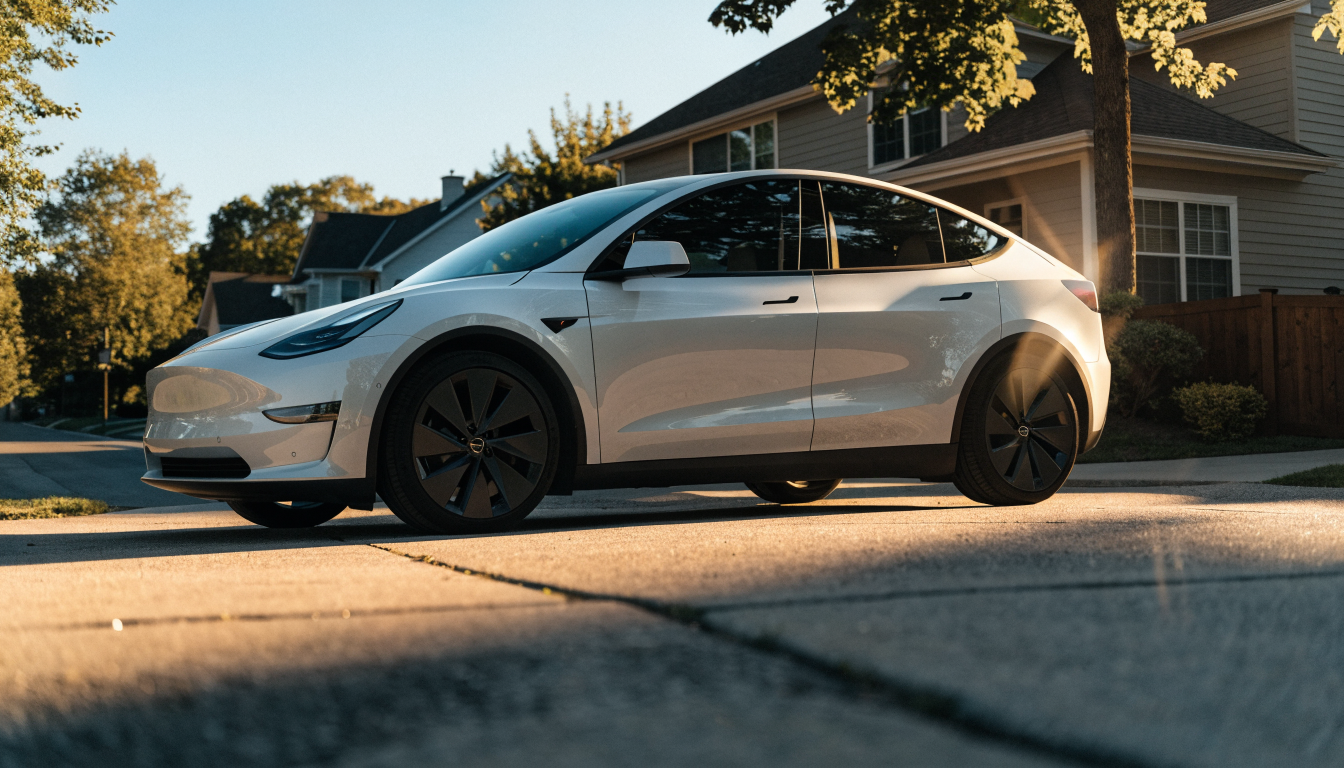
Tesla currently sells the Model Y in five trims, from a rear-wheel-drive entry car to a dual-motor Performance version. Range and price climb roughly together, though not in a straight line. The mid-range cars use a bigger battery than the entry trim without necessarily adding a second motor, so the jump in range is not always matched by an equal jump in price. Before you pay for the top of that range, check how much EV range you actually need against your own driving. The entry trim already covers most UK journeys comfortably.
Where the charge port is, and how the battery is sized
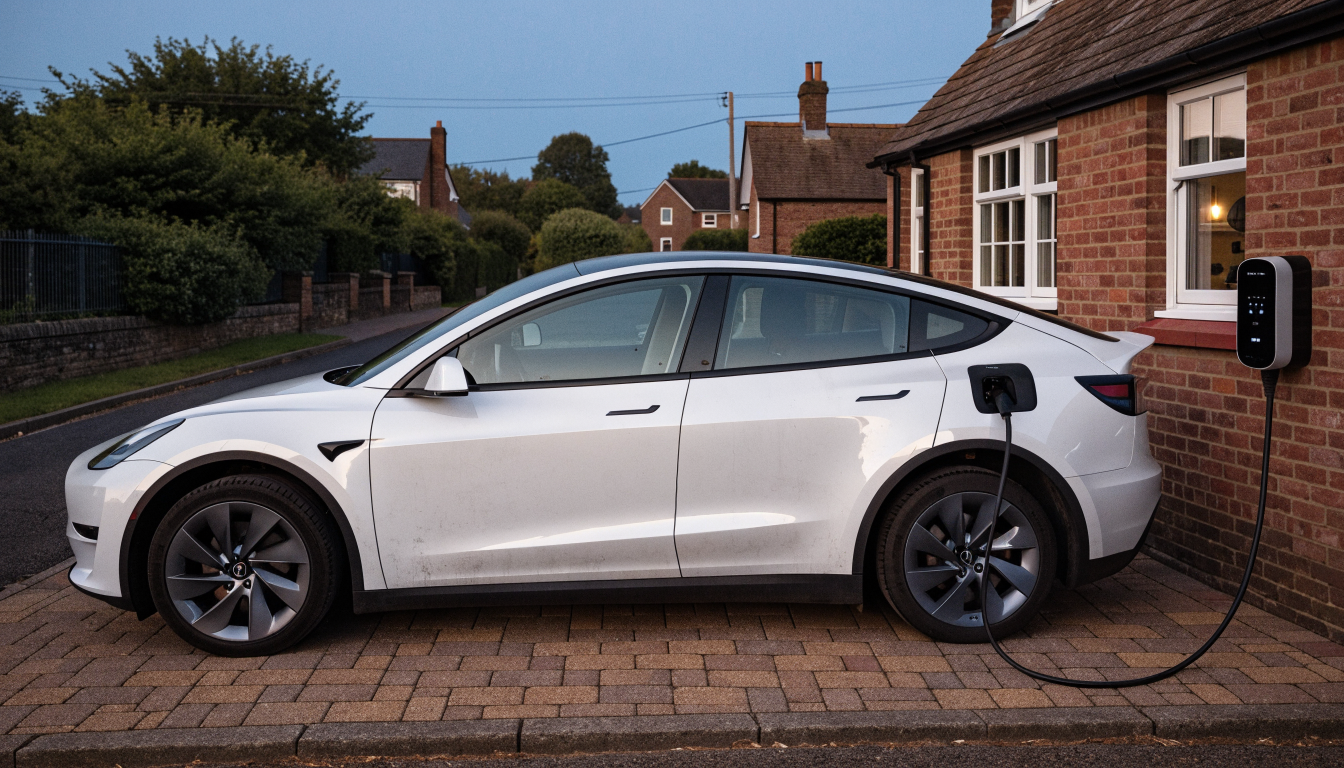
The charging inlet sits on the near-side rear flank, built into the leading edge of the rear light cluster, the same spot on every Model Y regardless of trim. It takes a Type 2 connector for home and public AC charging, up to 11kW on the onboard charger. The same port handles CCS for DC rapid charging, at up to around 210kW on the fastest units.
Tesla does not publish an official usable battery size. Independent data on the entry rear-wheel-drive car puts it at around 57kWh usable, drawn from a slightly larger gross pack. Higher trims carry meaningfully larger packs to reach their longer WLTP ranges, though Tesla does not confirm the exact figure for every version. Treat any specific number you see quoted for the Long Range or Performance cars as a well-informed estimate, not an official spec.
What the numbers mean day to day
A 7kW home charger adds a full charge overnight in around 11 hours from empty. A 22kW public AC point does the same in about 7 hours, and a 50kW DC rapid charger reaches 80% in roughly 70 minutes. On a Supercharger, Tesla's own routing tool estimates an 80% charge in as little as half an hour, provided the battery has had time to precondition on the way there.
How to work out what it will actually cost you
Start with the trim, not the badge. The entry Standard RWD, at £41,990, covers 314 miles WLTP. The Long Range RWD, at £44,990, stretches to 383 miles for £3,000 more, a genuinely good trade if you regularly drive long distances. That is already comfortably more than most drivers use in a week, so do not assume a bigger battery is automatically better value. The Performance, at £61,990, exists for speed rather than economy. It actually has a shorter WLTP range than the cheaper Long Range cars. Buying nearly new instead of straight from Tesla, using our used EV buying guide, sidesteps the steepest first-year depreciation.
Work out your realistic home charging cost. Ofgem's standard price cap rate is 26.11p per kWh for July–September 2026. Charging a roughly 57kWh entry battery from empty costs about £14.88 at that rate. On a cheap overnight EV tariff such as Octopus's Intelligent Octopus Go, at 8p per kWh, the same charge costs around £4.56. That saving adds up fast if you charge several times a week.
Budget for tyres before you need them. A Model Y is heavy and delivers torque instantly, so it wears front tyres noticeably faster than a similarly sized petrol SUV. Owners on Tesla's UK forum have reported quotes from around £171 at independent fitters to £395 at Tesla's own service centres for a single replacement tyre, depending on brand.
Get a service cost estimate before you need one. Independent UK garages quote roughly £135–£210 for a full annual service. Items like front brake pads (£150–£270) and a brake fluid change (£55–£100) are the most common extra jobs. Both are less frequent than on a petrol car, since regenerative braking spares the discs and pads most of their work.
Which trim actually makes sense
| Trim | Price (OTR) | WLTP range | Best for |
|---|---|---|---|
| Standard RWD | £41,990 | 314 miles | Lowest entry cost, typical UK mileage |
| Long Range RWD | £44,990 | 383 miles | Best range-per-pound in the range |
| Premium Long Range AWD | £51,990 | 364 miles | Winter grip, family use |
| Performance | £61,990 | 360 miles | Pace over efficiency |
The Long Range RWD stands out as the value pick. It adds 69 miles of range over the Standard for £3,000, without the efficiency penalty that comes with the second motor in the AWD cars.
What it actually costs to run for a year
Take a driver covering 8,000 miles a year, mostly on home charging. At the Model Y's real-world efficiency of roughly 3.5–4 miles per kWh, that is about 2,100 kWh a year. On the standard Ofgem rate, that is around £548 in electricity. On a cheap overnight EV tariff at 8p per kWh, it drops to about £168, a difference of roughly £380 a year for exactly the same driving.
Add one annual service (£135–£210), an occasional brake fluid change every two years (£55–£100), and a set of tyres every couple of years. A realistic total running cost still sits well below what the same mileage would cost in fuel and servicing for a comparable petrol SUV.
Stretch the same maths to a higher-mileage driver covering 15,000 miles a year, a common figure for a family SUV. The electricity bill on an overnight tariff rises to roughly £315 a year, against something closer to £1,000 for the same distance on the standard daytime rate. The tariff you charge on, not the trim you buy, decides which end of that range you land in.
When the running costs change the answer
The cost advantage shrinks sharply if you cannot charge at home or overnight and rely mainly on public rapid charging. Rapid charging in the UK frequently costs 60–80p per kWh, which can push your annual electricity bill close to what you would pay for petrol. In that situation, prioritise a car with a strong DC charging curve over outright battery size. Time spent plugged in at a rapid charger is the real cost, not just the pence per kWh.
Budget for tyres and consumables at the top of the ranges above, not the bottom, if your car is used hard: high mileage, frequent full-power acceleration, towing. Towing in particular can cut real-world range by a third or more, which changes both your charging stops and your electricity bill.
Get a state-of-health check before assuming the rest of the car's life matches the bodywork, if the battery has already covered well over 100,000 miles or eight years. A car that looks immaculate can still be hiding a tired battery. That is not something a test drive alone will reliably reveal.
What to do next
Our guide to the best electric cars under £30,000 covers what real money buys further down the market, if the Model Y's price feels like a stretch.
Browse our other EV model guides for the rest of Tesla's range and its rivals before you commit to a specific trim.
Sources
- Rivervale — Tesla Model Y 2026 changes: UK price & range.
- Zapmap — Tesla Model Y charging guide.
- Fleet News — Tesla Model Y RWD price and specifications.
- Ofgem — Energy price cap unit rates and standing charges.
- Octopus Energy — Intelligent Octopus Go.
- myrepaircost.co.uk — Tesla Model Y service cost UK.
- kmcelectric.co.uk — Cost of Tesla battery replacement: 2026 UK pricing guide.
- Tesla Motors Club — UK tyre prices thread.
Common questions
How many kWh does it take to charge a Tesla Model Y?
The entry rear-wheel-drive Model Y uses an estimated 57kWh usable battery, so a full charge from empty uses roughly that much energy. Higher trims carry larger packs to reach their longer WLTP ranges, though Tesla does not publish the exact figures for every version.
Where is the Tesla Model Y's charging port?
It sits on the near-side rear flank, built into the leading edge of the rear light cluster, on every current Model Y regardless of trim. It takes a Type 2 connector for AC charging, and the same socket handles CCS for DC rapid charging.
How much does servicing a Tesla Model Y cost in the UK?
A full annual service costs roughly £135–£210 at an independent UK garage in 2026. With no engine, gearbox or exhaust to maintain, the main recurring costs are brake fluid, cabin filters and the 12V battery rather than a traditional service — and using an independent garage does not void the manufacturer warranty under UK Block Exemption rules.
How much do Tesla Model Y tyres cost?
UK owners have reported quotes from around £171 per tyre at independent fitters to £395 at Tesla's own service centres, depending on brand. The Model Y wears tyres faster than a similarly sized petrol SUV because of its weight and instant torque, so shopping around genuinely pays off.
How much does a Tesla Model Y battery replacement cost in the UK?
Outside the battery warranty, a full pack replacement typically costs £10,000–£14,000 in the UK as of 2026. Tesla's battery warranty covers most owners for eight years, so an unwarranted replacement is mainly a risk on older or very high-mileage cars — a state-of-health check before buying used is the best way to price in that risk.
About the author
ElectraMile EditorialEditorial desk
The ElectraMile editorial team covers charging, running costs and EV ownership for readers in the UK and US.
Spotted something wrong? Tell us — we correct and date every change.
Figures shown for United Kingdom in GBP. Switch market in the header to see local pricing and terminology.