Tesla Battery Life: What Real Fleet Data Actually Shows
Real fleet data, not forum guesswork: how much range a Tesla battery actually loses by 100,000 and 200,000 miles, and when a low reading means something is genuinely wrong.
Tesla battery life is holding up better than most owners expect: real fleet data shows Model 3 and Model Y packs keeping roughly 85% of their original range past 200,000 miles. That is not a marketing claim. It comes from Tesla's own fleet reporting and from independent tracking firms that log real cars, not lab tests. The pack does fade, but slowly, and the worst of it happens in the first few years, then flattens out. Most owners never come close to needing a replacement.
Why this search leaves people more confused, not less
Type "tesla battery life" into Google and you get three different answers on the same page. One site says packs die after eight years. Another says they outlast the car. A forum post says a specific owner lost 20% in eighteen months. All three can be true at once, because they are describing different things: a worst-case outlier, an average, and a warranty floor.
That gap matters if you are buying a used Tesla, or you already own one and a range number just looked lower than you remembered. You want a straight answer: how much range will this car actually lose, and when does it become a real problem rather than a rounding error? The honest answer needs two things most articles skip. Real numbers, and the difference between normal ageing and a fault.
Why an EV battery loses range at all
A Tesla battery is a large block of lithium-ion cells, the same basic chemistry as a laptop or phone battery, just built at a much bigger scale with active cooling. Every battery of this type loses a small amount of capacity over time. The question is only how much, and how fast.
Calendar ageing
Even a car that never moves loses a little capacity every year, just from sitting fully charged in the heat. Chemists call this calendar ageing. It is the reason a five-year-old phone holds less charge than a new one, even if you barely used it. Keeping a Tesla near 100% charge for long stretches, especially in hot weather, speeds this up slightly. It is a small effect on its own.
Cycling and fast charging
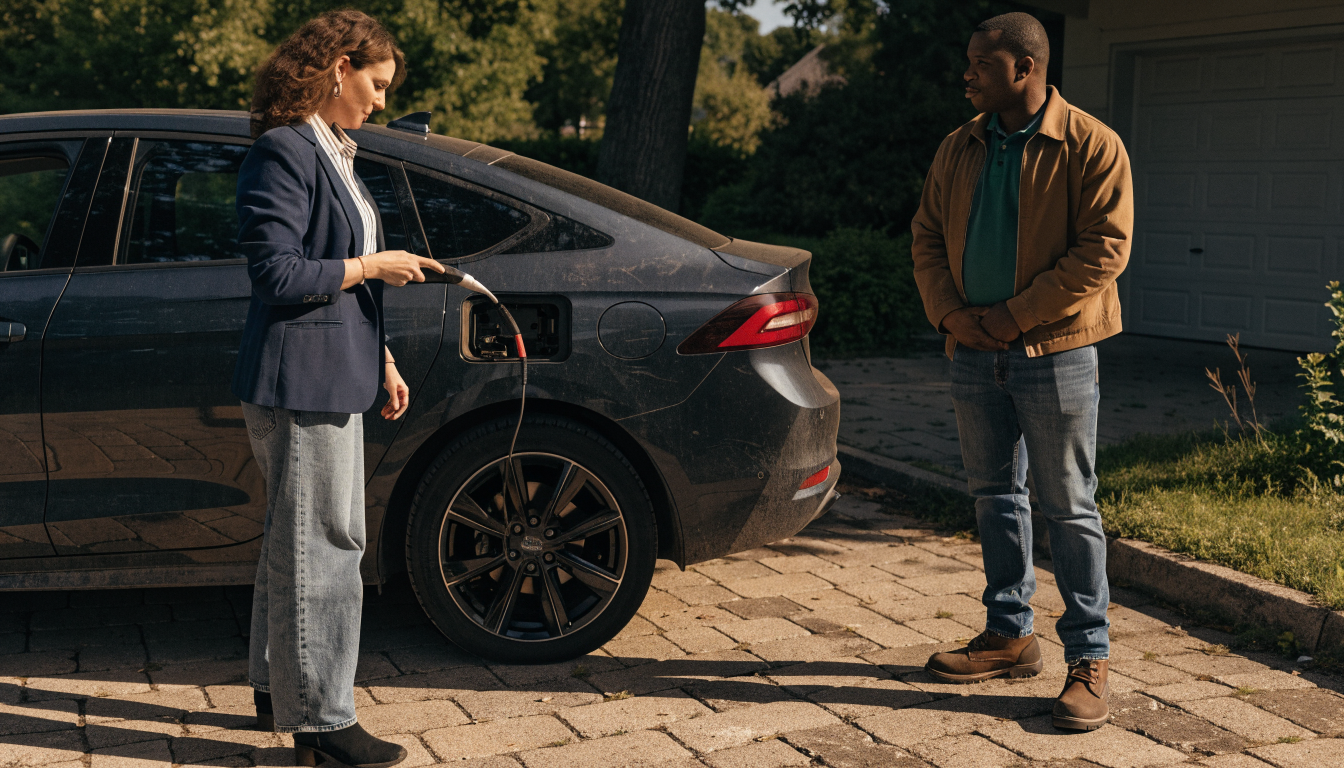
Every full charge-and-drain cycle wears the cells a little, and repeated DC fast charging adds heat that speeds the wear further. Geotab's fleet study found that cars charged mostly on DC fast chargers degraded noticeably faster than ones charged mostly at home overnight. This does not mean avoid fast charging. It means home charging is gentler, and worth using as your default when a trip does not need speed.
High mileage itself
More miles simply means more cycles, and more cycles means more gradual wear. This is why battery health tables are usually built around mileage brackets rather than age alone. A car driven 30,000 miles a year for three years has done far more cycling than one driven 6,000 miles a year for the same three years, even though both are "three years old".
How to check and protect your own battery's health
- Find your car's actual reading, not an estimate. The dashboard's range figure is affected by driving style and temperature on the day. A proper State of Health (SoH) reading, either through Tesla's own tools or an independent EV specialist, tells you the pack's real remaining capacity as a percentage.
- Compare it against your car's age and mileage, not a stranger's. A three-year-old car with heavy daily fast charging and a three-year-old car charged mostly at home overnight will show different numbers, and both can be entirely normal for their own use pattern.
- Charge to 100% only before a long trip. Tesla's own guidance is to use a daily limit around 80-90% for routine driving, saving a full charge for days you actually need the extra range. This one habit does more for long-term capacity than almost anything else you can control.
- Avoid leaving the car at a very low or very high charge for days at a time. Sitting for long periods near empty or completely full, particularly in hot weather, is the specific condition that accelerates calendar ageing the most.
- Do not panic over a single low reading. A reading a little below the typical range for your car's age and mileage is not automatically a fault. Recheck it after a week of normal driving before assuming something is wrong.
- Know when a drop is not ordinary wear. A sudden loss of several percentage points within days or weeks, especially with a dashboard warning, is a different problem from gradual ageing. That points to a fault, and it is worth reading through a full battery health check to see what a proper diagnostic actually involves.
What the numbers actually look like
| Mileage | Typical retained capacity | What it means |
|---|---|---|
| 0-50,000 miles | 95-98% | Normal early fade, nothing to act on |
| 50,000-100,000 miles | 90-95% | Still comfortably inside warranty terms |
| 100,000-150,000 miles | 87-92% | Matches most fleet-tracked Model 3 and Model Y data |
| 150,000-200,000 miles | 85-90% | Tesla's own reporting places long-range packs here |
| 200,000+ miles | 85-88%, wider spread | Still usable; get an independent reading before buying or selling |
These bands come from more than one source, not a single number repeated everywhere. Kelley Blue Book, reporting on Tesla's own published fleet figures, put Model S and Model X retention at roughly 88% past 200,000 miles, and Model 3 and Model Y long-range packs at roughly 85% over the same distance. Recurrent's independent tracking of real Model 3 owners found about 95% retained at three years and 93% at five, which sits neatly inside the same curve. Treat the table as a guide, not a strict cut-off. A car noticeably below its bracket is worth investigating; one comfortably inside it is not.
What reduced range actually costs you
The clearest way to see what a percentage point of degradation means is to work it in miles, not just percent. A Model 3 Long Range with a 333-mile EPA range at 88% retained capacity delivers roughly 333 × 0.88 = 293 miles on a full charge, a loss of 40 miles rather than a vague "some". At 85%, the same car delivers about 283 miles. For most daily driving, under 50 miles a day for the typical UK or US commuter, that difference is invisible. It only starts to matter on long trips where you were already planning around the car's maximum range.
It is also worth sizing up how long it actually takes to reach the mileage where any of this matters. The average UK driver covers around 7,400 miles a year, according to Department for Transport figures. At that rate, reaching 150,000 miles, the point where Tesla's own data shows long-range packs still holding 85-90%, takes roughly 150,000 ÷ 7,400 ≈ 20 years of ownership. Most owners will replace the car, or hand it down, long before the battery becomes the limiting factor. If a pack ever does need replacing outside warranty, the bill is a separate, larger question, covered in full in our Tesla battery replacement cost guide, since it varies hugely by model and by whether the whole pack or a single module needs swapping.
When a health check is not what you actually need
A slow, steady decline across years is ordinary ageing, and checking it obsessively will not change the outcome. A sudden drop, especially with a warning light, is not ordinary and needs a dealer or service centre diagnostic rather than repeated home checks. It is also worth remembering that cold weather temporarily reduces the range shown on the dashboard without touching the pack's actual health at all, so a worse number in January is a weather effect, not a degradation event. Do not confuse the two when comparing readings across seasons.
What to do next
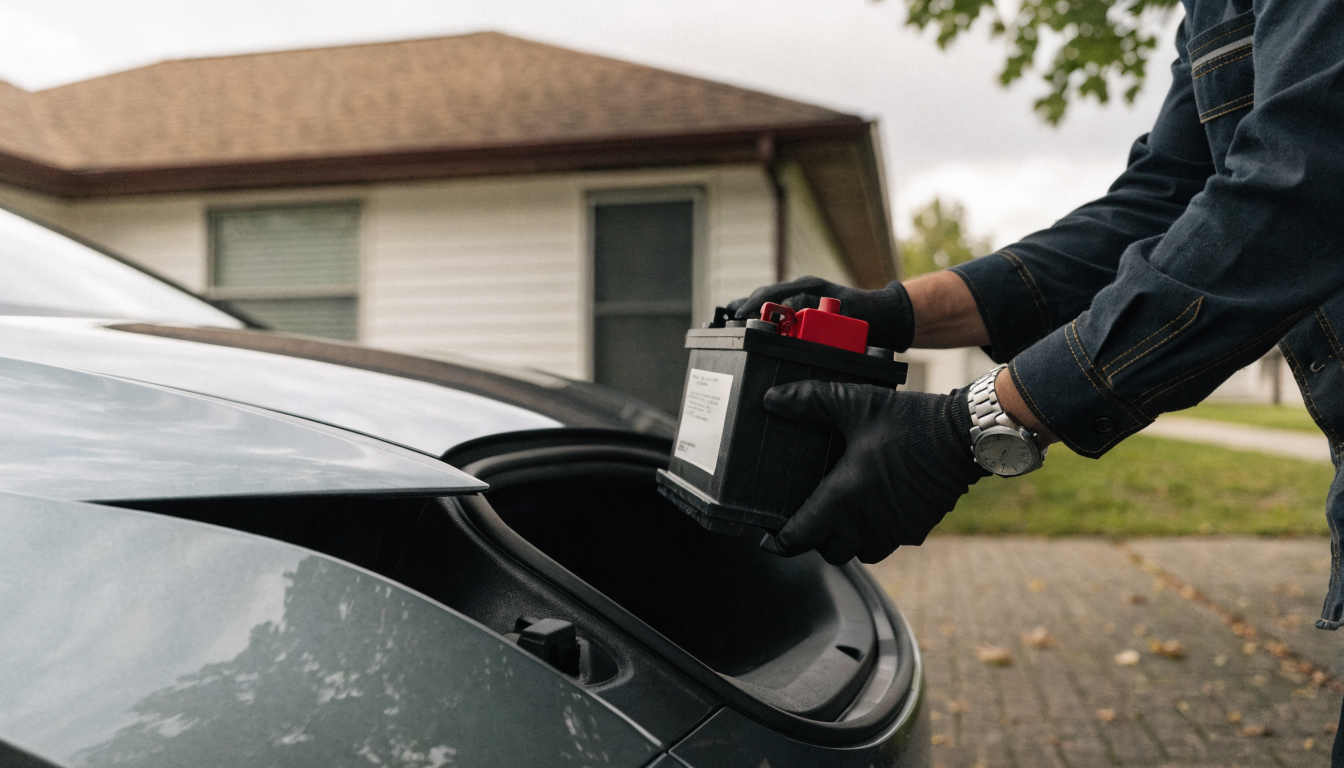
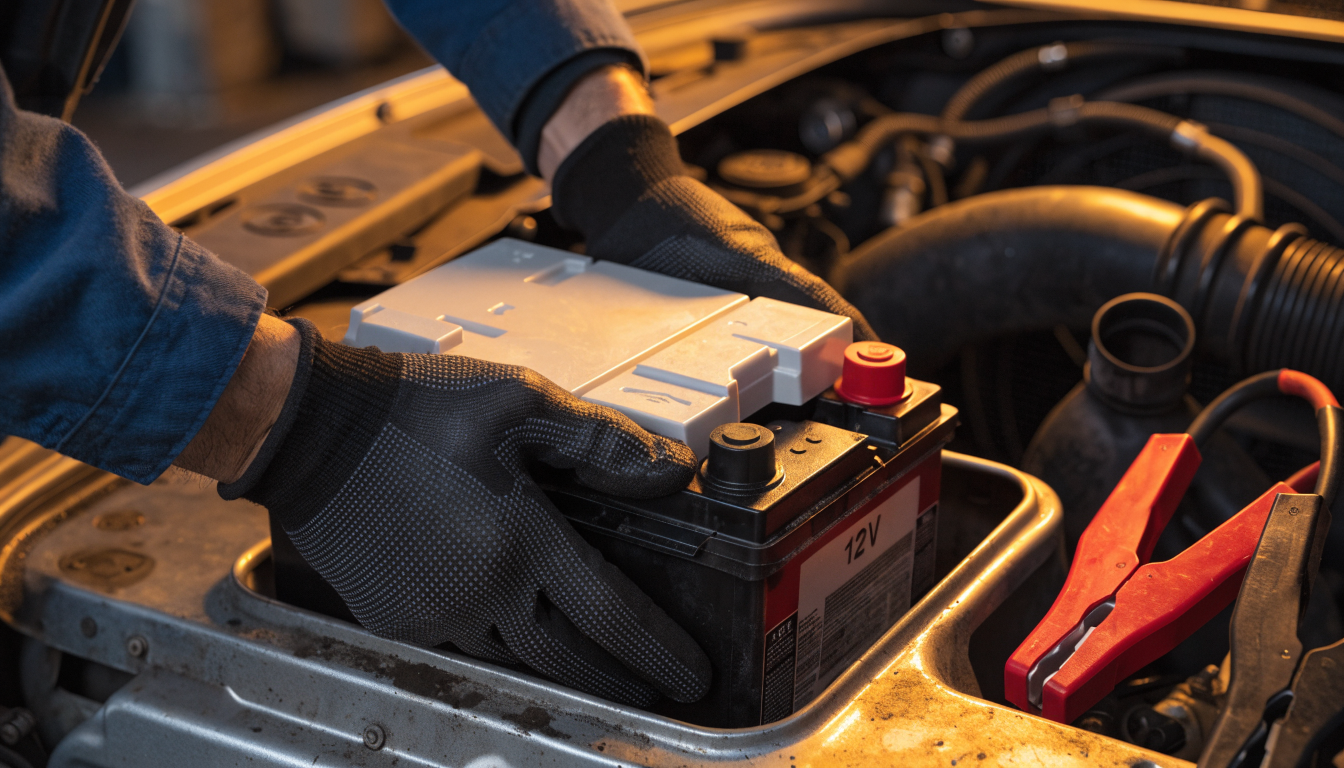
Get your car's real SoH reading this month, even if range feels fine, so you have a baseline to compare against later. If your reading sits outside the bracket for your mileage in the table above, get an independent second opinion before assuming the worst. Two everyday habits are worth building alongside this: look after your EV's battery with sensible charging limits, and remember that EV tyres wear faster than a petrol car's, since it is the other consumable that quietly costs owners money without ever showing up on a dashboard warning. And if a low-voltage warning appears rather than a range warning, that is very likely the car's separate 12V accessory battery, not the traction pack at all; see how brands like Super Start and AAA-branded batteries handle that entirely different, much cheaper part.
Sources
- Tesla — Model 3 New Vehicle Limited Warranty (Battery and Drive Unit coverage)
- Kelley Blue Book — Tesla: Our Batteries Lose Only 12% of Their Range After 200,000 Miles
- Recurrent — Tesla Model 3 Battery Degradation
- Charged EVs — New Geotab Data Shows How Frequent DC Fast Charging Affects EV Battery Health
- RAC Drive — How Long Do Electric Car Batteries Last?
Common questions
How does Tesla's battery life compare with other EV cars' battery life?
Most modern EVs follow a similar curve to Tesla's: rapid early stability, then slow, steady fade. Independent tracking by Recurrent and fleet data from Geotab both show average retention above 85% past 150,000 miles across brands, not just Tesla. The exact rate varies by pack chemistry and cooling system, but the broad shape of gradual, predictable ageing is consistent across the EV market.
What does real-world EV battery life driving research actually show?
Fleet studies, including Geotab's tracking of thousands of vehicles, show that frequent DC fast charging accelerates wear slightly compared with home AC charging, and that most capacity loss happens in a car's first few years before flattening out. Driving style itself matters less than charging habits and how often a battery sits at a very high or very low charge.
How much does Tesla battery replacement cost?
Outside warranty, a full Tesla pack replacement typically runs from around £8,000 for a Model 3 up to £20,000 or more for a Model S or X, depending on the model and whether the whole pack or a single module needs replacing. Most owners never need one, since packs are covered for 8 years and up to 150,000 miles from new.
How much does Tesla battery replacement cost in the UK specifically?
UK pricing sits within the same range as the rest of the market: roughly £8,000-£12,000 for a Model 3, £10,000-£14,000 for a Model Y, and £15,000-£20,000 for a Model S or X, based on current 2026 UK repair pricing. A single faulty module, rather than the whole pack, often costs a few thousand pounds instead.
Is Tesla's battery life better than other EV cars' battery life?
Tesla's fleet data compares favourably with the wider EV market, but it is not uniquely superior. Retention figures from Recurrent and Geotab put most modern EVs, across several manufacturers, in a similar 85-90% band after 150,000-200,000 miles. Tesla simply has the largest public dataset, because it has sold the most EVs for the longest time.
About the author
ElectraMile EditorialEditorial desk
The ElectraMile editorial team covers charging, running costs and EV ownership for readers in the UK and US.
Spotted something wrong? Tell us — we correct and date every change.
Figures shown for United Kingdom in GBP. Switch market in the header to see local pricing and terminology.