Battery Health Check: How to Test an EV Before You Buy
A proper battery health check reveals an EV's real remaining range, not the dashboard estimate. Here is the order to test it, whether it is your own car or one you are about to buy.

A battery health check tells you an EV's State of Health: how much usable capacity its battery has left, compared with new. For a used car, it is worth more than a fresh MOT. The dashboard range figure is not the same measurement, and cannot be trusted on its own. It swings with temperature and driving style. A proper check gives you one stable number. It is the single most useful thing you can ask for before buying a used electric car.
Why the dashboard number cannot be trusted
Buying a used EV usually comes down to one seller's word: "the battery's fine." There is no dipstick to check. There is no oil colour to read. The range shown on the dashboard when you view the car changes with the weather, the last few miles driven, and even how gently the car was driven to the viewing. None of that tells you what you actually need to know.
What you need instead is State of Health. It is a single, stable percentage. It compares the battery's current usable capacity with what it had when the car was new. It does not move around from one test drive to the next, which is exactly why it is worth asking for specifically, rather than accepting a vague reassurance. Ask for the number, not the story. This sits alongside our wider EV ownership and maintenance advice.
Why you cannot just trust a test drive
Range and State of Health are different numbers
A car can show a healthy-looking range estimate on a mild day, and still have a mediocre underlying State of Health. That is because the estimate is calculated fresh each time, from recent driving and temperature, not from a fixed capacity figure. The reverse is also true. A low range estimate on a freezing morning does not mean the battery is unhealthy at all. Judging a battery by one dashboard reading is like judging a car's fuel economy from a single short trip.
Sellers rarely offer proof unprompted
Most private sellers, and even some dealers, will not volunteer a State of Health reading unless you ask directly. Partly, that is because many never think to check it themselves. That is not necessarily a red flag on its own. A seller who actively refuses to let you check, or to show you the manufacturer's own app, is a different matter entirely. Asking is normal, not rude, and any seller used to the used-EV market will expect the question.
The check, step by step
Work through this in order. Each step only matters if the one before it raised no concern.
- Ask for a manufacturer battery report first. For a Tesla, that means opening the app together, and running Service, then Battery & Charging, then the Range test, so you see a live result rather than a printout or screenshot. Other brands have an equivalent menu in the car's own service system.
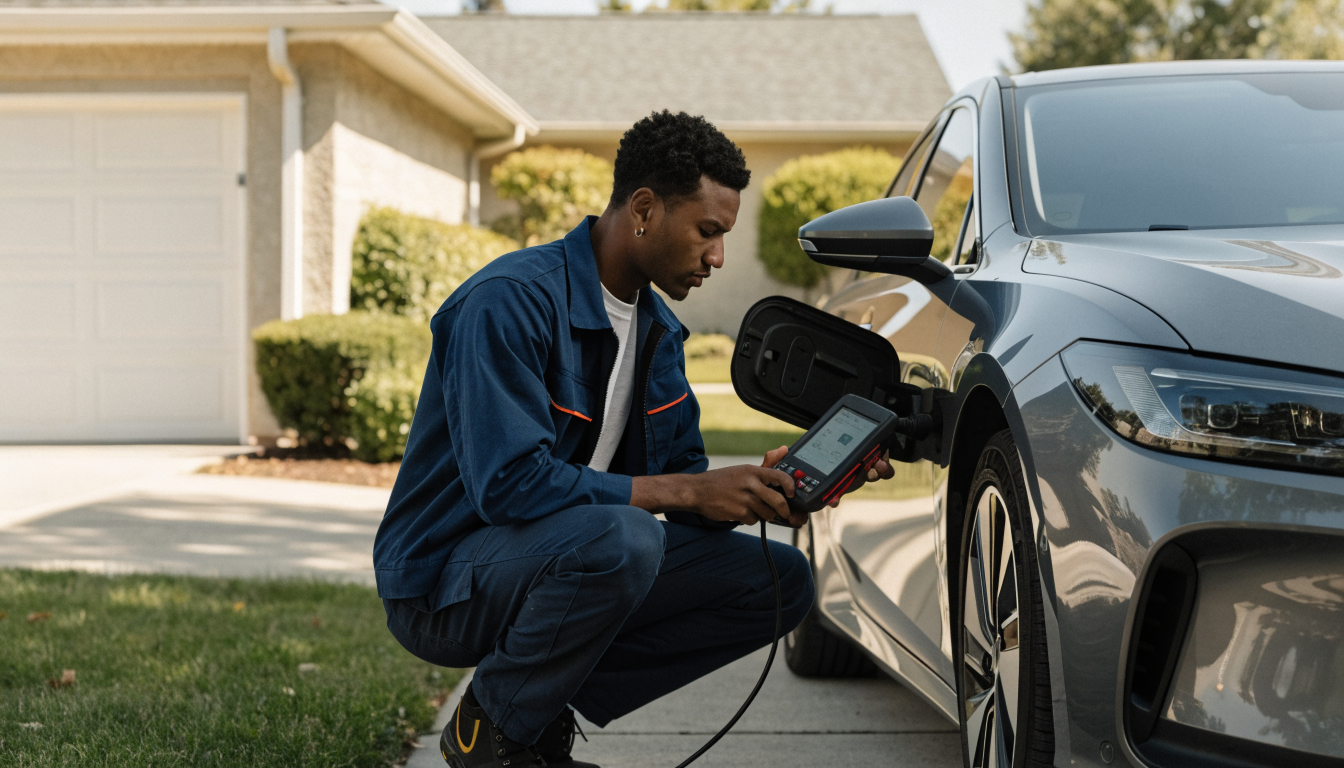
- If none is offered, arrange an independent check. In the US, Recurrent provides a free battery report for Tesla owners, without needing the seller involved at all. For other EVs, and in the UK, an independent EV specialist can run a comparable test as part of a pre-purchase inspection. Many now offer this as a stand-alone service, bundled with a general mechanical check, typically booked a day or two ahead rather than on the spot.
- Compare the reading against what is normal for the car's age and mileage. A figure noticeably below what similar cars show at the same age is not automatically a dealbreaker. It is a reason to ask why, and to check for any accident or fault history that might explain it.
- If the seller refuses any check at all, treat it as a red flag. A healthy battery costs a seller nothing to demonstrate. Refusal, more than a mediocre reading, is the strongest single warning sign in this whole process.
- Confirm the remaining manufacturer warranty separately. Check the exact battery warranty terms against the car's build date, not its registration date. The two can be months apart, and the warranty clock runs from the earlier one.
What the result actually means
| Result | What it means | What to do |
|---|---|---|
| Normal SoH for the car's age | Battery is ageing as expected | Proceed with the purchase as normal |
| Low SoH, still under warranty | Manufacturer may repair or replace free | Confirm the warranty transfers in writing before you buy |
| Low SoH, outside warranty | You would be buying the replacement risk too | Price in a possible future repair, or negotiate hard |
| Seller refuses any check | Impossible to verify either way | Walk away, or assume the worst-case price |
Reading a result off this table only works once you actually have the number. That is the entire reason to insist on the check in step one, rather than relying on how the car felt to drive. A test drive tells you almost nothing about long-term capacity.
What it costs to get this wrong
Skipping the check does not save you money. It just moves the cost to later, and often makes it larger. A car bought without a battery check, that turns out to need attention shortly afterwards, leaves you facing a full Tesla battery replacement cost with no comeback to the seller. A private sale rarely comes with any comeback at all. A ten-minute check before you hand over money is the cheapest insurance available in this entire transaction. It costs nothing and it cannot make your position worse.
When a health check will not help
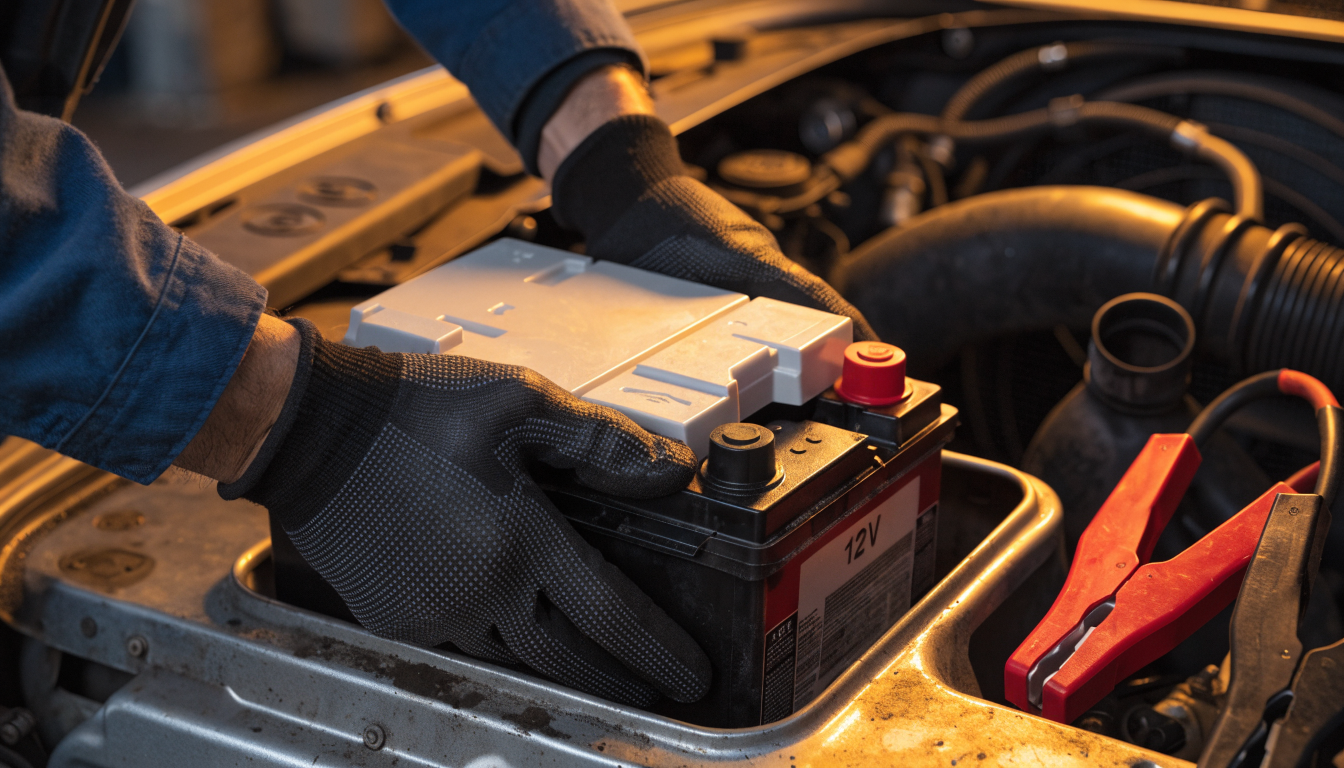
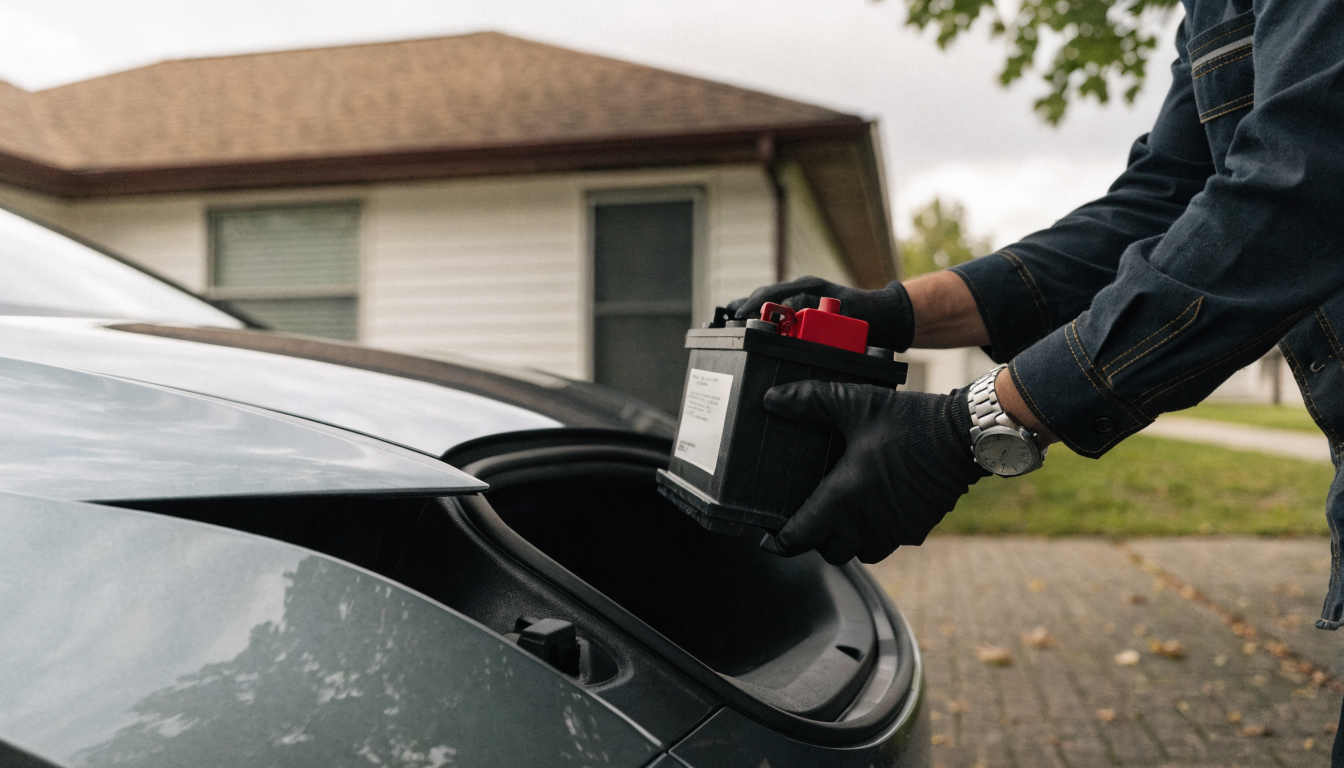
A battery health check is a snapshot, not a guarantee. It cannot predict a future fault, only report the capacity lost so far. It also will not help if the problem is actually the car's separate 12V accessory battery, rather than the main traction pack. That is a different, far cheaper part, with its own warranty, and a low-voltage fault can sometimes mimic symptoms that look battery-related at first. And if you are buying a car still well within its manufacturer warranty, a mediocre reading matters less than confirming that warranty genuinely transfers to you. In that case, the paperwork matters more than the percentage.
What to do next
Make a battery health check a condition of any used EV viewing, not an afterthought once you are already keen on the car. If the seller hesitates, that alone tells you most of what you need to know. Put it in writing before you agree a price, not after.
Two related habits are worth building at the same time. Check how winter weather affects the range you actually get, since a worse number in January is not automatically bad news. And find out why EV tyres wear faster than you'd expect, since it is the other running cost buyers routinely underestimate.
Sources
- Recurrent — Checking Tesla Battery Health: Measure, Monitor, and Protect
- Not a Tesla App — How to Run Tesla Battery Health Test & Check Degradation
- RAC Drive — How Long Do Electric Car Batteries Last?
- Charged EVs — New Geotab Data Shows How Frequent DC Fast Charging Affects EV Battery Health
- Tesla — Model 3 New Vehicle Limited Warranty (Battery and Drive Unit coverage)
Common questions
What is a battery health check, exactly?
It is a test that reports an EV battery's State of Health, or SoH: its current usable capacity, as a percentage of what it had when new. That is different from the dashboard's estimated range, which moves around with temperature and driving style, and is not reliable on its own.
How do I run an EV battery health check myself?
Start with the manufacturer's own tool. Most EV apps, or in-car service menus, include a battery or range test. It compares your car against expected figures for its age and mileage. If your car does not expose one, a dealer or independent EV specialist can run an equivalent test.
How do I check a car battery health before buying a used EV?
Ask the seller for a State of Health report before you view the car, not after you have made an offer. If they cannot produce one, arrange an independent inspection that includes a battery test as a condition of viewing. Treat a flat refusal to allow any check as a serious warning sign.
How do I check Tesla battery health before buying?
Ask the seller to open the Tesla app with you, and run the Service, then Battery & Charging, then Range test on the spot. That way you see the live result, not a screenshot. In the US, Recurrent also offers a free independent battery report for Tesla owners, which does not rely on the seller at all.
Is a laptop's battery health check useful for understanding an EV's?
Only as an analogy, not a method. Both report a percentage of original capacity, but an EV uses a far more advanced battery management system than a laptop. A laptop-style reading has no bearing on a car. Use the manufacturer's own tool, or an independent EV specialist test, instead.
About the author
ElectraMile EditorialEditorial desk
The ElectraMile editorial team covers charging, running costs and EV ownership for readers in the UK and US.
Spotted something wrong? Tell us — we correct and date every change.
Figures shown for United Kingdom in GBP. Switch market in the header to see local pricing and terminology.