Tesla Mobile Connector: What It Is and What It Costs
Tesla stopped including the Mobile Connector free with new cars in 2022. Here is what the portable charging cable actually does, what it costs now, and when you genuinely need one.
DisclosureSome links on this page earn ElectraMile a commission. It never changes what we recommend.
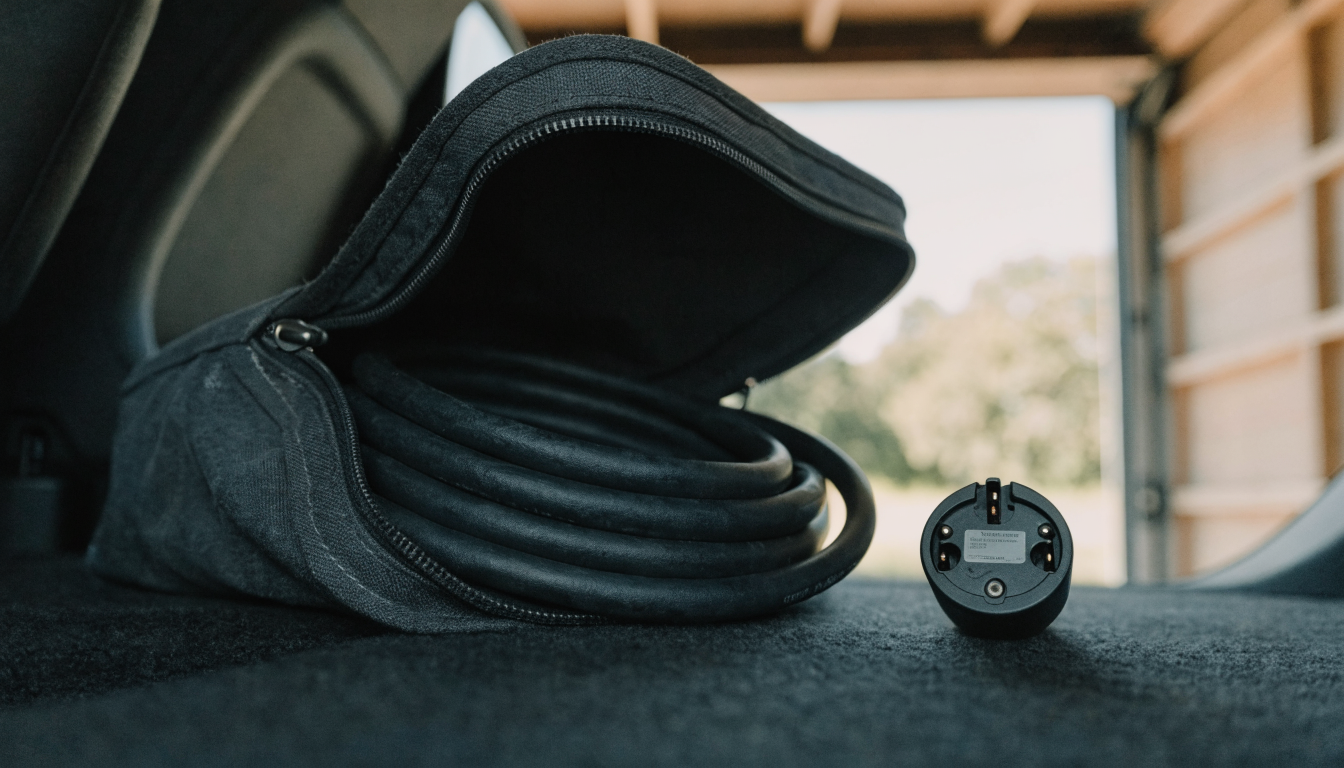
A Tesla Mobile Connector is a portable charging cable. It plugs into a household socket instead of being fixed to a wall. Since April 2022, Tesla has not included one free with a new car. It is now a separate purchase. It also charges far more slowly than a wall-mounted unit, which makes it a backup tool rather than your main way of charging at home.
Why new owners keep asking where it is
Older Tesla deliveries included a cable and a storage bag as standard. Plenty of owners still expect to find one in the boot on delivery day. That stopped being true on 18 April 2022. Tesla removed the Mobile Connector from standard equipment that day. It became an optional accessory instead. Tesla's own leadership said the change followed low measured usage of the item (Not a Tesla App).
For background on how EV charging hardware has changed since then, our charging technology guides cover the wider picture.
The second source of confusion is what a Mobile Connector actually does. It is not a faster alternative to a wall-mounted charger. It is a slower, portable one. It was built for emergencies and occasional use, not daily overnight charging.
Why it charges so much more slowly
It uses your existing socket, not a dedicated circuit
A wall-mounted unit is wired directly into your consumer unit or breaker panel. It runs on its own circuit, sized specifically for EV charging. A Mobile Connector instead plugs into whatever socket is already there. That socket is typically rated for far less continuous current, because it was never designed with car charging in mind.
Household sockets were never built for sustained high current
Pulling several kilowatts continuously for hours is a different job to running a kettle for two minutes. The adapters bundled with a Mobile Connector step the current down. They reduce it to something a normal socket can handle safely. That is why charging on one adds only a small amount of range per hour, rather than the tens of miles a dedicated home charger delivers.
Its plug still has to match your car
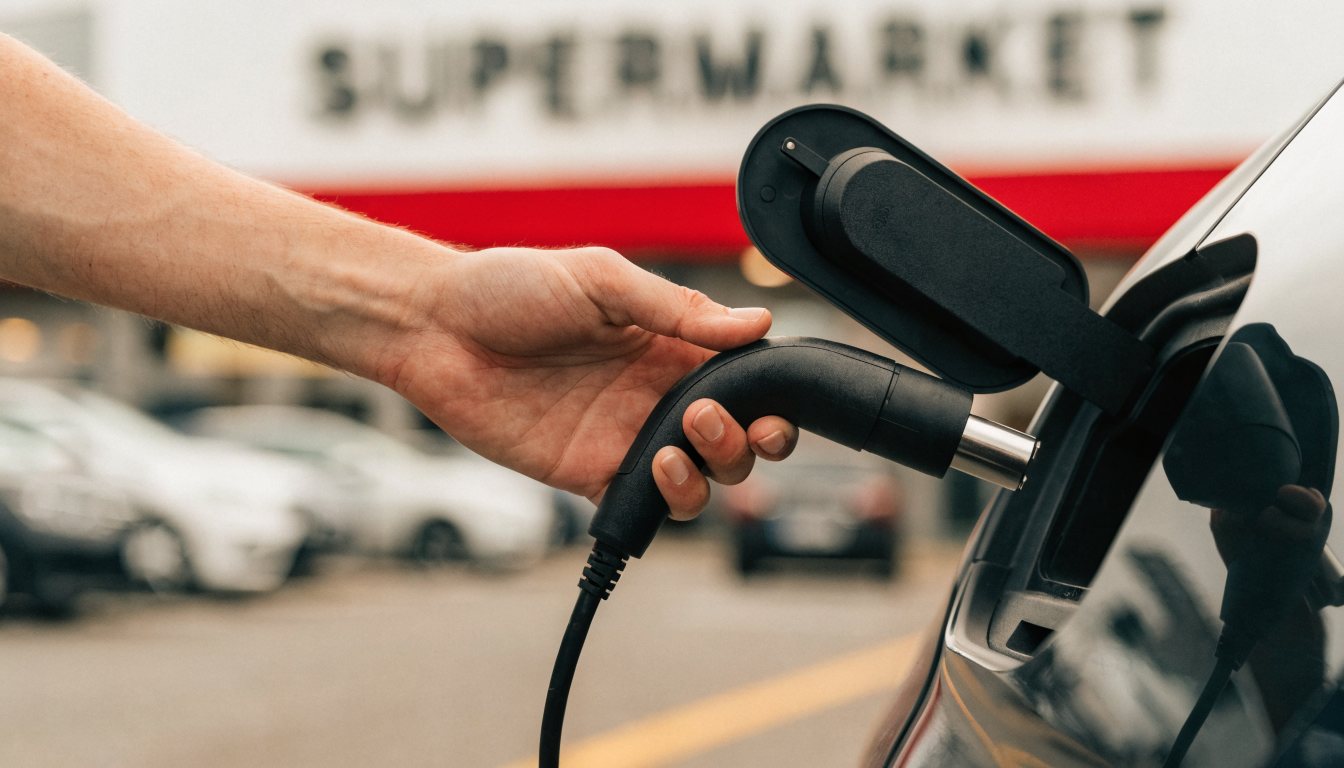
The connector at the car end is the same NACS or Type 2 plug your car already uses, depending on region. The Mobile Connector does not solve any adapter question on its own. It only changes what is plugged in at the wall.
Gen 1 and Gen 2 are not quite the same tool
Older Tesla deliveries shipped with a Gen 1 Mobile Connector, built around swappable plug heads for different sockets. The current Gen 2 version ships with a single fixed head and separate adapters instead. If you are buying a used Tesla, check which generation came with it, since Gen 1 adapters and Gen 2 adapters are not interchangeable.
How to decide if you need one
-
Check what actually came with your car. Tesla's included-accessories policy has changed more than once since 2022. Do not assume based on an older delivery or a forum post. Check your own order confirmation, or ask your delivery specialist directly.
-
Work out what you would actually use it for. If you already have, or plan to install, a wall-mounted charger at home, a Mobile Connector is mainly insurance. Think travel, a friend's house, or a power cut affecting your main charger. It is not meant to be your daily method.
-
Match the adapter to your socket, not just your country. In the US, the bundle typically ships with a 120V household adapter. A separate, higher-current adapter is sold for a heavier-duty outlet. In the UK, the standard bundle covers a 13A three-pin socket. A faster commando-plug adapter is sold separately, for outdoor or garage sockets wired to take it.
-
Buy from Tesla or a reputable seller, not an unbranded copy. This cable carries mains current into your car for hours at a time. A cheap, uncertified equivalent is not where a small saving is worth the risk.
-
Set your expectations on speed before you rely on it. On a standard 120V US household socket, expect roughly 2 to 3 miles of range added per hour of charging (Not a Tesla App). That is enough overnight to matter, but nowhere near a dedicated charger's output.
-
Keep it in the car, not in a drawer at home. Its whole value is portability. A Mobile Connector left at home when you break down away from a charger, or arrive somewhere with only a household socket, has done nothing for you.
Mobile Connector against the alternatives
| Option | Plugs into | Typical speed | Best for |
|---|---|---|---|
| Mobile Connector | Existing household socket | Roughly 2–3 miles of range per hour | Emergencies, travel, occasional top-ups |
| Wall-mounted home charger | Dedicated circuit, hardwired | Around 25–44 miles of range per hour | Daily overnight charging |
| Public AC charger | Type 2 or J1772 post | Similar to a home charger | Destination charging while parked elsewhere |
| Public DC rapid charger | CCS or NACS post | Far faster, but tapers sharply | Topping up on a longer trip |
A Mobile Connector and a wall-mounted charger are not competing products. They solve different problems. Most owners eventually want both.
What it costs
Tesla's Mobile Connector currently sells for around $200 in the US. That is down from an earlier $275, alongside the decision to stop including it as standard (Not a Tesla App). It is a fraction of the cost of a hardwired wall unit and its installation. That is part of why it is worth owning even once you also have a dedicated charger at home. It travels with the car. A dedicated unit does not.
Extra regional adapters cost more again. A UK commando-plug adapter for a faster outdoor socket, for example, is sold separately. Factor that in if your only usable outlet at home is not a standard three-pin socket.
Buying used is worth considering too. A secondhand Mobile Connector from a reputable seller can work out cheaper than a new one, provided the cable and plug are undamaged and it is the correct generation for your car. Check the connector pins closely before paying, since bent or scorched pins are a genuine safety issue, not just cosmetic wear.
When a Mobile Connector is not the answer
If you drive daily and need a full charge reliably overnight, do not plan around a Mobile Connector as your only method. The maths does not work for most battery sizes on a standard household socket. That is a wall-mounted charger's job. It is worth budgeting for one from the start, rather than discovering the gap after delivery.
If your car is a CCS1 model rather than a NACS one, none of this changes your DC charging situation. The Mobile Connector is AC-only, whichever car you drive. What actually affects your access to Tesla's Supercharger network is covered in what the NACS transition means for CCS owners. The difference between the connector families generally is explained in CCS vs NACS vs Type 2.
What to do next
Confirm what shipped with your specific order before buying anything extra. Treat a Mobile Connector as a travel companion, not a home charging plan on its own. If you are still working out how AC and DC charging speeds differ in practice, why DC charging slows near 80% explains the physics behind the numbers quoted for rapid charging.
Sources
Common questions
Does a new Tesla still come with a Mobile Connector?
Not automatically. Tesla stopped including it as standard equipment on 18 April 2022 and made it an optional purchase instead. What ships with your car depends on your specific order, so check your order confirmation rather than assuming based on an older delivery or a forum post.
How fast does a Tesla Mobile Connector charge?
On a standard 120V US household socket, expect roughly 2 to 3 miles of range added per hour. That is enough overnight to matter, but far slower than a dedicated wall-mounted charger, which can add 25 miles or more of range per hour on the same car.
Can I use a Tesla Mobile Connector in the UK?
Yes, with the correct adapter for your socket. The standard UK bundle covers a 13A three-pin plug, and a faster commando-plug adapter is sold separately for outdoor or garage sockets wired to take it.
Is a Mobile Connector cheaper than a wall-mounted charger?
Yes, considerably — it costs a fraction of a hardwired unit and its installation. But it is not a substitute for one if you charge daily, since its output on a household socket is much lower than any dedicated home charger can deliver.
What is the difference between a Mobile Connector and a Wall Connector?
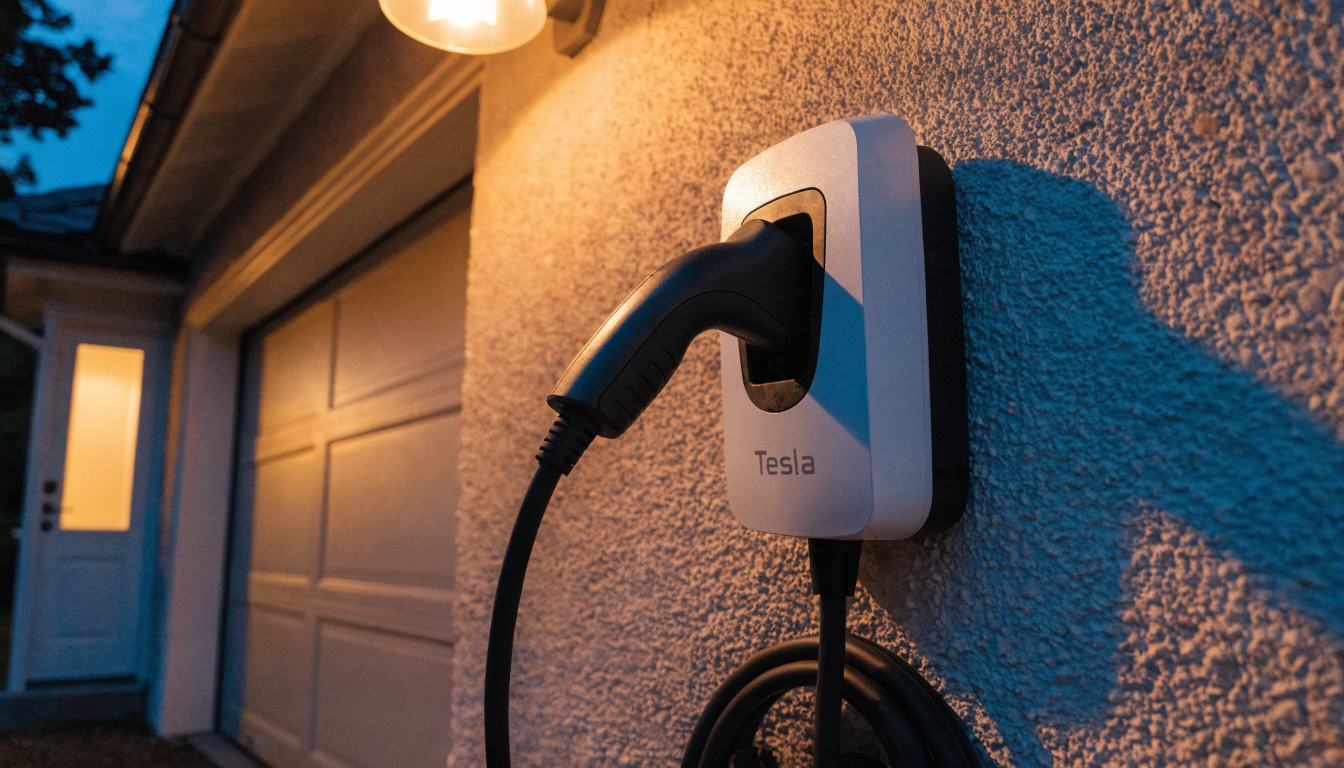
A Mobile Connector is portable and plugs into an existing socket. A Wall Connector is fixed and hardwired into your consumer unit or breaker panel by an electrician. They solve different problems, and many owners eventually end up owning both.
About the author
ElectraMile EditorialEditorial desk
The ElectraMile editorial team covers charging, running costs and EV ownership for readers in the UK and US.
Spotted something wrong? Tell us — we correct and date every change.
Figures shown for United Kingdom in GBP. Switch market in the header to see local pricing and terminology.