Tesla to J1772 Adapter: What It Does and When You Need It
A Tesla to J1772 adapter lets your Tesla use ordinary public AC chargers, and it usually comes included with the car. Here is how it differs from the separate CCS adapter people confuse it with.
DisclosureSome links on this page earn ElectraMile a commission. It never changes what we recommend.
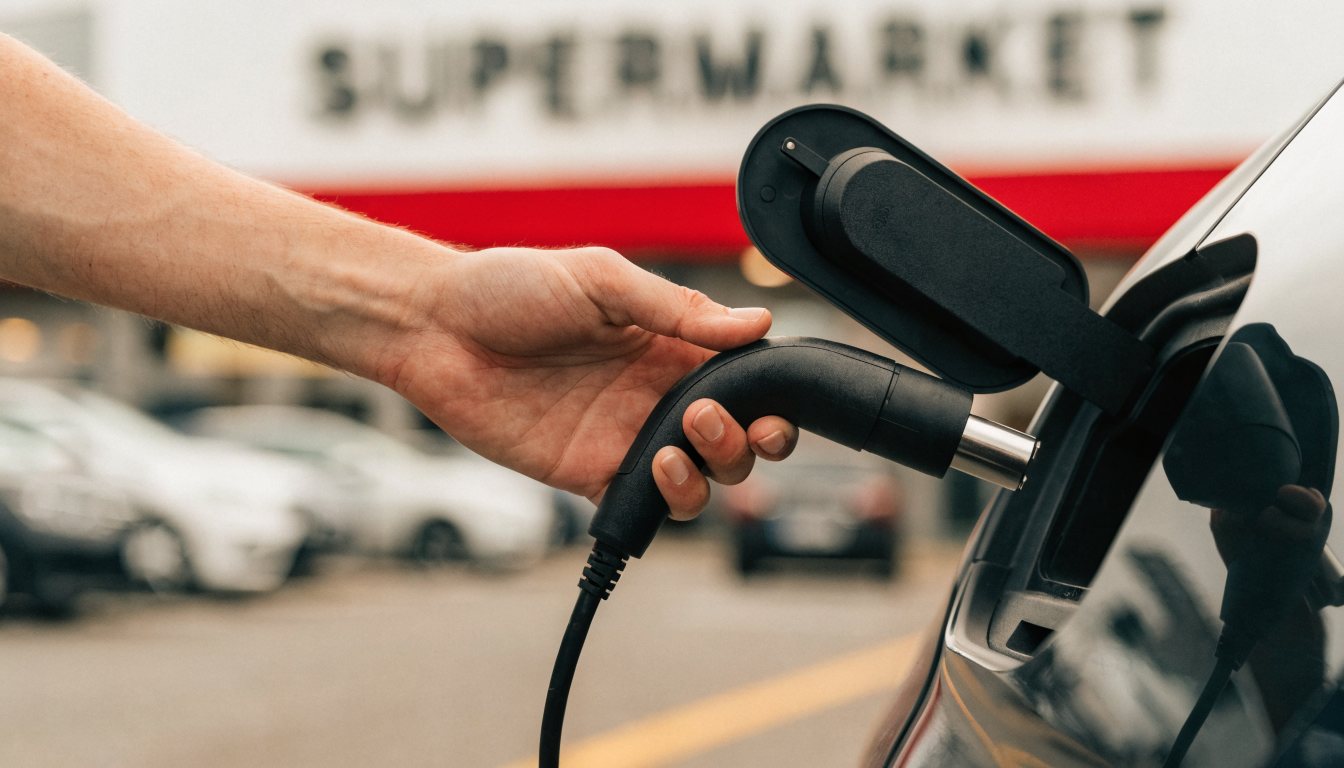
A Tesla to J1772 adapter lets a Tesla connect to the J1772 sockets used by non-Tesla AC chargers. A Tesla's own charge port takes Tesla's NACS plug, not J1772, so this small adapter bridges the two. It comes included with most new Teslas, rather than being something you need to buy. It only works for AC charging. It will not connect a Tesla to a DC rapid charger, however similar the two adapters sound.
Why this trips people up at the charger, not before
You plug in at a hotel, a car park or a workplace charging post. The socket does not match your car. That is normal. Most non-Tesla public AC chargers in North America use the J1772 connector. It is a five-pin plug that predates Tesla's own NACS design. Your Tesla cannot plug straight into it.
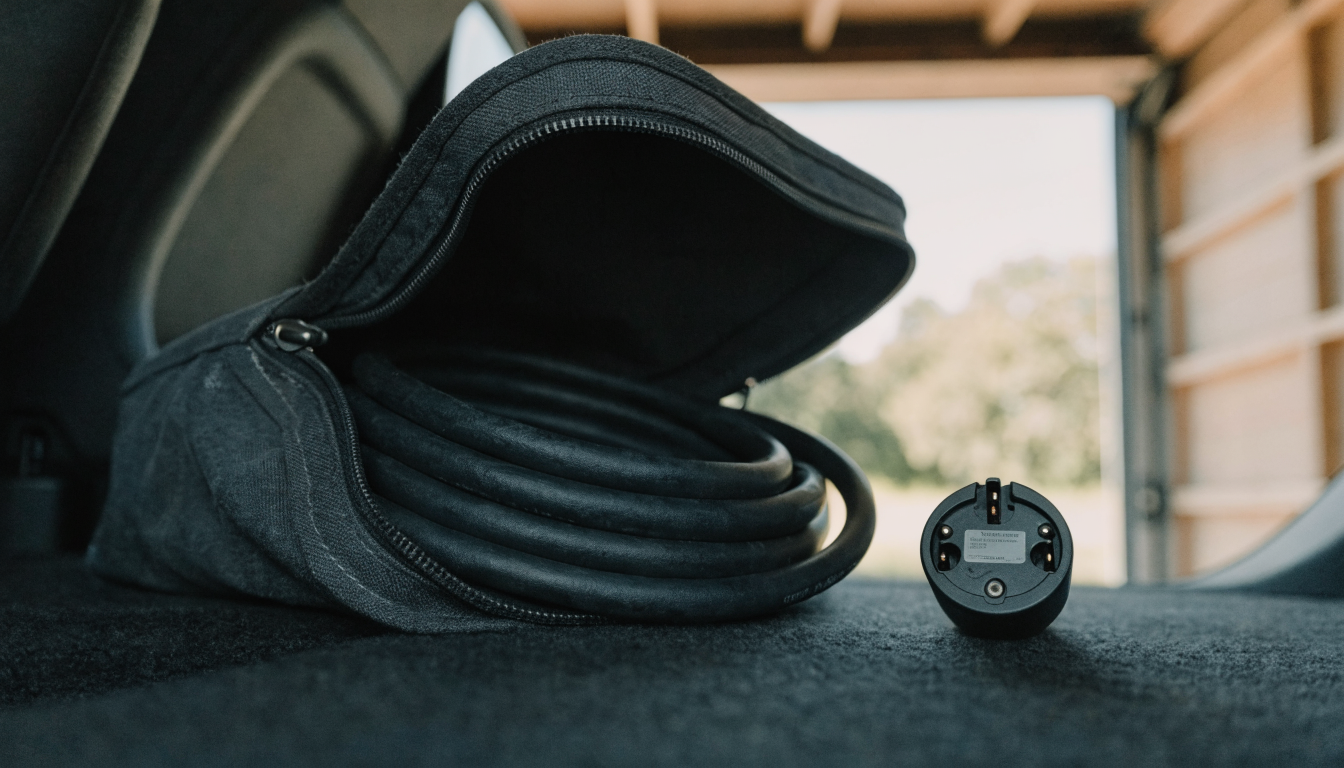
The panic is usually unnecessary. A small black adapter lets a Tesla use exactly this kind of charger. It typically already lives in the frunk or glovebox, because Tesla includes it with the car (WattLogic). The genuine confusion is with a different, similarly named product: the CCS adapter, covered further down. That one does an entirely different job. Our charging technology guides cover the rest of the connector landscape if this is your first time meeting NACS or J1772.
Why there are two adapters with almost the same name
NACS and J1772 solve the same problem differently
Both connectors carry AC power for Level 1 and Level 2 charging. Those are the everyday charging speeds used at home, at work and at most destination chargers. J1772 is the older, wider five-pin design. Nearly every non-Tesla EV sold in North America uses it. NACS is Tesla's smaller, single-piece design. It is now being adopted more widely, as SAE International standardises it as J3400. CCS vs NACS vs Type 2 covers how all three plug families actually relate.
The J1772 adapter and the CCS adapter solve different problems
The Tesla to J1772 adapter is for AC charging only. It lets a Tesla use a normal, non-Tesla Level 2 charger. A separate product, generally sold as the "Tesla CCS Adapter," does something else entirely. It lets a Tesla use non-Tesla DC rapid chargers, such as Electrify America or EVgo in the US. The two look broadly similar and get confused constantly. Neither substitutes for the other.
Older Teslas need to check compatibility first
Not every Tesla can use the CCS adapter without extra work. Some older models need a hardware compatibility check before the adapter will function at all, and Tesla's own adapter page will confirm this for your specific vehicle before you buy. The J1772 adapter has no such restriction. It works on any Tesla with a NACS port, old or new, because the underlying AC hardware has not changed in the same way.
How to get and use one
-
Check what is already in the car first. Before buying anything, check the frunk, glovebox or boot. Tesla ships the J1772 adapter with new deliveries. A surprising number of "missing adapter" purchases turn out to be unnecessary.
-
Confirm the amp rating before you rely on it for a long session. Tesla's J1772 adapter is rated for the high-current end of Level 2 charging. It should not be the bottleneck at most public posts. The post's own output, not the adapter, is usually what limits your speed.
-
Attach it the right way round. The adapter clips onto the end of your Tesla's own charging cable, not directly into the car. Then the adapter end goes into the public charger's J1772 socket. Forcing it on the wrong way is the most common reason people think it is faulty.
-
Replace it through Tesla or a reputable seller if lost. It often ships alongside the Mobile Connector, and the same rule applies to both. This is not the place to save a few pounds or dollars on an uncertified copy carrying mains current for hours.
-
Do not reach for it at a DC rapid charger. A thick cable with a chunky, two-part connector, rather than a J1772 or Type 2 head, means DC fast charging. This adapter is the wrong tool there. You need the CCS adapter instead, or none at all if the car already has a native NACS or CCS port.
-
Keep it somewhere you will actually find it. A frunk pocket or a door bag is more useful than the boot floor under other luggage, especially if you need it in the rain at an unfamiliar charger.
Which adapter actually does what
| Adapter | Direction | Enables | Does not enable |
|---|---|---|---|
| Tesla to J1772 | NACS car to J1772 socket | Public and workplace Level 2 AC charging | DC rapid charging |
| Tesla CCS Adapter | NACS car to CCS1 socket | Non-Supercharger DC rapid charging, such as Electrify America and EVgo | AC charging — the car's own port already handles that |
| J1772 to NACS | J1772 car to Tesla home hardware | Charging a non-Tesla car on Tesla home charging equipment | Supercharger network access |
Notice the direction each row moves in. Most confusion around Tesla adapters comes from mixing up which side of the plug is the car and which is the charger.
What it costs
The J1772 adapter itself is not usually a separate purchase. It ships with new Tesla deliveries, as part of the car's included accessories (WattLogic). The adapter people do pay for is the CCS one. It currently costs around $200 in the US — Tesla has changed the price more than once since launch, so treat the figure as approximate and check Tesla's own shop page before budgeting (Tesla). If your public charging habit is mostly workplace and destination AC posts, you may never need to spend anything beyond what came with the car.
Third-party J1772 adapters exist too, often cheaper than buying a genuine replacement from Tesla. They can be a reasonable backup, but treat the price gap with some caution. A cable rated to carry high current for hours needs proper insulation and a secure fit, and that costs money to manufacture properly, whoever the brand is.
When this adapter is not the answer
If the charger you are trying to use is a DC rapid post rather than an AC one, this adapter will not fit. It would not help even if it did. You need the separate CCS adapter instead. Even then, charging speed on any rapid charger tapers sharply as the battery fills. Why DC charging slows near 80% explains why the last portion of a rapid session takes disproportionately long.
If you are charging a Tesla bought in the UK or Europe, none of this applies at all. European Teslas use a Type 2 and CCS2 combination port natively, not NACS. The J1772 question simply does not arise there.
What to do next
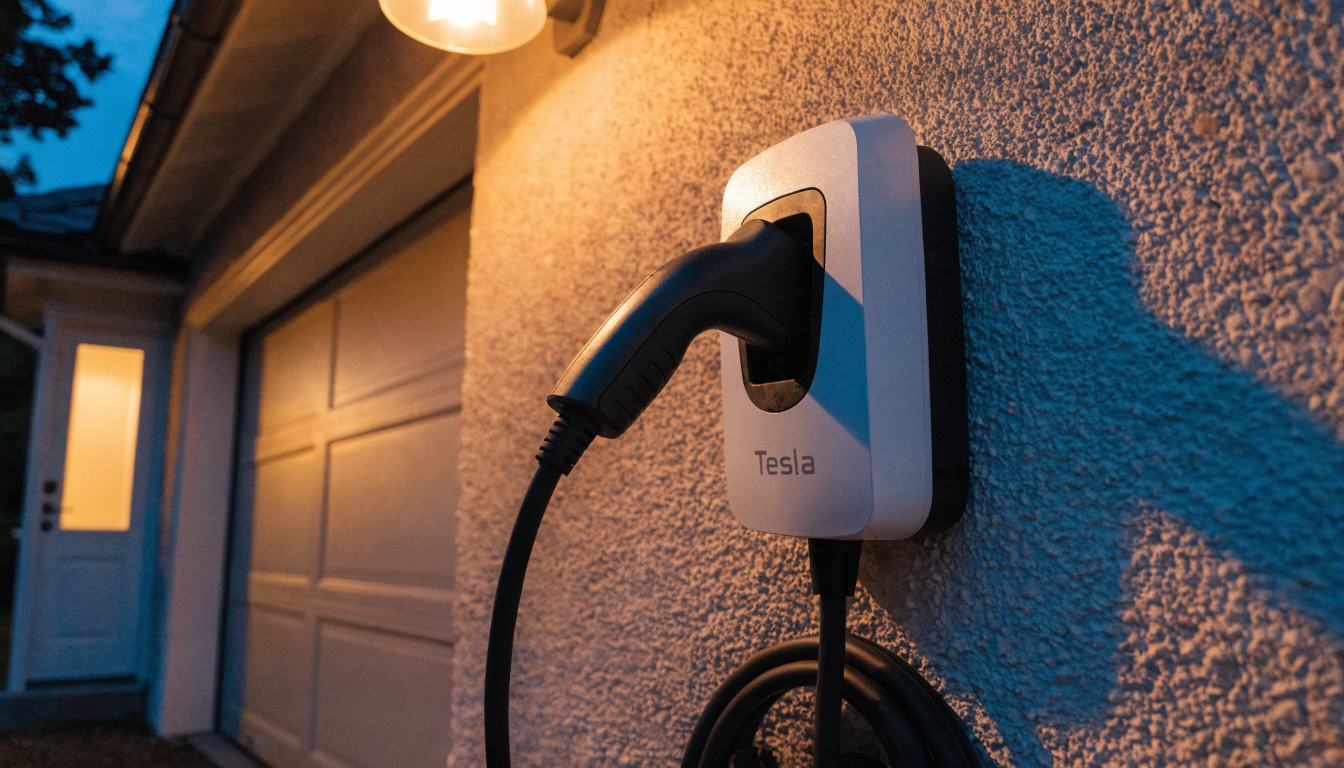
Check your frunk or glovebox before ordering a replacement adapter. It is very likely already there. If you are weighing up home charging hardware at the same time, compare a Tesla Wall Connector against a Tesla Mobile Connector for daily use — neither one needs this adapter at all, since both plug straight into your car.
Sources
- Alternative Fuels Data Center — Electric Vehicle Charging Stations
- WattLogic — Does Tesla come with a J1772 adapter?
- Tesla — CCS1 to NACS Adapter
- NotebookCheck — Tesla Model Y CCS retrofit price drops to lowest ever
- Wikipedia — Combined Charging System
- Zap-Map — The complete UK guide to EV charger connector types
Common questions
Do I need to buy a Tesla to J1772 adapter separately?
Usually not. Tesla includes this adapter with new car deliveries, so check your frunk, glovebox or boot before assuming you need to buy one. A surprisingly common purchase turns out to be unnecessary once people actually look.
Can a Tesla to J1772 adapter be used for DC rapid charging?
No. It only handles AC charging — the everyday speeds used at home, at work and at most destination chargers. DC rapid charging on a non-Tesla network needs a separate product, generally sold as the Tesla CCS Adapter, which costs extra.
What is the difference between the J1772 adapter and the CCS adapter?
The J1772 adapter lets a Tesla use ordinary AC chargers and usually comes free with the car. The CCS adapter lets a Tesla use non-Tesla DC rapid chargers, such as Electrify America, and costs around $200 as a separate purchase.
Will a Tesla to J1772 adapter work in the UK?
The question does not really apply. UK and European Teslas use a Type 2 and CCS2 combination port natively, not NACS, so there is no J1772 adapter to buy or use on those cars in the first place.
Is the amperage of the adapter itself a bottleneck?
Rarely. Tesla's J1772 adapter is rated for the high end of Level 2 AC charging, so the public charging post's own output usually limits your speed long before the adapter does.
About the author
ElectraMile EditorialEditorial desk
The ElectraMile editorial team covers charging, running costs and EV ownership for readers in the UK and US.
Spotted something wrong? Tell us — we correct and date every change.
Figures shown for United Kingdom in GBP. Switch market in the header to see local pricing and terminology.