Tesla Model 3 Performance 0-60: is the extra pace worth it?
Tesla claims 2.9 seconds; Edmunds tested 3.0. Here's what the gap means, what the extra pace actually costs per tenth of a second, and who should pay for it.
DisclosureSome links on this page earn ElectraMile a commission. It never changes what we recommend.
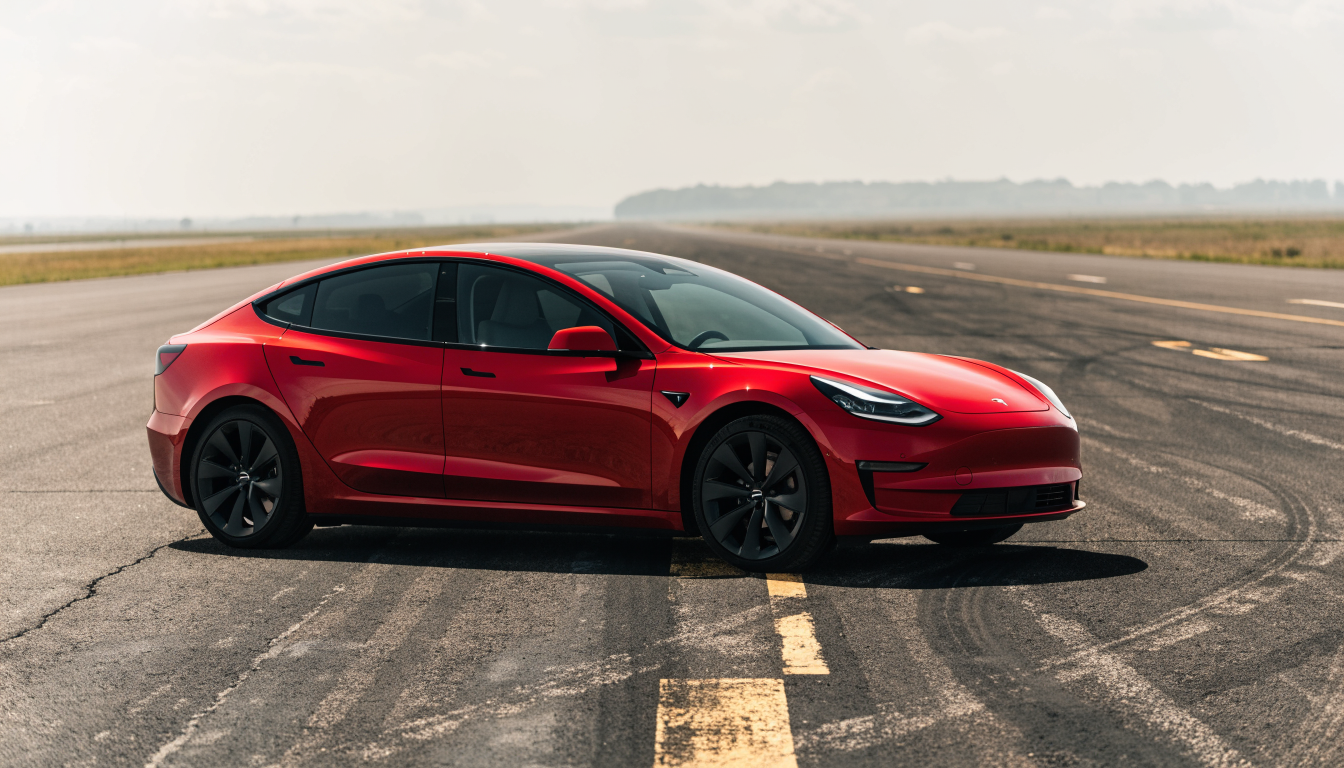
The Tesla Model 3 Performance 0-60 time is 2.9 seconds by Tesla's own claim, and 3.0 seconds in Edmunds' independent test at their track. That extra £10,000 over the Premium AWD buys roughly 1.3 seconds off the sprint to 60mph, which works out at close to £770 for every tenth of a second saved. Whether that is a good deal depends on whether you will ever use it, not on the number alone.
The question behind the number
You have seen the 2.9-second figure everywhere, and you are trying to decide if it is worth the premium over a slower, cheaper trim. It is a fair question. Tesla's own claim and an outside tester's result do not quite match, and neither figure tells you whether the extra speed changes anything about how the car actually feels to own.
This is not another list of every Model 3 trim's 0-60 time; our Tesla Model 3 0-60 guide already covers that comparison in full. This one asks a narrower, more useful question: is the Performance trim's headline number worth paying for, once you actually price out what it costs to own the extra speed?
Most buyers asking this are not cross-shopping supercars. They are choosing between two versions of the same car, and trying to work out whether a genuinely fast number changes anything about a normal week of driving. It rarely does, and that is worth admitting before you spend the extra money.
Why testers do not all agree with Tesla
Rollout versus a dead stop
Tesla's 2.9-second claim uses a "rollout" method, subtracting the first foot of movement most cars need to build initial momentum. It is a genuine industry-standard practice, not a trick unique to Tesla, but it shaves a few tenths off any car's raw time compared with a true standing start.
What Edmunds actually measured
Edmunds tested a Model 3 Performance at their own track and recorded 3.0 seconds from a genuine dead stop, with a quarter-mile of 11.0 seconds at a 123.7mph trap speed. That is slightly slower than Tesla's figure, and the rollout difference explains almost all of the gap. It is not evidence that Tesla's claim is false. It is evidence that two different measuring methods rarely produce identical numbers.
Why this matters more than the exact tenth
Neither figure is "wrong." A rollout time and a dead-stop time are simply answering slightly different questions. What both agree on, regardless of method, is that the Performance trim is genuinely, seriously quick for its price, quicker in a straight line than cars costing two or three times as much.
What repeated hard launches actually do to the car
A single 0-60 run tells you almost nothing about daily use. Tyres and brakes both wear faster under repeated hard acceleration than under normal driving, and the Performance trim makes it easy to use all of its power, all of the time, if you choose to. A driver who genuinely exploits that number regularly should expect to replace tyres more often than someone who never does.
How to decide if the extra pace is worth paying for
1. Work out the actual price difference for your market. In the UK, the Performance costs £59,990 against £49,990 for the Premium AWD, a £10,000 gap. In the US, it is $54,990 against $47,490, a $7,500 gap.
2. Compare that gap to trims you would actually cross-shop. The Tesla Model 3 Performance guide covers what else that money buys beyond the faster sprint, including brakes, suspension and range trade-offs.
3. Be honest about where you would ever use the extra speed. A closed track day and a motorway slip road both benefit from strong acceleration. Most daily commuting and school runs do not.
4. Check the knock-on costs before you commit. A faster trim usually sits in a higher insurance group, so price a real quote before deciding the performance premium is the only extra cost involved. Tyres and brake pads also wear faster if you actually use the car's full performance regularly.
5. Look at what similar money buys elsewhere. If outright pace, not the badge, is what you are actually chasing, cross-shop rivals at a similar price point before assuming the Model 3 Performance is the only fast option. A rival a size up or down can sometimes match the number for less.
6. Decide honestly whether the number is the product. For some buyers, the ability to genuinely have the quickest car in the car park is exactly what they are paying for, and that is a legitimate reason to buy it. For most daily drivers, the Premium AWD delivers the same commute in the same time, just a few seconds slower off the line.
Performance trims compared, Tesla and rivals
| Car | Price from | 0-60 (claimed) | Verdict |
|---|---|---|---|
| Model 3 Premium AWD | £49,990 | 4.2 sec | Quick enough for almost everyone, at £10,000 less |
| Model 3 Performance | £59,990 | 2.9 sec | The number itself, plus stronger brakes and a firmer setup |
| BYD Seal Excellence AWD | £48,730 | 3.8 sec | Slower, but closer to Premium AWD money |
| Ford Mustang Mach-E GT (with Performance Upgrade) | From Mach-E GT pricing, plus a $995 software add-on | 3.3 sec | Nearly as quick, from a different badge entirely |
What the extra speed actually costs, worked out
£59,990 − £49,990 = £10,000. That is the full price of stepping up from Premium AWD to Performance. The Premium AWD's own claimed 0-60 time is 4.2 seconds, against the Performance's 2.9 seconds. 4.2 − 2.9 = 1.3 seconds saved for that £10,000.
£10,000 ÷ 1.3 = £7,692 per second, or roughly £769 for every tenth of a second shaved off the sprint. Framed that way, the Performance trim is not cheap speed. It is a genuine luxury, priced accordingly, and worth it only if the number itself is part of what you are buying.
That figure does not even include running costs. The Performance sits in a higher official insurance group than the Premium AWD, though real quotes do not always follow the group rating in a straight line, so it is worth pricing your own policy rather than assuming the purchase price is the whole story.
When the Performance trim is not the right answer
If range matters more to you than acceleration, the Performance trim works against you twice: it costs more to buy, and it goes fewer miles on a full charge than the Premium AWD it is built from. If long trips without stopping matter more to you than a fast sprint, our Tesla Model 3 Long Range guide covers the trim built specifically for that instead.
If you are cross-shopping against Tesla's own larger saloon, the discontinued Tesla Model S Plaid is quicker still, at roughly 2.1 seconds, but it is no longer in regular production and comes with a very different price tag entirely.
What to do next
Get a real quote for the exact trim, including insurance, before letting the 0-60 figure alone decide anything; our Tesla Model 3 insurance cost guide shows how much that step-up in group actually adds. If practicality matters as much as pace, our Tesla Model 3 vs Model Y comparison covers the trade-offs between Tesla's two most cross-shopped models.
Sources
- Motor1 — The new Tesla Model 3 Performance hits 60 mph in 2.9 seconds
- Edmunds — Our Tesla Model 3 Performance is quicker than a whole bunch of supercars
- EV Specifications — 2026 Tesla Model 3 Premium AWD acceleration
- Carwow — Tesla Model 3 Performance review 2026: 0-60mph, interior and price
- CarsDirect — 2026 Tesla Model 3 reviews, prices and specs
- Auto Express — BYD Seal review
- Edmunds — Ford Mustang Mach-E GT Performance Package rockets EV to 60 mph in 3.3 seconds
- CarBuzz — Tesla Model S Plaid by the numbers: 0-60, quarter-mile, horsepower and more
Common questions
What is the Tesla Model 3 Performance's real 0-60 time?
Tesla claims 2.9 seconds, using the industry-standard rollout method. Edmunds independently tested 3.0 seconds from a true dead stop at their own track, with a quarter-mile of 11.0 seconds at 123.7mph. Both figures are genuine; they simply measure the start slightly differently.
Is the Tesla Model 3 Performance worth the extra money?
Only if the acceleration itself matters to you. It costs £10,000 more than the Premium AWD for roughly 1.3 seconds off the 0-60 time, around £769 per tenth of a second saved. Most daily driving never uses that extra pace.
How much quicker is the Performance than the Premium AWD?
About 1.3 seconds, comparing Tesla's own claimed figures: 2.9 seconds for the Performance against 4.2 seconds for the Premium AWD. Both trims are genuinely quick by everyday standards; the Performance simply pushes further into genuinely rapid, low-volume supercar territory for considerably less money.
How does the Tesla Model 3 Performance compare to rival performance EVs?
It is quicker than the BYD Seal Excellence AWD, at 3.8 seconds, and close to a Ford Mustang Mach-E GT fitted with its Performance Upgrade, at 3.3 seconds. All three sit well ahead of most family EVs on outright acceleration.
Why do different reviewers report different 0-60 times for the same car?
Testing method explains most of the gap. Tesla's claim uses a rollout start, subtracting the first foot of movement, while a track like Edmunds' measures from a genuine dead stop. Neither method is wrong; they answer slightly different questions about the same run.
Does the Tesla Model 3 Performance cost more to run than other trims?
It typically costs more to insure, since it sits in a higher official group than the Premium AWD, and its tyres and brakes wear faster if you regularly use its full acceleration. Get a real insurance quote before assuming the purchase price is the only extra cost.
About the author
ElectraMile EditorialEditorial desk
The ElectraMile editorial team covers charging, running costs and EV ownership for readers in the UK and US.
Spotted something wrong? Tell us — we correct and date every change.
Figures shown for United Kingdom in GBP. Switch market in the header to see local pricing and terminology.