Tesla Model 3 vs Model Y: which one actually suits you?
Boot space, towing and price, not styling, are what should decide between Tesla's two cheapest models. Here's the comparison that actually matters.
DisclosureSome links on this page earn ElectraMile a commission. It never changes what we recommend.
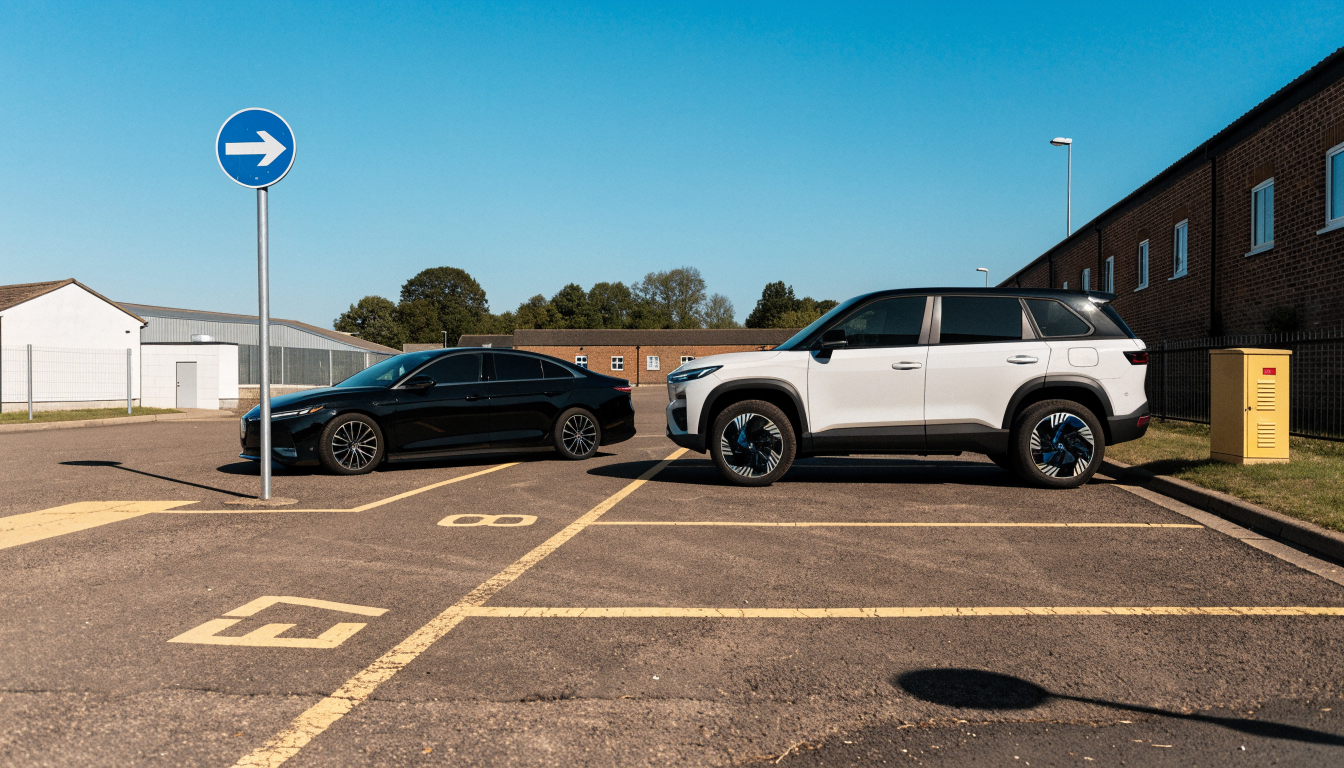
Choose the Tesla Model 3 vs Model Y question by cargo and towing, not styling: the Model Y carries 854 litres against the Model 3's 425, folds out to 2,138 litres, and tows 1,600kg against the Model 3's 1,000kg. The Model 3 costs less to start, from £37,990 against £41,990, and is the easier car to park on a tight UK street. Neither is objectively "better." They are built for different weeks, not different budgets.
Why this comparison keeps coming up
You are choosing between Tesla's two cheapest models, and every spec sheet you find lists numbers without saying which ones actually matter. Both are efficient, both charge on the same Supercharger network, and both share most of their interior technology. The genuine differences are smaller in number than you might expect, and bigger in effect once you actually live with the car day to day.
Salespeople and forums often frame this as a lifestyle choice: saloon against SUV, sporty against practical. That framing hides the one factor that should decide it for most buyers. Ask yourself whether your week regularly involves cargo, passengers or towing that the smaller car cannot handle.
This is not a review of either car in isolation. Our Tesla Model 3 and Tesla Model Y guides both cover their own model in full detail; this one is about the handful of differences that should actually decide which one you buy.
Where the two cars genuinely differ
Space, not styling, is the real divide
The Model Y is a compact SUV built around cargo and passenger space. Its 854 litres of boot space, rising to 2,138 litres with the rear seats folded, comfortably beats the Model 3's 425-litre boot. The Model Y also offers a seven-seat option on its Long Range AWD trim, something the Model 3 has never offered in any form.
Towing splits them further apart
The Model Y is rated to tow up to 1,600kg braked in the UK. The Model 3 manages up to 1,000kg on RWD and AWD trims. That drops to just 500kg on the Performance trim. If you tow a caravan or anything beyond a small trailer, that gap rules the Model 3 out on its own, regardless of price.
Price and parking favour the Model 3
The Model 3 starts lower: £37,990 in the UK against the Model Y's £41,990 Standard trim, and $36,990 against $39,990 in the US. Its saloon shape is also simply easier to park and manoeuvre on a narrow UK street or in a tight multi-storey space than the taller, longer Model Y.
Efficiency and charging rarely decide it either way
Both cars charge on Tesla's own Supercharger network at broadly similar peak speeds for their comparable trims. Neither efficiency nor charging time should be the deciding factor between them on their own; the gap on a typical motorway top-up is measured in minutes, not the sort of difference that changes your daily routine.
How to choose between them
1. Measure what you actually carry, not what you might carry once a year. A weekly supermarket shop and the school run rarely need the Model Y's extra space. A regular trip with pushchairs, sports kit or a dog usually does.
2. Check your real towing needs against the numbers above. If you tow anything heavier than a small trailer, the Model Y is the only one of the two that can legally and safely do it.
3. Price both on the road, not just from the headline figure. The starting prices above are before any options, and both ranges climb quickly once you add all-wheel drive or a longer-range battery. If the seven-seat option is what tipped you towards the Model Y, our Tesla Model Y L guide covers that specific version in full.
4. Test-park both, ideally somewhere as tight as your actual driveway or street. The size difference sounds small on paper and feels larger in practice, especially in an older UK terrace with narrow parking.
5. Think about resale, not just the first three years. Family-shaped SUVs like the Model Y have historically held demand well on the used market, though this varies by year and trim, so check current listings for the specific age of car you are planning to sell in future.
6. Do not let charging habits decide it. Both cars share the same charging network and broadly similar peak speeds, so this is one factor you can safely rule out of the comparison rather than agonise over.
Model 3 vs Model Y, by scenario
| You mainly need | Choose | Why |
|---|---|---|
| Cheapest way into a new Tesla | Model 3 | £37,990 vs £41,990, and lower running costs to match |
| Boot space for a family or bulky gear | Model Y | 854 litres vs 425 litres, more with seats folded |
| A seven-seat option | Model Y | Long Range AWD only; the Model 3 has none |
| Towing a trailer or caravan | Model Y | 1,600kg vs 1,000kg (500kg on Model 3 Performance) |
| Easiest car to park on a tight street | Model 3 | Smaller footprint, saloon shape |
What the space actually adds up to
854 litres minus 425 litres leaves the Model Y with 429 more litres of boot space than the Model 3, before you fold anything down. Fold the rear seats and the Model Y reaches 2,138 litres, which is more than five times the Model 3's fixed 425-litre boot. On towing, 1,600kg minus 1,000kg is a 600kg gap, enough to be the difference between towing a small trailer safely and not being able to tow one at all.
None of that is a small rounding difference. It is the entire reason one of these cars suits a family with a caravan, and the other suits a single commuter who never needs the extra room. Buyers who focus only on the purchase price often discover the space gap the hard way. It usually shows up on the first big supermarket run or the first camping trip, not on a spec sheet beforehand.
When neither Tesla is actually the right call
If your budget sits below the Model 3's £37,990 starting price, neither of these two cars is realistically in range yet, and a cheaper rival is worth a look before you stretch. Our best electric cars under £30,000 guide covers exactly that gap.
If towing is your absolute priority and even the Model Y's 1,600kg limit falls short of what you need, look beyond Tesla entirely. Our guide to the best electric cars for towing covers models built specifically around a heavier braked limit. It is a genuinely different shortlist from either car covered here, and worth reading before you assume Tesla is your only realistic option.
What to do next
Measure your actual boot and towing needs against the table above before comparing a single other spec. If price is the deciding factor once space and towing are settled, our Tesla Model 3 insurance cost guide shows how running costs differ once you are past the sticker price, and our Tesla Model 3 Performance guide covers the one Model 3 trim that changes these numbers again.
Sources
- Parkers — Tesla Model 3 boot space & practicality
- Parkers — Tesla Model Y (2026) boot space & practicality
- Towingcapacity.co.uk — Tesla Model Y towing capacity and weight limit information
- Towingcapacity.co.uk — Tesla Model 3 towing capacity and weight limit information
- Top Gear — The Tesla Model Y Standard is coming to the UK with 314 miles of range for £41,990
- CarsDirect — 2026 Tesla Model 3 reviews, prices and specs
Common questions
Should I buy a Tesla Model 3 or a Tesla Model Y?
Choose the Model 3 for a lower price and easier parking, from £37,990. Choose the Model Y for far more boot space, 854 litres against 425, and the option to tow up to 1,600kg. The right answer depends on cargo and towing needs, not styling preference.
How much more boot space does the Tesla Model Y have than the Model 3?
429 litres more with the rear seats up, 854 against 425, according to Parkers. Fold the Model Y's rear seats flat and it reaches 2,138 litres of total space, more than five times the Model 3's fixed 425-litre boot capacity.
Can the Tesla Model 3 tow a caravan?
Only a very light one. Its UK towing limit is 1,000kg braked on RWD and AWD trims, dropping to 500kg on the Performance. Most caravans and box trailers exceed that, making the Model Y, rated to 1,600kg, the safer choice for regular towing.
Is the Tesla Model 3 or Model Y cheaper to buy?
The Model 3 starts lower in both markets: £37,990 against the Model Y's £41,990 in the UK, and $36,990 against $39,990 in the US. That gap narrows or widens considerably depending on which specific trims and options you actually compare.
Does the Tesla Model Y come with seven seats?
Yes, but only on the Long Range AWD trim in the UK. The Model 3 has never offered a seven-seat option in any form, so buyers who need a third row have only one of these two cars to choose from.
Which Tesla is better for a small family?
The Model Y, in most cases, thanks to its larger boot, higher towing limit and optional seven-seat layout. The Model 3 still suits a smaller household well if boot space and towing are not regular requirements, and its lower price leaves more budget for other costs.
About the author
ElectraMile EditorialEditorial desk
The ElectraMile editorial team covers charging, running costs and EV ownership for readers in the UK and US.
Spotted something wrong? Tell us — we correct and date every change.
Figures shown for United Kingdom in GBP. Switch market in the header to see local pricing and terminology.