Polestar 4 review: the single motor is the one to buy
A five-star Euro NCAP coupe-SUV from £56,750, reviewed on how it actually drives and feels rather than the lease deal — plus where it genuinely disappoints.
DisclosureSome links on this page earn ElectraMile a commission. It never changes what we recommend.
This Polestar 4 review starts with the verdict: a five-star Euro NCAP-rated electric coupe-SUV from £56,750, and the single motor version is the one worth having. It is cheaper. It has the longer range. Reviewers rate it as the more engaging car to drive, too. Its biggest talking point, a missing rear window replaced by a camera and screen, is a genuine adjustment, not a gimmick. Everything else about it drives and feels like a pricier car.
What you actually notice driving one
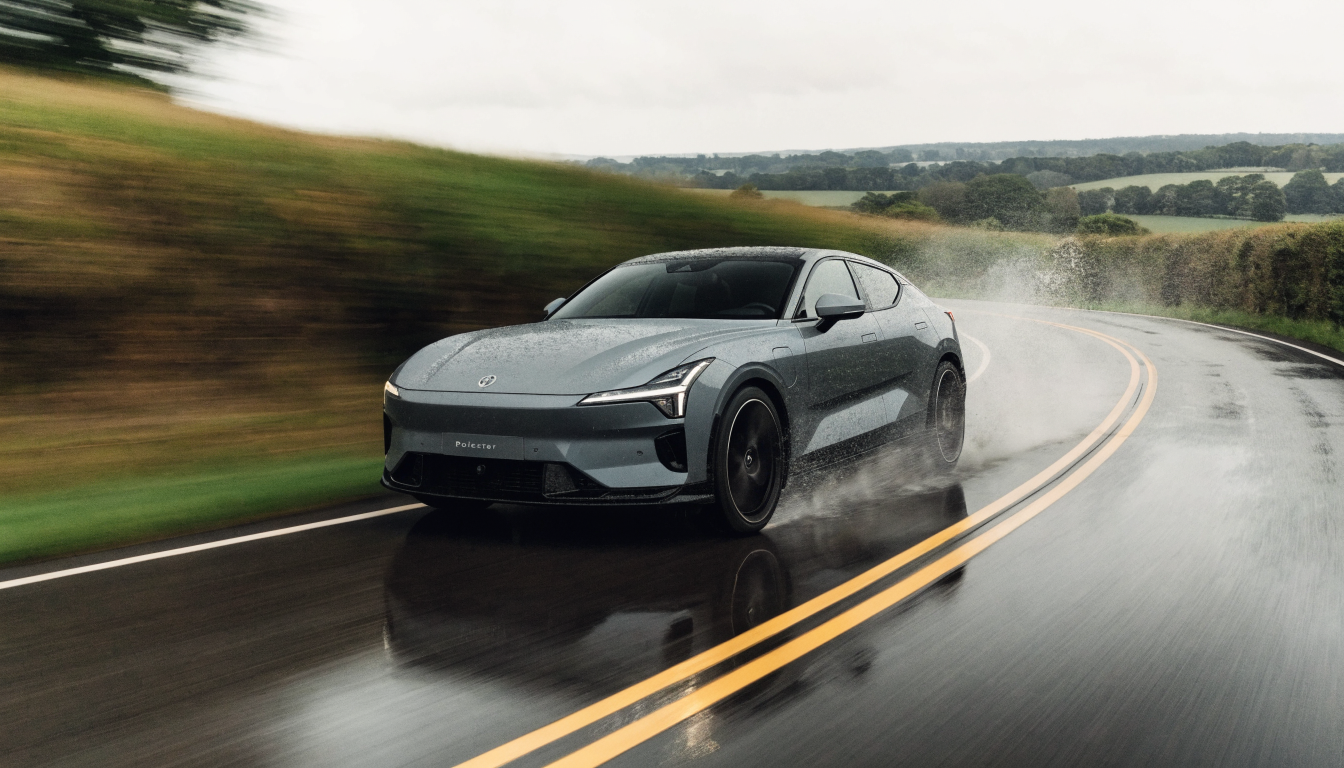
Every review mentions the missing rear window in its first paragraph. Get past that, and the Polestar 4 drives more like a hot hatch than an SUV. The steering is precise and well-weighted. It does not feel vague at low speed, the way many tall electric SUVs do. Ride quality has a slightly firm edge. It never tips into real discomfort, even on a rough UK B-road. For a taller, more conventional rival to weigh it against, our Tesla Model Y review covers the UK's best-selling electric SUV in the same way.
The single motor car is the one reviewers keep coming back to. It is not just the cheaper choice. It manages 0-62mph in 6.9 seconds, quick enough to never feel slow. It also stays better balanced through a corner than the heavier dual-motor version. The dual motor has more outright grip and more power. But several reviewers call its cornering blunter. Point-and-shoot, not genuinely playful.
Why it reviews so well, and where it doesn't
Safety
The Polestar 4 holds a five-star Euro NCAP rating. Its overall score is 86%. It scored 92% for adult occupant protection and 85% for child occupant protection. Vulnerable road users scored 81%, and safety assist systems scored 79%. It hit maximum points in the side-impact tests specifically. Automatic emergency braking, with pedestrian and cyclist detection, comes as standard. So do lane-keeping assistance and blind-spot monitoring.
Tech and cabin
The 15.4-inch central touchscreen is genuinely responsive. Graphics are sharp, and menus load fast. But Polestar routes nearly every function through it, rather than a physical switch. Even mirror adjustment needs a shortcut set up first. The separate driver display and head-up display fare better. Both are clear and easy to glance at while driving. Material quality throughout the cabin sits above the car's direct rivals. It feels closer to a pricier badge than its own price tag suggests.
Practicality, and the thing everyone asks about
Rear legroom is genuinely generous. It comfortably fits a six-footer sitting behind another adult. The boot totals around 496 litres above the load floor. A further 30 litres sits beneath it, plus a 15-litre front boot. That trails several direct rivals, though it stays workable for most weekly use. The missing rear window is the real trade-off. Reviewers consistently call the camera-fed rear-view mirror manageable, not ideal. Judging distance through a screen takes longer to trust than a normal mirror does, especially in the first few weeks.
How to decide if it's actually right for you
- Spend real time with the rear-view screen before signing anything, not just a five-minute test drive. If you reverse into tight spaces by eye rather than by camera or sensor, this is the single biggest adjustment the car asks of you.
- Choose the single motor unless you specifically want the extra pace. It is the cheaper car, the longer-range car, and the one reviewers rate as more engaging to drive — the dual motor buys speed, not a broadly better everyday car.
- Weigh the boot space against your actual use, not the spec sheet alone. At around 496 litres, it trails several rivals; if you regularly carry bulky items, check that figure against what you actually need to fit.
- Compare it directly against the Porsche Macan Electric and BMW iX3 before deciding. The Macan Electric is rated the more engaging drive by most reviewers, at a higher price; the iX3 offers a longer official range without the Polestar's styling or missing rear window.
- Factor in running costs, not just the purchase price. At over £50,000 new, every Polestar 4 trim triggers the UK's Expensive Car Supplement, an extra £440 a year in VED for five years from the second year of registration.
Verdict scorecard
| Category | Rating | Why |
|---|---|---|
| Driving experience | Strong | Precise steering and tight body control, especially in single-motor form |
| Interior quality | Excellent | Material quality that feels a class above the price point |
| Practicality | Mixed | Generous rear legroom, but a below-average boot and a real rear-visibility adjustment |
| Safety | Excellent | Five-star Euro NCAP, 86% overall |
| Value against rivals | Good | Undercuts the Macan Electric while matching it on cabin quality |
What it costs to own, not just to buy
The Polestar 4 carries a 100kWh battery, 94kWh of it usable. A full charge from empty costs around £24.54 on Ofgem's standard price cap rate of 26.11p/kWh for July-September 2026. Charge overnight instead, on a tariff such as EDF's GoElectric at 6.99p/kWh, and the same full charge drops to about £6.57 — worth arranging before ownership starts, since it applies to every single charge across however long you keep the car.
Every Polestar 4 trim lists above the £50,000 zero-emission threshold, which means every one also triggers the UK's Expensive Car Supplement: an extra £440 a year in VED, on top of the standard rate, for five years starting from the second year of registration. Budget for that alongside the purchase price or lease payment, not as an afterthought once the first renewal reminder arrives.
When the Polestar 4 isn't the right call
If the missing rear window is a genuine dealbreaker, no trim or configuration solves that. It is a design decision built into the whole range, not something limited to one version you could simply avoid by paying more.
If boot space matters more than driving feel or cabin quality, a more conventionally shaped SUV gives more usable cargo room for similar money. And if outright driving engagement is the priority above everything else, reviewers are consistent that a Porsche Macan Electric delivers more of it, at a real price premium over even the top Polestar 4 trim.
None of that makes the Polestar 4 a bad car. It means the badge and the styling should not be the only reason you buy one. A test drive that specifically includes reversing into a tight space, on a wet road if you can arrange it, tells you more about whether this particular car suits your particular driveway than any spec sheet or review ever will — this one included.
What to do next
If lease pricing and monthly cost matter more to you than the drive itself, our Polestar 4 guide covers that side in full. For a smaller, more affordable alternative from the same brand, our Polestar 2 guide is worth reading, and our Porsche Taycan Turbo S guide covers the performance flagship several reviewers compare it against.
Sources
Common questions
Is the Polestar 4 a good car overall?
Yes, with one real caveat. Reviewers rate the ride, steering and interior quality well above the car's direct rivals, and it carries a five-star Euro NCAP rating. The missing rear window, replaced by a camera and screen, is a genuine adjustment rather than a minor styling quirk, and it will not suit every driver.
Should I buy the single motor or dual motor Polestar 4?
The single motor. It is cheaper, holds the longer official and real-world range, and reviewers consistently rate it as the more engaging car to drive. The dual motor adds pace, not range or comfort, so it is worth paying for only if outright acceleration matters more to you than range or handling.
How does the Polestar 4 compare to rivals like the Porsche Macan Electric or BMW iX3?
It undercuts the Macan Electric on price while offering a similarly premium interior, though reviewers still rate the Macan as the more engaging car to drive. Against the BMW iX3, the Polestar 4 trades a longer official range for sharper styling and a more distinctive cabin.
Is the Polestar 4 practical for a family SUV?
Reasonably. Rear legroom is genuinely generous, fitting a six-footer behind another adult with room to spare, and the boot totals around 496 litres above the load floor plus a small front boot. It trails several rivals on outright boot volume, and the missing rear window takes real adjustment when reversing or parking.
How does the Polestar 4 compare to the Polestar 2?
The Polestar 4 is a larger, more expensive coupe-SUV with a five-star safety rating and no rear window, replaced by a camera. The Polestar 2 is a smaller, more affordable saloon-hatchback with a conventional rear window and cabin layout, and remains the simpler, easier car to live with day to day.
Can I lease a Polestar 4 in the UK?
Yes, alongside buying outright or on PCP finance. Lease pricing moves often and depends on the term, mileage allowance and deposit you choose, so treat any advertised monthly figure as a starting point rather than a fixed price, and compare the total cost across the whole contract before committing.
About the author
ElectraMile EditorialEditorial desk
The ElectraMile editorial team covers charging, running costs and EV ownership for readers in the UK and US.
Spotted something wrong? Tell us — we correct and date every change.
Figures shown for United Kingdom in GBP. Switch market in the header to see local pricing and terminology.