Gas Stations With EV Charging Near Me: What to Expect
Gas stations with EV charging near me range from one slow charger to a twelve-bay ultra-rapid hub. Here is how UK forecourts and US gas stations differ.
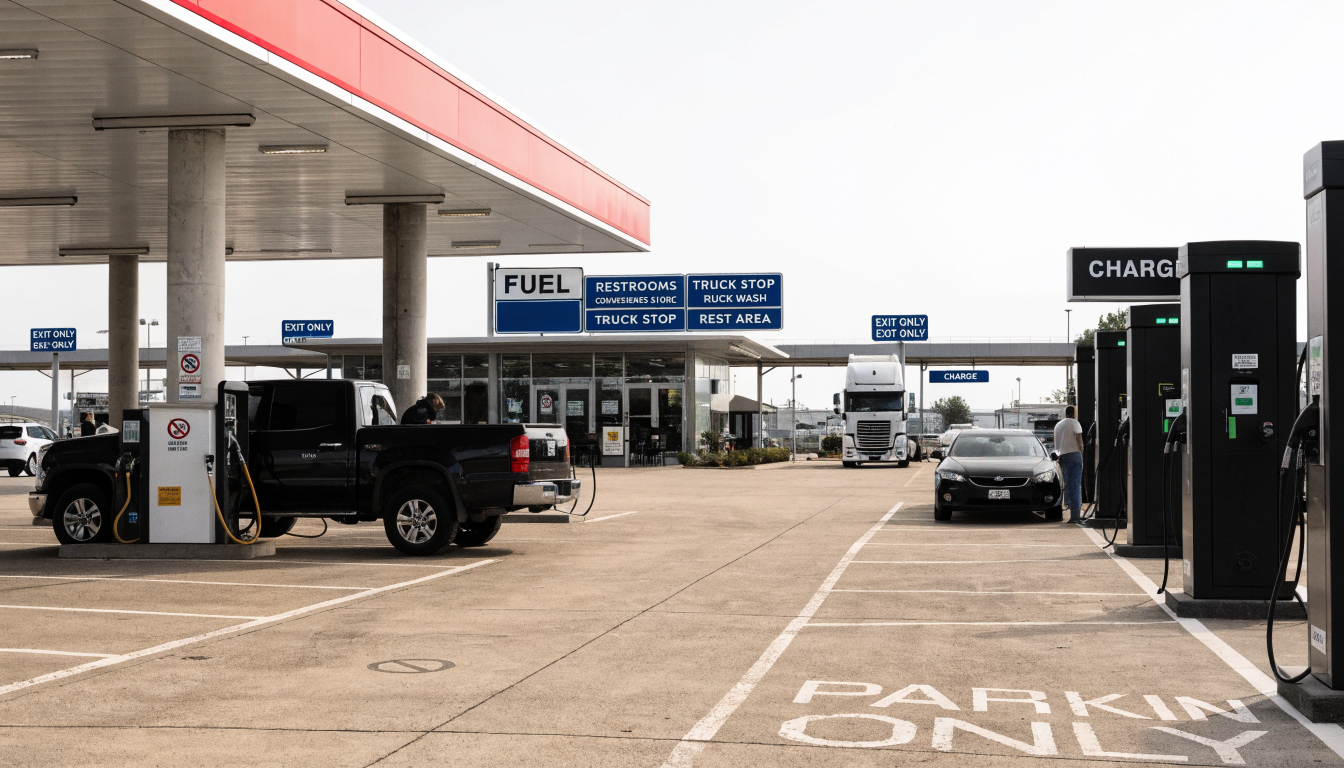
Yes — a growing number of fuel-station brands now host EV charging, but "gas stations with EV charging near me" covers everything from a single slow charger on a forecourt to a dedicated ultra-rapid hub with a dozen bays. In the UK, BP, Shell and the MFG forecourts all now host rapid or ultra-rapid chargers. In the US, Pilot, Flying J and 7-Eleven do the same. Which one you land on decides whether you wait five minutes or fifty.
Why this search gets such mixed answers
You expect a gas station — the US term for a petrol station — to be interchangeable with the next one, the way they mostly are for fuel. EV charging does not work like that yet.
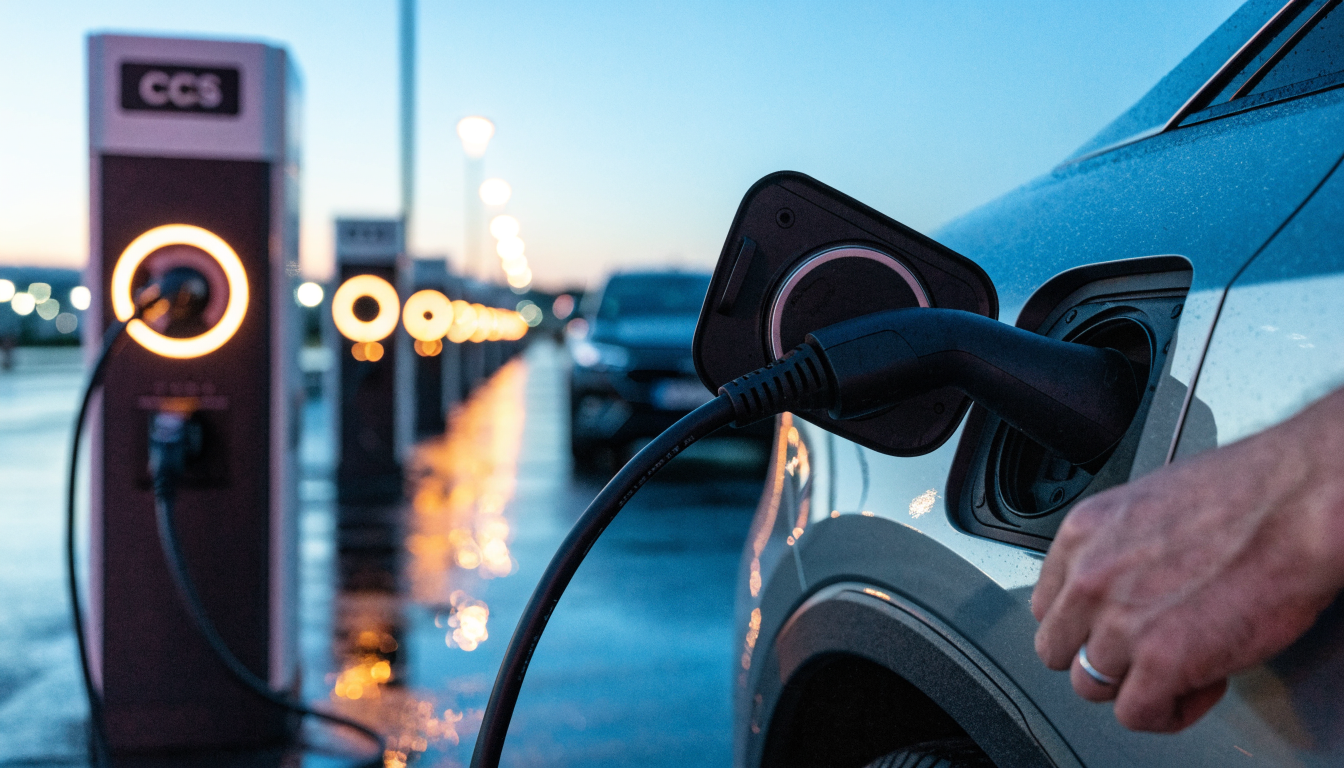
One forecourt might have a single 50kW charger tacked onto a corner of the car park. Another, run by the same fuel brand two miles away, might have a purpose-built six-bay ultra-rapid hub doing 300kW. Both show up under the same search, and nothing in the results tells you which one you are actually driving to.
That inconsistency is not random. It reflects how fast, and how unevenly, fuel retailers are rebuilding their forecourts for electric cars. A forecourt built in the 1990s was never designed to carry the electricity supply a modern rapid charger needs, so upgrading it properly can cost far more than simply bolting a unit onto a spare parking bay.
Why forecourt charging is so inconsistent
Retrofitting an existing site has real limits
Bolting chargers onto a forecourt built for petrol pumps means working around existing tanks, drainage and the local electricity grid connection. Some sites can only ever support one or two chargers at a lower speed; others can be rebuilt with a much bigger power supply.
Fuel retailers are increasingly building dedicated hubs instead
Rather than adding chargers piecemeal, several major brands now build stand-alone ultra-rapid hubs — sometimes at a forecourt, sometimes on land next to one. bp pulse's biggest UK hub, at the NEC in Birmingham, pairs 30 ultra-rapid 150kW chargers with 150 standard 7kW units on one site, a different scale entirely from a two-bay retrofit.
The forecourt brand is not always who runs the charger
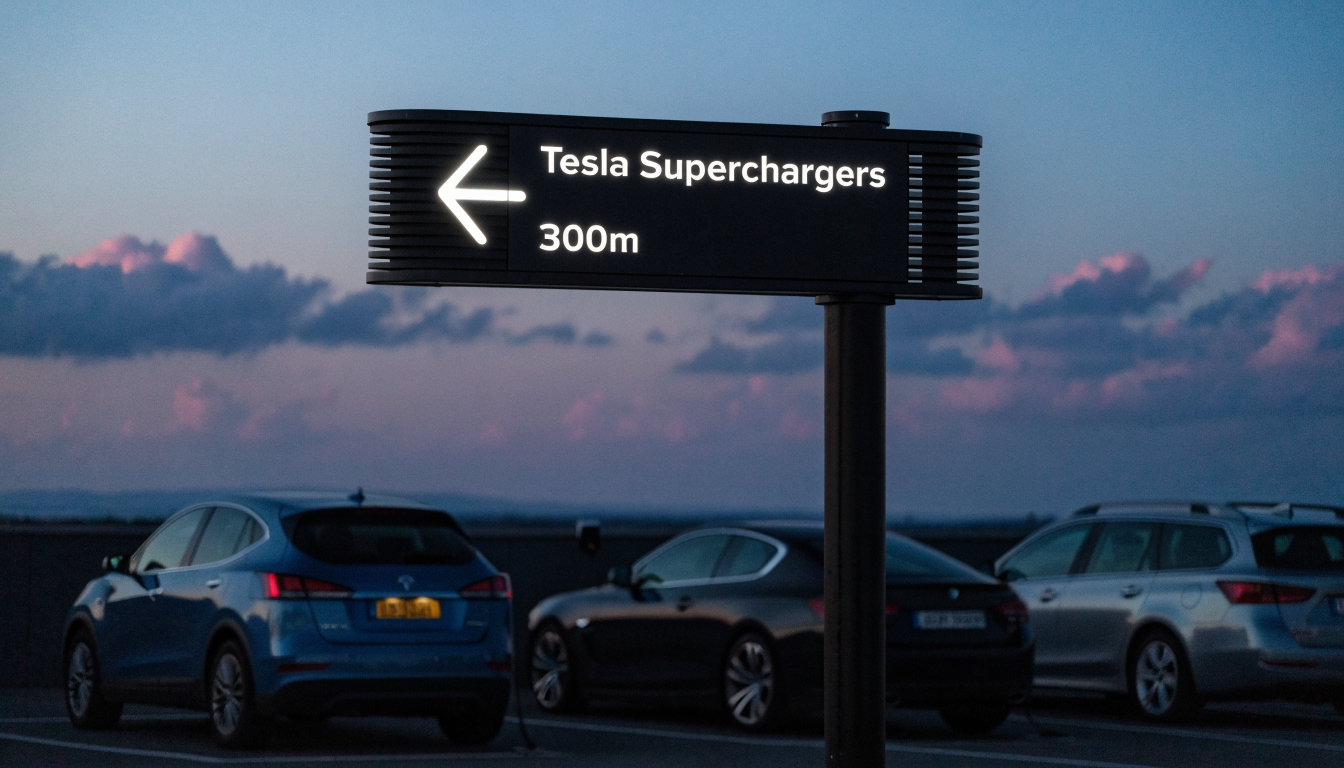
A BP sign over the pumps does not always mean bp pulse runs the charger next to them, and the same goes for Shell and Esso. Franchise and partner arrangements mean the charging operator, the app you need and the price you pay can vary between two forecourts flying an identical fuel brand.
How to actually use one
- Check a live-status app before you commit to a specific forecourt, exactly as you would for any EV charging near me now search — a fuel brand on the sign tells you nothing about whether the charger behind it is working today.
- Look up the speed, not just the brand. A "rapid" charger at 50kW and an "ultra-rapid" one at 300kW can sit under the same forecourt sign and take four times as long to fill the same battery.
- Confirm which app or card actually pays for it. bp pulse, Shell Recharge and MFG EV Power each run their own app and pricing, separate from the fuel side of the business, so your regular fuel loyalty card will not work at the charger.
- Expect to queue at busy times, especially at smaller sites. A forecourt with two charging bays serves far fewer cars per hour than one built specifically as a charging hub, and evening rush hour is when that gap shows up most.
- In the US, check whether the network is store-branded or a partner's. Pilot and Flying J locations use EVgo-operated chargers under a joint scheme with GM, while 7-Eleven runs its own 7Charge network — the app you need differs between the two.
- Keep a backup forecourt in mind for a longer trip. Relying on one specific site is riskier than checking two along your route before you set off, covered in our guide to planning a long EV trip.
Which forecourt brand actually gets you what
| Forecourt brand | Charging operator | Typical speed | Market |
|---|---|---|---|
| BP forecourts | bp pulse | 50–150kW, up to 400kW at dedicated hubs | UK |
| Shell forecourts | Shell Recharge | 50–300kW | UK |
| Esso, Morrisons, Jet, Texaco, Murco (MFG) | MFG EV Power | 50–400kW | UK |
| Pilot & Flying J | EVgo, via a GM-backed scheme | Up to 350kW | US |
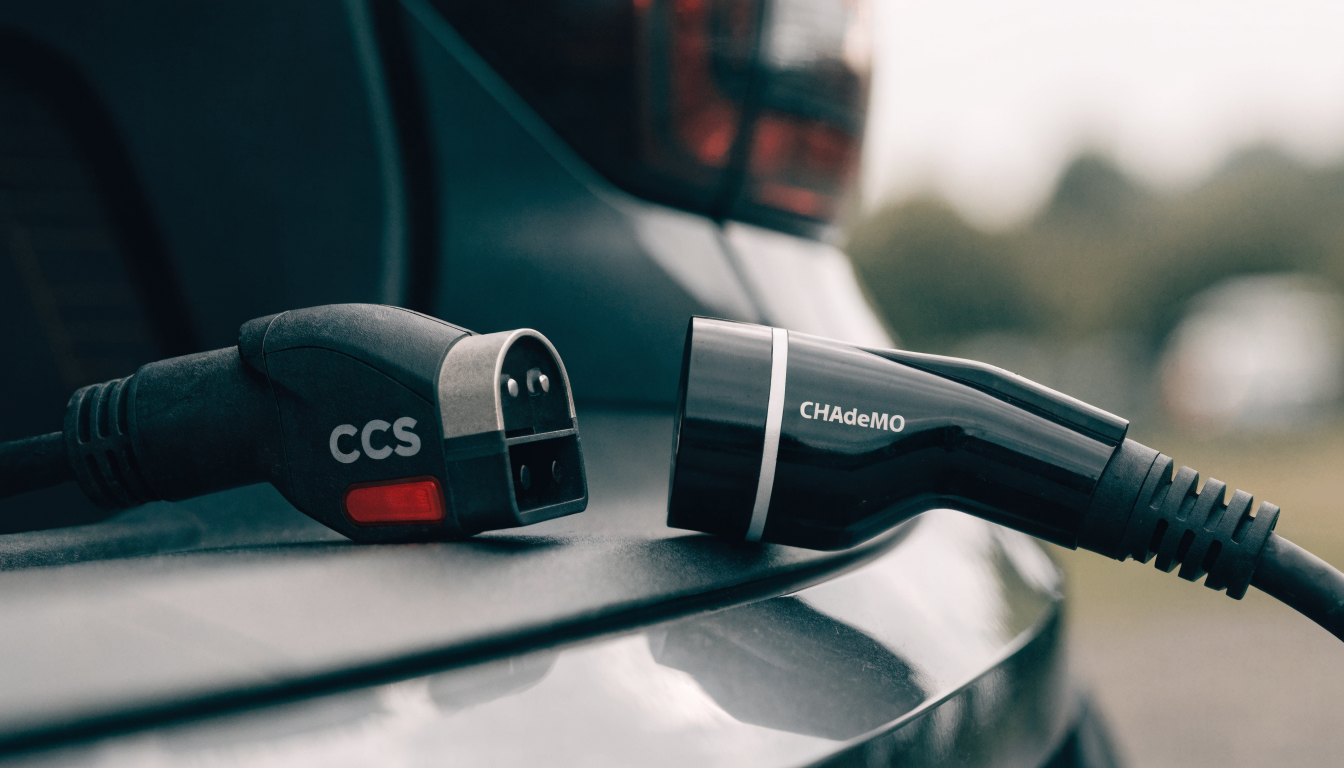
| 7-Eleven, Speedway, Stripes | 7Charge (7-Eleven's own network) | DC fast, CCS and CHAdeMO | US |
Check the operator before you rely on a brand name alone — the sign over the forecourt is a weaker signal than the actual network running the charger next to it.
What it actually costs
Forecourt rapid and ultra-rapid pricing sits inside the same range as the rest of the public network. Zap-Map's UK price index put the top ten rapid networks, forecourt-based or not, between 59p and 92p per kWh in July 2026. MFG EV Power specifically cut its ultra-rapid price to 59p per kWh for summer 2026, down from 79p, running from 1 July to 30 September.
There is no single "forecourt price". Two forecourts under the same fuel brand can charge different rates if a different operator runs the hardware, and promotional pricing like MFG's summer cut is time-limited rather than permanent. In the US, Electrify America averaged $0.617 per kWh and EVgo averaged $0.641 per kWh across their networks in mid-2026, similar in principle whichever fuel brand happens to be on the sign. Check the rate in the app before you plug in, not after. For the full comparison against home charging and petrol, see our breakdown of EV public charging cost.
When a forecourt is not enough
A two-bay forecourt charger is fine for a top-up on the way somewhere. It is not a substitute for a dedicated charging hub if you are relying on public charging for most of your driving, since a small site queues up fast once more than one or two EVs arrive at once.
It is also not the place to gamble on a single make-or-break stop. If a specific forecourt charger is broken and there is no realistic alternative nearby, that is a public charging reliability problem worth reading up on before your next long trip, not something to discover with an empty battery.
Treat a forecourt charger the same way you would treat any other public charger: useful, convenient, and worth a live-status check first, but not automatically the best option simply because it shares a car park with fuel pumps.
What to do next
- Check what is actually on your specific route rather than assuming any fuel brand will do — our EV charging network guide breaks down who runs what.
- Searching from Greater Manchester or the North West specifically? Our be.EV guide covers a regional network that often out-performs the forecourts nearby.
- Browse our full public charging hub for every major operator, forecourt-based or not.
Sources
- Zap-Map — bp pulse public charging network guide
- Zap-Map — Shell Recharge public charging network guide
- Motor Fuel Group — MFG EV Power slashes ultra-rapid charging prices by 25% for summer 2026
- EnergyTech — Pilot Flying J expands electric vehicle charging network across North America
- 7-Eleven — 7-Eleven Inc. launches new electric vehicle charging network, 7Charge
Common questions
Are gas station EV chargers as fast as dedicated charging hubs?
Not always. Many forecourt EV public charging stations bolt one or two rapid chargers onto a car park built for fuel pumps, capped by the site's electricity supply. A purpose-built hub, like bp pulse's Birmingham NEC site, offers far more bays and higher power than a typical forecourt retrofit.
Do I need a different app to charge at each fuel brand's forecourt?
Usually yes. BP, Shell and MFG each run charging through bp pulse, Shell Recharge and MFG EV Power respectively — separate apps and accounts from their fuel loyalty schemes, so you cannot simply tap a fuel card at the charger.
Where can I find EV public charging stations near me at a gas station?
A live-status app such as Zap-Map or PlugShare shows forecourt chargers alongside every other type, filtered by speed and connector — far more reliable than assuming any given fuel brand's forecourt has one.
Do US gas stations have fast EV chargers now?
Increasingly, yes. Pilot and Flying J had passed 300 locations with EVgo-operated fast chargers by mid-2026, working towards 2,000 charging stalls across roughly 500 sites, and 7-Eleven has begun rolling out its own 7Charge network at selected US stores.
Is charging at a gas station more expensive than at a dedicated hub?
Not inherently — forecourt rapid and ultra-rapid pricing sits within the same range as the rest of the public network, though individual promotions, like MFG's discounted summer 2026 rate, can make one option temporarily cheaper than another nearby.
About the author
ElectraMile EditorialEditorial desk
The ElectraMile editorial team covers charging, running costs and EV ownership for readers in the UK and US.
Spotted something wrong? Tell us — we correct and date every change.
Figures shown for United Kingdom in GBP. Switch market in the header to see local pricing and terminology.